Overview
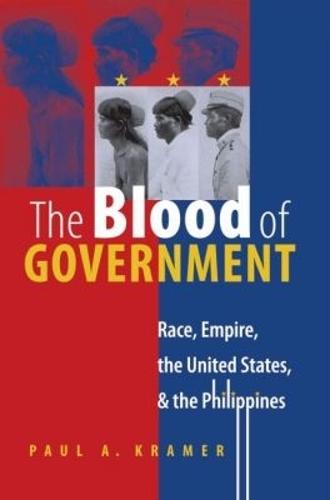
In 1899 the United States, having announced its arrival as a world power during the Spanish-Cuban-American War, inaugurated a brutal war of imperial conquest against the Philippine Republic. Over the next five decades, U.S. imperialists justified their colonial empire by crafting novel racial ideologies adapted to new realities of collaboration and anticolonial resistance. In this pathbreaking, transnational study, Paul A. Kramer reveals how racial politics served U.S. empire, and how empire-building in turn transformed ideas of race and nation in both the United States and the Philippines. Kramer argues that Philippine-American colonial history was characterized by struggles over sovereignty and recognition. In the wake of a racial-exterminist war, U.S. colonialists, in dialog with Filipino elites, divided the Philippine population into """"civilized"""" Christians and """"savage"""" animists and Muslims. The former were subjected to a calibrated colonialism that gradually extended them self-government as they demonstrated their """"capacities."""" The latter were governed first by Americans, then by Christian Filipinos who had proven themselves worthy of shouldering the """"white man's burden."""" Ultimately, however, this racial vision of imperial nation-building collided with U.S. nativist efforts to insulate the United States from its colonies, even at the cost of Philippine independence. Kramer provides an innovative account of the global transformations of race and the centrality of empire to twentieth-century U.S. and Philippine histories.
Full Product Details
Author: Paul A. Kramer
Publisher: The University of North Carolina Press
Imprint: The University of North Carolina Press
Edition: New edition
Dimensions:
Width: 15.40cm
, Height: 3.80cm
, Length: 23.10cm
Weight: 0.804kg
ISBN: 9780807856536
ISBN 10: 0807856533
Pages: 552
Publication Date: 30 April 2006
Audience:
College/higher education
,
Professional and scholarly
,
Undergraduate
,
Postgraduate, Research & Scholarly
Format: Paperback
Publisher's Status: Active
Availability: Awaiting stock

The supplier is currently out of stock of this item. It will be ordered for you and placed on backorder. Once it does come back in stock, we will ship it out for you.
Reviews
Compelling. . . . The author shows impressive command of . . . the sources in the United States and the Philippines, ranging from personal papers, newspapers, and military civilian archives. . . . Highly recommend[ed].--CENTRO Journal An important work not only to the field of Philippine-American studies, but also to the studies of race and imperialism in general.--Journal of American Studies Compelling. . . . The author shows impressive command of . . . the sources in the United States and the Philippines, ranging from personal papers, newspapers, and military civilian archives. . . . Highly recommend[ed]. -- CENTRO Journal An important work not only to the field of Philippine-American studies, but also to the studies of race and imperialism in general. -- Journal of American Studies A very significant contribution to the study of American imperialism. . . . A book that will define and influence the way the next generation of scholars will look at the American empire in the Philippines and Asia. . . . An impressive book that is both highly specific and broadly suggestive. It presents a thorough and thoughtful study of the imperial relationship between the United States and the Philippines. . . . A solid contribution toward building a new historiography of U.S. empire. -- H-Diplo A useful contribution. . . . Fascinating. -- Patterns of Prejudice A formidable assessment of the intertwined nature of race and U.S. imperialism. -- Journal of Southern History A useful and often original analysis of a very interesting and highly complex period of colonial history. -- Register of the Kentucky Historical Society A much needed and innovative intervention into the scholarship on the American empire and the Philippine nation-state. Vicente L. Rafael, University of Washington
A formidable assessment of the intertwined nature of race and U.S. imperialism. <br> -- Journal of Southern History
Compelling. . . . The author shows impressive command of . . . the sources in the United States and the Philippines, ranging from personal papers, newspapers, and military civilian archives. . . . Highly recommend[ed].--CENTRO Journal
Author Information
PAUL A. KRAMER is associate professor of history at The Johns Hopkins University.