Overview
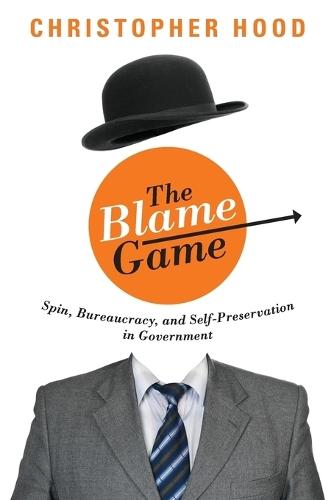
The blame game, with its finger-pointing and mutual buck-passing, is a familiar feature of politics and organizational life, and blame avoidance pervades government and public organizations at every level. Political and bureaucratic blame games and blame avoidance are more often condemned than analyzed. In The Blame Game, Christopher Hood takes a different approach by showing how blame avoidance shapes the workings of government and public services. Arguing that the blaming phenomenon is not all bad, Hood demonstrates that it can actually help to pin down responsibility, and he examines different kinds of blame avoidance, both positive and negative. Hood traces how the main forms of blame avoidance manifest themselves in presentational and ""spin"" activity, the architecture of organizations, and the shaping of standard operating routines. He analyzes the scope and limits of blame avoidance, and he considers how it plays out in old and new areas, such as those offered by the digital age of websites and e-mail. Hood assesses the effects of this behavior, from high-level problems of democratic accountability trails going cold to the frustrations of dealing with organizations whose procedures seem to ensure that no one is responsible for anything. Delving into the inner workings of complex institutions, The Blame Game proves how a better understanding of blame avoidance can improve the quality of modern governance, management, and organizational design.
Full Product Details
Author: Christopher Hood
Publisher: Princeton University Press
Imprint: Princeton University Press
Dimensions:
Width: 15.20cm
, Height: 1.40cm
, Length: 23.50cm
Weight: 0.369kg
ISBN: 9780691162126
ISBN 10: 0691162123
Pages: 240
Publication Date: 01 December 2013
Audience:
College/higher education
,
Professional and scholarly
,
Tertiary & Higher Education
,
Professional & Vocational
Format: Paperback
Publisher's Status: Active
Availability: Manufactured on demand

We will order this item for you from a manufactured on demand supplier.
Language: English
Reviews
-In taking us through the permutations and definitions of the concept and its actualization in the form of structures, impact and possible outcomes, Hood employs a style and approach that is open and engaging. Certainly it is cerebral and analytical, but he does not shirk from using what at times is a matey almost tabloid style.---Andrews Massey, LSE Blog
In taking us through the permutations and definitions of the concept and its actualization in the form of structures, impact and possible outcomes, Hood employs a style and approach that is open and engaging. Certainly it is cerebral and analytical, but he does not shirk from using what at times is a matey almost tabloid style. <b>--Andrews Massey, <i>LSE Blog</i></b>
In taking us through the permutations and definitions of the concept and its actualization in the form of structures, impact and possible outcomes, Hood employs a style and approach that is open and engaging. Certainly it is cerebral and analytical, but he does not shirk from using what at times is a matey almost tabloid style. --Andrews Massey, LSE Blog
Author Information
Christopher Hood is the Gladstone Professor of Government at All Souls College, Oxford. His books include The Limits of Administration, The Tools of Government, and The Art of the State.