|
|
|||
|
||||
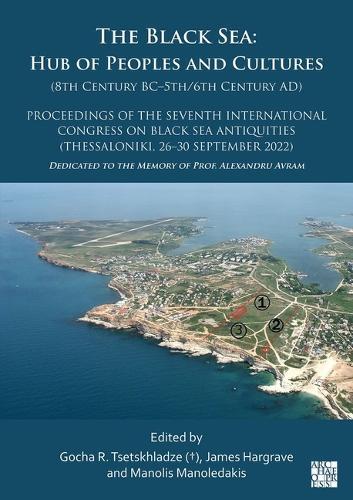
OverviewFull Product DetailsAuthor: Gocha R. Tsetskhladze , James Hargrave , Manolis Manoledakis (Professor of Classical Archaeology, International Hellenic University in Thessaloniki)Publisher: Archaeopress Imprint: Archaeopress Archaeology Weight: 2.006kg ISBN: 9781803279336ISBN 10: 1803279338 Pages: 502 Publication Date: 01 May 2025 Audience: Professional and scholarly , Professional & Vocational Format: Paperback Publisher's Status: Active Availability: Manufactured on demand We will order this item for you from a manufactured on demand supplier. Table of ContentsEditors’ Preface Message from the President of the Congress, Prof. Sir John Boardman Appreciation of Gocha Tsetskhladze – James Hargrave About Gocha – Manolis Manoledakis Launch of the Festschrift, 26 September 2022 – John Boardman(†), James Hargrave and Alexandru Avram List of Illustrations Session 1 Scythians, Taurians, Sarmatians, Dacians, Thracians, Colchians, the Local Populations of the Southern Black Sea, etc. The Getae and Scythians at Callatis and in its territory, 4th–2nd centuries BC – Nicolaie Alexandru The Sarmatian Cultural Phenomenon between Migration and ‘Network Analysis’: From M.I. Rostovtzeff to recent historical debates – Victor Cojocaru Multiple Aiai in Colchis. On the creation and proliferation of mythical landscapesin the eastern Black Sea region – Altay Coşkun ‘Bird-bowls’ as an Indication for the Foundation Date of Some of the Earliest Greek Settlements in the Black Sea Region and the Early Trade in This Region – Jan G. de Boer The Bithynians and the Greek Poleis of the Asian Propontis in the Archaic and Classical Ages – Ferdinando Ferraioli Rock Sanctuary at Komatinski Skali in the Region of Brestovo Village, South-Western Bulgaria – Anton Genov, Dimitriya Spasova and Anastas Ifandiev Phrygians in the Black Sea? – Manolis Manoledakis Rock Arches in Thracian Megalithic Sanctuaries on the Southern Black Sea Coast of Bulgaria – Vasil Markov Why the Sea of Azov Was Called a ‘lake’ in Antiquity. The Problem of Estuary Lakes in the Pontus Euxinus – Аlexander V. Podossinov The Sumela Monastery Near Trabzon, an Important Pre-Christian Cult Site – Alexandar Portalsky Gold Clothing Decoration of the Sarmatians in the North Pontic Area – Evgenia Velychko Session 2 Relations of Greece, Rome and Anatolia with the Local Peoples of the Black Sea: Cultural, Political, Commercial Retracing Connections Through Artefacts: a Bone Plaque with an Image of a Naked Woman from Ancient Armazi – Eka Avaliani The Presence of Tauric Chersonesus on the Western Coast of the Pontus Euxinus – Livia Buzoianu and Irina Sodoleanu Archaeological Materials from the Early Byzantine Period in Pichvnari, South-west Georgia – Tamaz Darchidze Literacy in Roman Iberia, South Caucasus – Irina Demetradze-Renz Greek Colonisation of Colchis (Western Georgia): The Failure of an Hellenic Experiment – Tedo Dundua and Natia Phiphia Initiatives édilitaires à Tyras aux premier–troisième siècles ap. J.-C. La perspective épigraphique – Ana Honcu Were Thracian and Pontic Slaves Traded in the East Mediterranean in the Archaic Period? – Liviu Mihail Iancu An Alternative Route of the Silk Road Through Svaneti (West Georgia) to the Black Sea in the 6th Century AD – Besik Lortkipanidze, Nikoloz Murgulia, Davit Lomitashvili, Ian Colvin and Paul Everill Postponing the End of the Lower Danube Limes – Andrei Opaiţ Some Remarks on the Financing of Agonistic Festivals in Tauric Chersonesus – Oksana A. Ruchynska Thracophobia? Greek Representations of Ancient Thracians: a Modern Misjudgment – Aliénor Rufin Solas Coins and Trade in the Local Environment of the South-Western Istro-Pontic Territory. Some Remarks Regarding the Archaeology and Numismatics of the Hellenistic Period – Gabriel Mircea Talmațchi Aspects of Monetary Circulation in the Province of Scythia in the 6th–7th Centuries AD. A Case Study: Tropaeum Traiani – Gabriel Mircea Talmațchi and Gabriel Custurea Tyche-Fortuna. The Image of a City-State between Europa and Asia – Viktorya Vasilyan Session 3 Macedonia and the Black Sea From Athens to North Greece and the Black Sea: Red-figure Vases of the Group of the Vienna Lekanis – Nikos Akamatis Mapping river gods. Highlighting the importance of rivers as gods, as seen through their representations in art during the Roman period in the regions of Macedonia and Thrace – Georgia Aristodemou Macedonians and Scythians: a remarkable interaction through alliances and conflicts mirrored by the archaeological evidence – Francesca Fariello Macedonia and Scythians in the second half of the 4th century BC – Luigi Gallo Comparative research into the andrones from the Hellenistic houses of Macedonia and the Greek colonies of the northern Black Sea – Peli Plika Session 4 New Excavations and Projects Settlement pattern and exchange networks at the border of the territory of Apollonia Pontica: the fortified settlement of Malkoto Kale – Teodora Bogdanova, Alexandre Baralis, Maguelone Bastide, Dimitar Nedev, Nicolas Morand and Tsvetana Popova Development of the city plan of ancient Sinope: infrastructure as ideology – Owen Doonan Travelling in the Ionian and Dorian colonies of ‘Thracia Pontica’. Results of the implementation of an innovative museological project – Maria Girtzi and Athanasia Bountidou Early Roman amphorae from Tropaeum Traiani (Constanța, Romania) – Bianca-Elena Grigoraș and Adriana Panaite The sacred sea spaces of Byzantium and the mythology about its origins – Vanya Lozanova-Stancheva The temple(s) of Apollo in Sinope. A preliminary study – Eleni Mentesidou The Early Roman burials from Histria – Liana Oța An important bothros from Oluz Höyük: the oldest Zoroastrian ritual finds in Anatolia – Mona Saba Strabo’s ‘Ancient Chersonesus’: new discoveries (phrourion, acropolis, temple of the acropolis) – Angelina Zedgenidze Session 5 Varia Cases of ‘premature colonisation’ in Greek history of the 8th–5th centuries BC – M.A. Kolesnikov Appendix 1: Programme. Seventh International Congress on Black Sea Antiquities Appendix 2: Summaries of Papers. Seventh International Congress on Black Sea AntiquitiesReviewsAuthor InformationGocha Tsetskhladze (PhD Moscow, DPhil Oxford) was a classical archaeologist who specialised in ancient Greek colonisation and the archaeology of the Mediterranean, the Black Sea, Caucasia, Anatolia, and Central and Eastern Europe in the 1st millennium BC. He was the author of more than 250 books, edited volumes, chapters, articles, etc.; founder and series editor of the publication series Colloquia Pontica, now Colloquia Antiqua; and founder and editor-in-chief of the journal Ancient West and East. He organised many international conferences, congresses, etc., notably the International Congress on Black Sea Antiquities which he established in 1995. He died suddenly on 11 September 2022, aged 59. James Hargrave has a PhD in Economic History from the University of Durham and a Diploma in Archive Administration from the University of Wales (Aberystwyth). He specialised for 25 years in cataloguing large collections of papers accumulated by dukes, prime ministers, businesses, etc., but his historical interests stretch from antiquity to railway finance and equipment, Central and Eastern Europe, and the British Empire-Commonwealth, including comparisons between colonisations and empires ancient and modern. The diversity of his work is such that he has appeared as three unconnected people in the same library catalogue. As the archive world moved away from serious scholarship towards unreflective technophilia, he moved into editing (encouraged by the editing meted out to one of his own catalogues, and freed from the daily grind by an inheritance). He has collaborated with one or both of the other co-editors many times. He has been involved in the Black Sea Congress since 1997. Manolis Manoledakis is Professor of Classical Archaeology at the International Hellenic University in Thessaloniki. He has also taught at the University of Ioannina, the Democritus University of Thrace and the Hellenic Open University. He has participated in various research programmes and is the director of the International Hellenic University’s excavation in Neo Rysio, Thessaloniki. His research work concentrates on the archaeology and ancient history of the Black Sea as well as central Macedonia, ancient topography and geography, ancient Greek religion and cults, Greek mythology in its historical context, and ancient Greek painting and vase-painting. Tab Content 6Author Website:Countries AvailableAll regions |
||||