Overview
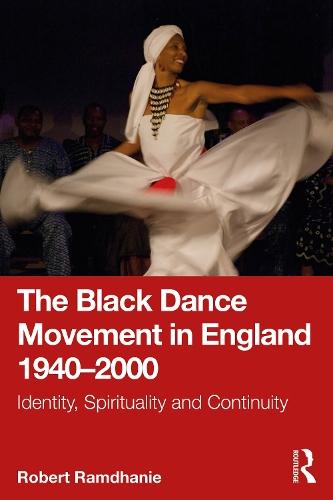
This book is the first written history of the development of African dance in the UK covering the last 60 years of the 20th century. This study introduces a parallel concept within the British and European exploitative ‘triangular slave trade’, by showing how powerful cultural heritage circles were being nurtured to enrich popular culture globally. Of necessity therefore, the reader is introduced to the continent of Africa and their religious principles and practices; the Caribbean and the creolisation of African culture and finally to the UK, where continental Africans met kith and kin from the Caribbean and distilled British African dance. Information relating to key individuals (e.g., Berto Pasuka, Boscoe Holder, Allister Bain, Jeanette Springer, George Dzikunu, Peter Badejo, Barry Anderson, Chester Morrison, Angela Anderson, Beverley Glean, Greta Mendez, H. Patten, Hermin McIntosh and Jackie Guy) who developed the infrastructure to underpin African dance development over those decades is acknowledged and explored. The final section, Women pioneers – In Their Own Words – facilitates Lorna, Angela and Pauline Anderson (Ekome), Patricia Donaldson (Mystic & The Israelites and Kokuma), Beverley Glean (Irie! dance theatre), Greta Mendez (MAAS Movers) and Judith Palmer (Afrikan Calabash and Adzido) to share their personal journeys in African dance and the significant contribution they made within the Dance Movement. This study is a valuable resource for students and scholars in performance studies and dance studies.
Full Product Details
Author: Robert Ramdhanie
Publisher: Taylor & Francis Ltd
Imprint: Routledge
ISBN: 9781041026259
ISBN 10: 1041026250
Pages: 274
Publication Date: 04 March 2026
Audience:
College/higher education
,
Professional and scholarly
,
Tertiary & Higher Education
,
Professional & Vocational
Format: Paperback
Publisher's Status: Forthcoming
Availability: Not yet available

This item is yet to be released. You can pre-order this item and we will dispatch it to you upon its release.
Reviews
“The Black Dance Movement in England 1940-2000 is a major contribution to the dance history of that island for two significant reasons. Firstly, this is the only book that gives credit to many of the pioneers of the Movement of the last century and secondly, it fills a missing gap in the UK’s dance history.” Germaine Acogny, dancer, choreographer, teacher, and Co-Founder of the ECOLE DES SABLES, Senegal. “Rooted in the artistic and spiritual heritage of Africa and the Caribbean, dance became a major part of cultural expression and resistance for the developing Black British community in the second half of the twentieth century. Drawing on decades of personal experience as an organiser, as well as detailed archival research and interviews with many of the pioneers, Robert Ramdhanie is the ideal guide to this fascinating story, and his The Black Dance Movement in England 1940-2000: Identity, Spirituality and Continuity will become the standard work on the subject.” John T. Gilmore, Professor, University of Warwick, UK. “Bob Ramdhanie’s book offers the first comprehensive history of Black British dance during the second half of the twentieth century. He himself was involved in the development of the Black dance sector during this period and knows most of the artists he discusses. Discussing the African and Caribbean historical contexts of these developments, including spiritual ideas and practices that travelled from Africa to the Caribbean, he shows why these are important for understanding Black British dance today.” Ramsay Burt, Professor Emeritus of Dance History, De Montfort University, UK. “The Black Dance Movement in England 1940-2000 has evolved out of the passion and commitment that Bob Ramdhanie has shown over several decades for African and Caribbean dance. He makes the connections between Africa and the Caribbean and highlights how the Windrush generations with their traditional dances in community clubs and places of worship, transformed British dance practice in the 1970s and 1980s. He gives due credit and recognition to those choreographers, musicians and dancers, who truly transformed the language and vocabulary of contemporary dance.” David Dabydeen, Emeritus Professor, University of Warwick, UK and Ambassador, Republic of Guyana.
Author Information
Robert (Bob) Ramdhanie is an arts activist. Born in Trinidad, he has been a pioneer supporting the development of ‘black arts’ for over 40 years. He co-founded and managed Mystics & the Israelites, Kokuma Dance Company and Danse de L’ Afrique between the 1970s and 1980s and was appointed the first Director of the Black Dance Development Trust. Bob established The Handsworth Cultural Centre and The CAVE Arts Centre and researched, edited and published three Black arts directories. He also co-founded and managed Black Voices for over 22 years. In 2011, Bob was awarded the 1st Arts and Cultural Entrepreneur Lifetime Achievement Award by the Drum Arts Centre and in 2018 he was awarded an MBE for his contribution to dance in the UK.