Overview
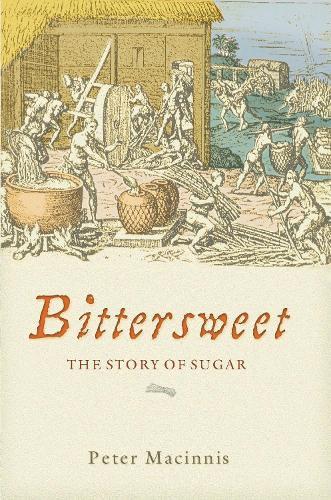
Forty years after first chewing on sugar cane in New Guinea, the home of sugar, the author underwent some complex dental work as a direct result of his sweet tooth. This led him to explore sugar cane's journey from New Guinea to Shakespeare's England. In the days before dentistry, people paid dearly for this sweet new food from exotic places. Queen Elizabeth I became so partial to hippocras, sugared almonds and pastilles that her teeth turned completely black. Bittersweet is full of ripping yarns and acts of bastardry. Through the ages, sugar has offered opportunities of tremendous riches to the unscrupulous few who grew and sold it. But in the days of manual processing, these fortunes were built on the backbreaking labour of slaves. Bittersweet explores the effects that sugar has had on the world. A foodstuff we take for granted and indulge in more than we should has caused wars and geopolitical balances that have shaped the modern world and the power balances we see in the 21st century. 'The breadth of the connections Macinnis weaves through his tale continually surprises, all the more because the substance sugar is so deceptively simple that, before this book, we have taken it for granted. He has put his encyclopaedic knowledge to excellent use, placing science and technology naturally in a social context.' - Dr Peter Pockley, Australasian Correspondent for Nature. 'Few foods have had such an impact on human history as sugar, from its origins, its influence on the slave trade and its use as a medicine, a luxury, a comfort food and now a cheap filler in the modern processed food supply. Peter Macinnis has traced its path carefully, cleverly crafting the story of all its sweet and sour effects.' - Dr Rosemary Stanton, Nutritionist.
Full Product Details
Author: Peter Macinnis
Publisher: Allen & Unwin
Imprint: Allen & Unwin
Dimensions:
Width: 13.00cm
, Height: 1.40cm
, Length: 19.50cm
Weight: 0.268kg
ISBN: 9781865086576
ISBN 10: 1865086576
Pages: 216
Publication Date: 13 June 2002
Recommended Age: From
Audience:
General/trade
,
General
Format: Paperback
Publisher's Status: Active
Availability: Manufactured on demand

We will order this item for you from a manufactured on demand supplier.
Reviews
Lively and entertaining: a splendid saga for the general reader. -- Kirkus Reviews
Lively and entertaining: a splendid saga for the general reader. Kirkus Reviews
Lively and entertaining: a splendid saga for the general reader. Kirkus Reviews Lively and entertaining: a splendid saga for the general reader. -- Kirkus Reviews
From Australian science writer and broadcaster Macinnis, an informative and readable history of the simple substance that changed the world and often brought out the worst in people. Sugar cane, a member of the grass family, was first discovered in the New Guinea jungle some 9,000 years ago. The locals found that chewing and sucking it was pleasurable; eventually they learned to cultivate it. A widely grown crop in the ancient civilized world, sugar's darker history began when the returning Crusaders brought it into Europe. There, it was a luxury item, being both capital- and labor-intensive, until the opening of the New World, particularly the Caribbean islands and Brazil, gave European colonizers the abundant land and suitable climate necessary for growing cane. Because a huge labor force was required to work the plantations, the author writes, Sugar and slavery seemed to go hand in hand. Surveying the sweet stuff's bitterest legacy, Macinnis unsparingly describes the appalling cruelty and dangerous working conditions inflicted on slaves and their not-much-better-off counterparts, indentured servants. He also writes of sugar's influence on policy matters and history, such as Napoleon's decision to hang onto France's sugar-growing colonies and sell the others to the US in the Louisiana Purchase. Blessed with a fine sense of humor as well as a sense of history, the author leavens his otherwise dramatic tale with lighter moments and such oddities as a four-volume 18th-century treatise on sugar-making written in blank verse, from which he quotes. Only a hardhearted few could resist priceless gems like, Of composts shall the Muse descend to sing, / Nor soil her heavenly plumes? The sacred Muse / Nought sordid deems, but what is base; nought fair / Unless true Virtue stamp it with her seal. Lively and entertaining: a splendid saga for the general reader. (6 maps) (Kirkus Reviews)
At first glance, a book on the subject of the world's most common sweetening agent doesn't exactly set the pulses racing. Yet there's much to recommend this tightly written tale of 'very few heroes and many villains', which manages to combine intrigue, dirty deeds and hugely important historical happenings. Macinnis's deftly humorous touch combines with his forays into self-deprecation and gently ironic prodding to get his message across. He even opens with a quote from Joseph Conrad acknowledging the lack of potential in covering 'the dreariest subject I can think of'. He then joyously proceeds to prove Mr Conrad wrong by covering some 9,000 years, 150 countries and all the major religions to reveal the truth about something that we all take for granted yet 'has influenced all our lives'. It's fair to say that sugar itself plays second fiddle to the complexities of human nature, and Macinnis acknowledges how the delightfully sweet substance was only one of any number of natural riches which our species would have squabbled over. From the volcanoes of Indonesia at the end of the last Ice Age through the side effects of dangerously volatile rum to sugar's ubiquitous presence in today's processed foodstuffs, Macinnis leaves no base uncovered, and no stone unturned in his research. Geographical phenomena, complex botany, man's inhumanity to man, and the payback of those dreaded visits to the dentist all jostle for space in the author's wonderfully woven consideration. The more ground he covers, the more the reader realizes the significance of the subject matter, and the more impressive becomes Macinnis's achievement in drawing it all together in such a concise and entertaining fashion. (Kirkus UK)
Author Information
Peter Macinnis has been involved in bringing science to the general public for many years. Formerly a science teacher, he has written a number of school textbooks and science readers, and writes for a number of magazines for adults and children. He left teaching to work as a bureaucrat, first at Sydney's Powerhouse Museum and later at the Australian Museum, before returning to teaching once more, combined with part-time writing. Over the years, he has recorded many talks for radio programs developed by the ABC Science Unit. He is now a full-time writer for adults and children.