Overview
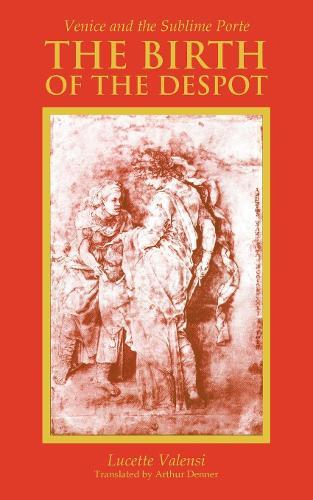
In her graceful account of the transformation of European attitudes toward the Ottoman empire during the sixteenth and seventeenth centuries, Lucette Valensi follows the genealogy of the concept of Oriental despotism. The Birth of the Despot examines a crucial moment in the long and ambiguous encounter between the Christian and Islamic worlds: the period after the fall of Constantinople to the Turks, when Venice's pursuit of its commercial and maritime interests brought two powerful protagonists-Venice and the Sublime Porte-face-to-face. Vivaldi's oratorio Juditha Triumphans, in which Judith liberates her besieged town by killing the Turk Holofernes, serves as the organizing metaphor in Valensi's study of how Venice's perceptions of its rival changed. Valensi shows how Venice's initial admiration for the sultan and his orderly empire metamorphosed into revulsion at a monstrous tyrant.
Full Product Details
Author: Lucette Valensi ,
Arthur Denner
Publisher: Cornell University Press
Imprint: Cornell University Press
Dimensions:
Width: 12.70cm
, Height: 1.10cm
, Length: 20.30cm
Weight: 0.454kg
ISBN: 9780801475436
ISBN 10: 0801475430
Pages: 132
Publication Date: 12 February 2009
Recommended Age: From 18 years
Audience:
General/trade
,
General
Format: Paperback
Publisher's Status: Active
Availability: In Print

This item will be ordered in for you from one of our suppliers. Upon receipt, we will promptly dispatch it out to you. For in store availability, please contact us.
Reviews
Using reports read to the doge and senate by ambassadors and envoys extraordinary to the Porte on their return home, Lucette Valensi analyzes their portrayals of Sultans within the context of Renaissance literary traditions. The origins and etymological evolution of the word 'despot, ' its attachment to the Sultans, and its emigration into contemporary usage in modern European languages form a central theme. Valensi tells a fascinating story, using the structure of Vivaldi's operatic rendition of the biblical parable of Judith and Holofernes as the organizing principle. She offers important historical insights as well, for Venice was surely better informed about the Turk than any other western polity. The story begins with visions of the Sultan as the model of an enlightened Renaissance prince in all but religion, and ends with an arbitrary and bloodthirsty Mehmet IV driven by strange appetites and unknowable impulses, the very image of Montesquieu's Oriental despot. The style is polished; the organization effective; the insights into the educational methods, rhetoric, and modes of thought of late Renaissance Venice fascinating. The International History Review
Using reports read to the doge and senate by ambassadors and envoys extraordinary to the Porte on their return home, Lucette Valensi analyzes their portrayals of Sultans within the context of Renaissance literary traditions. The origins and etymological evolution of the word 'despot, ' its attachment to the Sultans, and its emigration into contemporary usage in modern European languages form a central theme. Valensi tells a fascinating story, using the structure of Vivaldi's operatic rendition of the biblical parable of Judith and Holofernes as the organizing principle. She offers important historical insights as well, for Venice was surely better informed about the Turk than any other western polity. The story begins with visions of the Sultan as the model of an enlightened Renaissance prince in all but religion, and ends with an arbitrary and bloodthirsty Mehmet IV driven by strange appetites and unknowable impulses, the very image of Montesquieu's Oriental despot. The style is polished; the organization effective; the insights into the educational methods, rhetoric, and modes of thought of late Renaissance Venice fascinating. -The International History Review
Author Information
Lucette Valensi is Director of the Center for Historical Research at the University of Cambridge, and Fellow of Emmanuel College.