|
|
|||
|
||||
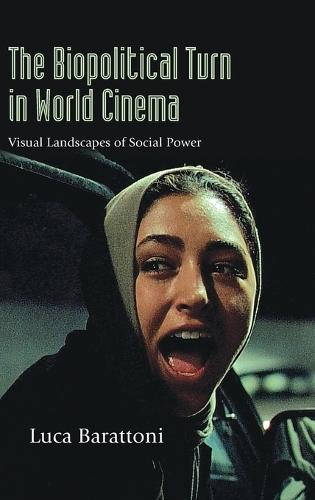
OverviewExplores biopolitical currents in world cinema, paying particular attention to postsocialist and postrevolutionary filmmakers from Iran, Russia, China, and Romania. The Biopolitical Turn in World Cinema explores how cinematic form and content understand and represent relationships of power between the state and life itself. Cinema, it argues, is both technical apparatus and aesthetic object and as such is imminently biopolitical, both as a medium of governmental control and as a site of resistance. The book analyzes a range of cinematic movements, paying particular attention to postsocialist and postrevolutionary filmmakers from Iran (Asghar Farhadi), Russia (Sergei Loznitsa), China (Xiaoshuai Wang), and Romania (Radu Jude). The book concludes by looking toward filmmakers—from Jordan Peele to Albert Serra—who further illuminate the limits of biopolitical paradigms, offering new ways of understanding contemporary political and ethical challenges posed by neoliberal globalization. While this book will appeal to film studies specialists, it is also a comprehensive introduction to film theory and biopolitical thought that will appeal to nonacademic and student readers with an interest in the subjects. Full Product DetailsAuthor: Luca Barattoni (Clemson University)Publisher: State University of New York Press Imprint: State University of New York Press Dimensions: Width: 15.20cm , Height: 2.40cm , Length: 22.90cm Weight: 0.562kg ISBN: 9798855805833Pages: 326 Publication Date: 01 March 2026 Audience: College/higher education , Postgraduate, Research & Scholarly Format: Hardback Publisher's Status: Active Availability: Manufactured on demand We will order this item for you from a manufactured on demand supplier. Table of ContentsReviews""Barattoni's The Biopolitical Turn in World Cinema describes with laser-sharp precision the current state of play in both film philosophy and film studies. Its original theoretical framework combines Foucault's 'bio power' and Agamben's 'biopolitics' with recent nonhuman and animistic approaches to substantiate the analysis of films picked from post-socialist and post-revolutionary regions, where political oppression results in harm to and often destruction of the human body and life. A highly recommended read for both scholars and lovers of world cinema."" — Lúcia Nagib, author of Realist Cinema as World Cinema: Non-cinema, Intermedial Passages, Total Cinema Author InformationLuca Barattoni is Associate Professor of World Cinema at Clemson University and the author of Italian Post-Neorealist Cinema. Tab Content 6Author Website:Countries AvailableAll regions |
||||