Overview
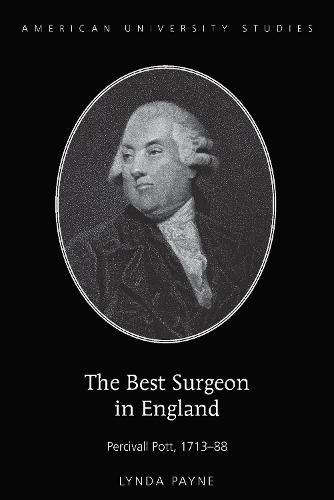
Percivall Pott (1713–88) was a leading surgeon in eighteenth-century Britain. This work mines the rich biographical and bibliographical record Pott and his students left behind to add to the historical and intellectual understanding of pre-modern surgery. This was a time when surgery was becoming professionalized. Pott maintained a significant role in crafting the image of a professional surgeon as someone who is capable of treating a multitude of poor hospital patients while at the same time effectively teaching operative skills and manners to the next generation of young men and running a successful and wealth-producing private practice. Pott had more medical conditions named after him during his lifetime than any other surgeon of his era or since; analyzing what conditions surgeons claimed were theirs to manage and what ailments patients sought surgical solutions for reveals the importance and power of rhetoric in crafting the increasingly rigid definition of medicine as a sophisticated scientific activity rather than a mundane lay experience of treating sickness. The practice of naming conditions after surgeons also helps lay bare the power to classify and own certain sites in the body. An account of Pott’s life and work challenges the prevailing view in historiographical works of surgery before the era of general anesthesia as a realm of screaming patients and larger than life eccentric medical men whose primary aims were to operate as fast as possible. Through an examination of the life and work of the man rated the best surgeon in England by his contemporaries, the whole field of surgery in history becomes humanized.
Full Product Details
Author: Lynda Payne
Publisher: Peter Lang Publishing Inc
Imprint: Peter Lang Publishing Inc
Edition: New edition
Volume: 205
Weight: 0.450kg
ISBN: 9781433123191
ISBN 10: 1433123193
Pages: 236
Publication Date: 07 March 2017
Audience:
Professional and scholarly
,
Professional & Vocational
Format: Hardback
Publisher's Status: Active
Availability: Manufactured on demand

We will order this item for you from a manufactured on demand supplier.
Reviews
Payne's book is important in providing the first biography of Percivall Pott since his son-in-law's sycophantic 1790 account. [...] the book will be of great interest to scholars trying to understand the profession and practice of English surgery around the turn of the nineteenth century. Students trying to learn what exactly early modern surgery entailed will also find the volume - and especially chapters three and four - useful. (Justin Barr, Journal of the History of Medicine and Allied Sciences, Vol 73, No 3, 2018) The extent of Payne's archival research into Pott is admirable and her book contains a wealth of fascinating material drawn from his case books and other manuscript sources. Taken together, these add considerably to our understanding of the nature and scope of eighteenth-century surgical ailments and treatments. (Michael Brown, H-Sci-Med-Tech September, 2018) Full review
Lynda Payne has achieved a remarkable reconstruction of elite hospital surgery, as it existed before the advent of anesthesia and antiseptic technique. This examination of the career of the influential surgeon Percivall Pott, 'the best surgeon in England,' explores a paradox at the heart of eighteenth-century surgical practice. Here was a highly respected and carefully cultivated form of expertise that in application proved to be fast, bloody, and all too lethal. If you would like to understand better how Mr. Pott could describe to families, teach to his many students, and walk to the table and perform a surgical procedure that might, in Pott's opinion, 'kill only 1 in 50 if done immediately,' this is your book. - Christopher Crenner, Robert Hudson and Ralph Major Professor of the History and Philosophy of Medicine and Chair of the Department of History and Philosophy of Medicine, The University of Kansas Medical Center
Author Information
Lynda Payne is the inaugural Sirridge Missouri Endowed Professor in Medical Humanities and Bioethics at the University of Missouri–Kansas City, School of Medicine, and also is Professor of History at UMKC. She received a M.A. in Mediaeval history from the University of Edinburgh and a Ph.D. in the history and philosophy of science from the University of California at Davis. Payne has practiced as a registered nurse, a respiratory therapist, and a psychiatric social worker. Her book With Words and Knives: Learning Medical Dispassion in Early Modern England (2007) examines how boys were turned into surgeons in seventeenth- and eighteenth-century England, and the effect this training had on their feelings toward themselves and their patients. Payne’s work has been supported by The Friends-of-the-Library of the University of Wisconsin at Madison; The Klemperer Fellowship in the History of Medicine, New York Academy of Medicine; The Wood Institute Fellowship at the College of Physicians of Philadelphia; The National Endowment for the Humanities: The Woodrow Wilson Foundation; The Huntington Library in Pasadena; and The Wellcome Trust.