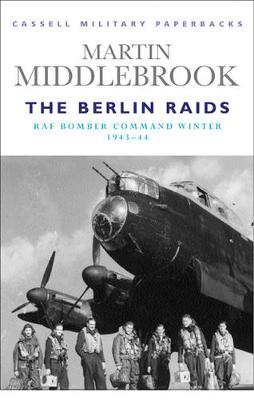
Full Product Details
Author: Martin Middlebrook
Publisher: Orion Publishing Co
Imprint: Cassell Military
Dimensions:
Width: 12.90cm
, Height: 3.40cm
, Length: 19.90cm
Weight: 0.350kg
ISBN: 9780304353477
ISBN 10: 0304353477
Pages: 432
Publication Date: 30 March 2000
Audience:
General/trade
,
Professional and scholarly
,
General
,
Professional & Vocational
Format: Paperback
Publisher's Status: Out of Print
Availability: Awaiting stock

Reviews
An unsentimental, meticulously documented, and somewhat plodding account of Britain's massive but abortive aerial assaults on Berlin during a six-month period ending in March of 1944. Bomber Command (led by Sir Arthur Harris) had already reduced Hamburg to burnt-out rubble over a four-day span, and it was intent on achieving similarly decisive results in the Nazi capital to force Germany out of WW II. As Middlebrook (The First Day on the Somme, Convoy, Operation Corporate, etc.) makes clear, however, Luftwaffe defenders hurt RAF raiders more than the raiders hurt Berlin. All told, the British made nearly 11,000 sorties during 19 major missions against the seat of Nazi government, dropping over 33,000 tons of high-explosive and incendiary bombs. While property damage was extensive in some sections of the sprawling city, morale remained generally high, and the civilian death toll was less than 10,000. By contrast, Bomber Command lost 625 planes, 7% of its total ETO losses; close to 2,700 crew members were killed, and almost 1,000 more wound up in POW camps. There were many reasons for the RAF's frustration, including effectively manned flak and searchlight batteries throughout Berlin. The operational limitations of the bombers also restricted the British to raids on moonless nights, giving residents of prime target areas time to recover and to prepare for fresh assaults. In addition, Middlebrook shows, German tacticians proved resourceful in deploying their night fighters and countering such innovations as window-thin strips of metal foil used to jam enemy radar sets. Finally, pathfinder craft frequently had difficulty spotting, let alone marking, strategic locales, and the city's physical characteristics precluded deadly firestorms of the sort that had consumed Hamburg. Middlebrook includes much first-person detail from bomber crews, fighter pilots, CD personnel, and Berlin residents who survived the battle, which represented at best a modest contribution to the Allied war effort. Overall, unfortunately, his definitive narrative is more notable for diligence than drama. (Kirkus Reviews)
Author Information
Following his first book, The First Day on the Somme, Martin Middlebrook has published a series of books on major turning points in the two World Wars - all classics of military history.