Overview
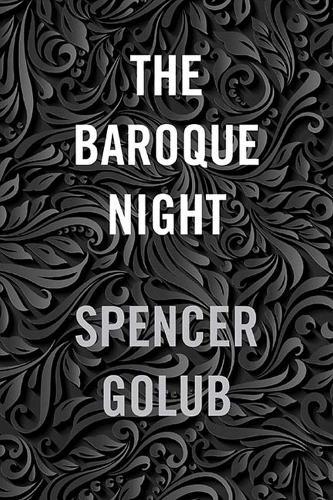
In The Baroque Night, authorial idiosyncrasy hybridizes the concepts of “baroque” and “noir” across the fields of film, theatre, literature, and philosophy, arguing for mental function as form, as an impossible object, a container in which the container itself is the thing contained. An experiment in thinking difference/thinking differently, an ethics of otherness and the abstract, Golub inverts the unreality of the real and the reality of fiction, exposing the tropes of memory, identity, and authenticity as a scenic route through life that ultimately blocks the view. The book draws upon materials that have not previously been included in studies of either the baroque or film noir, while offering new perspectives on other, more familiar sources. Leibniz’s concepts of the monad and compossibility provide organizing thought models, and death, fear, and mental illness cast their anamorphic images across surfaces that are deeper and closer than they at first appear. This is virtuality and reality for the phobic, making it a fascinating and viable document of and episteme for the anxious age in which we (always) find ourselves living, though not yet fully alive. This performance of suspect evidence speaks to and in the ways we are organically inauthentic, the cause of our own causality and our own worst eyewitnesses to all that appears and disappears in space and time. Key characters and situations in the book derive from the works of Alfred Hitchcock, Henri-Georges Clozot, Jean-Pierre Melville, Oscar Wilde, Georges Perec, Patricia Highsmith, Shakespeare, Jean Racine, Pierre Corneille, and Arthur Conan Doyle, among many others.
Full Product Details
Author: Spencer Golub
Publisher: Northwestern University Press
Imprint: Northwestern University Press
Dimensions:
Width: 15.40cm
, Height: 2.00cm
, Length: 23.10cm
Weight: 0.455kg
ISBN: 9780810137820
ISBN 10: 0810137828
Pages: 240
Publication Date: 30 September 2018
Audience:
Professional and scholarly
,
Professional & Vocational
Format: Hardback
Publisher's Status: Active
Availability: Manufactured on demand

We will order this item for you from a manufactured on demand supplier.
Reviews
The Baroque Night is a fascinating and erudite work on the question of unreality. It is a great example of how work grounded in performance studies continues to be a wellspring of original thought for interdisciplinary work on aesthetics, identity, and dynamic form. --Alanna Thain, author of Bodies in Suspense: Time and Affect in Cinema
A foremost authority on thought as invention, Spencer Golub practices shadow philosophy. The circuitous inner journey of The Baroque Night, with its rhapsodic carnival of phobias, holds the mirror up in which all objects are closer to nonbeing than they appear. Yet this volume turns film noir's fatalism on its head, extracting from it a vertiginous, vital composition of concept and image. --Matthew Goulish, author of 39 Microlectures: in proximity of performance Spencer Golub's The Baroque Night is virtuosic: a dazzling performance of philosophical dexterity. It weaves between baroque aesthetics, language, film-it narrates, it tunnels into the noir genre, spiralling through the curvatures of film's liquid temporalities and the cuts and shadows of its mnemonic spaces. A genuine rearticulation of genre. -K lina Gotman, author of Essays on Theatre and Change The Baroque Night stretches the boundaries of academic scholarship and of scholarly critique, and will indubitably find a faithful reader able to crisscross between philosophy, critical thought, film noir, theatre, and life itself. -Michal Kobialka, coeditor of Theatre/Performance Historiography: Time, Space, Matter The Baroque Night is a fascinating and erudite work on the question of unreality. It is a great example of how work grounded in performance studies continues to be a wellspring of original thought for interdisciplinary work on aesthetics, identity, and dynamic form. --Alanna Thain, author of Bodies in Suspense: Time and Affect in Cinema In this inquiry into the baroque metaphysics of film noir, all the form's stock devices--its shadowy cinematics, slaps, voiceovers, train cars, and doppelg ngers--disclose the haunting vision of a 'reality' that cannot keep from derealizing itself. Full of intrepid and melancholic insight, Golub takes his readers right up to the edge of the abyss. --Joseph Cermatori, Skidmore College
A foremost authority on thought as invention, Spencer Golub practices shadow philosophy. The circuitous inner journey of The Baroque Night, with its rhapsodic carnival of phobias, holds the mirror up in which all objects are closer to nonbeing than they appear. Yet this volume turns film noir's fatalism on its head, extracting from it a vertiginous, vital composition of concept and image. -Matthew Goulish, author of 39 Microlectures: in proximity of performance Spencer Golub's The Baroque Night is virtuosic: a dazzling performance of philosophical dexterity. It weaves between baroque aesthetics, language, film-it narrates, it tunnels into the noir genre, spiralling through the curvatures of film's liquid temporalities and the cuts and shadows of its mnemonic spaces. A genuine rearticulation of genre. -K�lina Gotman, author of Essays on Theatre and Change The Baroque Night is a fascinating and erudite work on the question of unreality. It is a great example of how work grounded in performance studies continues to be a wellspring of original thought for interdisciplinary work on aesthetics, identity, and dynamic form. --Alanna Thain, author of Bodies in Suspense: Time and Affect in Cinema
Spencer Golub's The Baroque Night is virtuosic: a dazzling performance of philosophical dexterity. It weaves between baroque aesthetics, language, film-it narrates, it tunnels into the noir genre, spiralling through the curvatures of film's liquid temporalities and the cuts and shadows of its mnemonic spaces. A genuine rearticulation of genre. -K�lina Gotman, author of Essays on Theatre and Change The Baroque Night is a fascinating and erudite work on the question of unreality. It is a great example of how work grounded in performance studies continues to be a wellspring of original thought for interdisciplinary work on aesthetics, identity, and dynamic form. --Alanna Thain, author of Bodies in Suspense: Time and Affect in Cinema
Author Information
Spencer Golub, a professor of theater arts and performance studies, Slavic languages, and comparative literature at Brown University, is the author of Incapacity: Wittgenstein, Anxiety, and Performance Behavior (NUP, 2014), Infinity (Stage) (1999), The Recurrence of Fate: Theatre and Memory in Twentieth-Century Russia (1994), and Evreinov: The Theatre of Paradox and Transformation(1984).