Overview
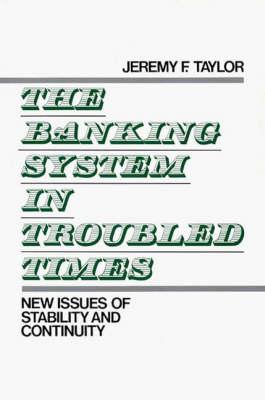
The terms system and industry are frequently used interchangeably--and with obfuscatory results. Members of Congress are especially prone to do so, and would profit from a perusal of the volume at hand. So will most bankers. The author, Jeremy Taylor, a bank officer, is typical of the younger breed of banking writers in combining hands-on practical experience with the ability to handle high-powered abstractions successfully. . . . This book is the latest in a useful series of publications by Quorum Books, generally dissident in both perspective and tone, yet thoroughly persuasive in substance. Bankers Monthly The continuing rise in bank failures, including newsmaking crashes at such banks as Penn Square and Continental Illinois, along with the insolvency of the Federal Savings and Loan Insurance Corporation Fund, has eroded confidence in the nation's banking system. Taylor offers an analysis of the implications that events over the past years have had for the future operation of the U.S. banking system. In analyzing why the system is in such disequilibrium, Taylor presents a systemic view of banking operations and functions, a perspective he argues has been lacking in previous works on the subject. He also suggests ways to remedy the current crisis situation and restore individual and institutional customer confidence. Taylor's systemic approach enables him to compare the present U.S. situation to the British banking crisis of 1973-1975. He analyzes a series of bank failures and explains that the FDIC has three alternatives to bank failures: payoffs, bailouts, and buyouts. He introduces a new model designed to help the financial and banking communities resolve certain difficulties and proposes new ways of dealing with credit risk and credit malfunction. Finally, Taylor stresses the importance of social consensus and the function played by public opinion in aiding or avoiding potential bank failures. An important addition to the banking and finance curriculum, this book will also benefit banking executives and policymakers concerned with today's unacceptably high level of bank failure.
Full Product Details
Author: Jeremy F. Taylor
Publisher: Bloomsbury Publishing Plc
Imprint: Praeger Publishers Inc
Dimensions:
Width: 15.60cm
, Height: 1.20cm
, Length: 23.40cm
Weight: 0.473kg
ISBN: 9780899304267
ISBN 10: 0899304265
Pages: 203
Publication Date: 26 June 1989
Recommended Age: From 7 to 17 years
Audience:
College/higher education
,
Undergraduate
,
Postgraduate, Research & Scholarly
Format: Hardback
Publisher's Status: Active
Availability: Manufactured on demand

We will order this item for you from a manufactured on demand supplier.
Reviews
Jeremy Taylor's ability to bring a fresh approach to important subjects is as impressive today as when we collaborated on writing in the past. His capacity for innovative thought is matched only by his passion for truth. This book is a must for anyone who has wondered why banking is now undergoing such turbulence and why so little is apparently being done about it. -R. Alec Mackenzie President Alec Mackenzie and Associates, Incorporated
Author Information
JEREMY F. TAYLOR is Strategic Planning Officer at Key Bank of Central New York. He has written articles published in the Journal of Commercial Bank Lending, Bankers' Monthly, the ABA Banking Journal, The Bankers' Magazine, Business Quarterly, Management World, and Bankers' Newsweekly.