|
|
|||
|
||||
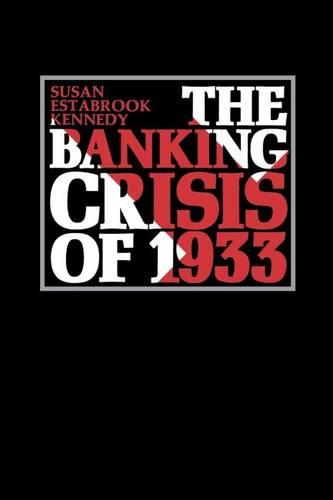
OverviewOn March 6, 1933, Franklin D. Roosevelt, less than forty-eight hours after becoming president, ordered the suspension of all banking facilities in the United States. How the nation had reached such a desperate situation and how it responded to the banking ""holiday"" are examined in this book, the first full-length study of the crisis. Although the 1920s had witnessed a wave of bank failures, the situation worsened after the 1929 stock market crash, and by the winter of 1932-1933, complete banking collapse threatened much of the nation. President Hoover's stopgap measures proved totally inadequate, the author shows, and by March 4, the day of Roosevelt's inauguration, thirty-four states had declared banking moratoriums. Of special interest in this study is Ms. Kennedy's examination of relations between Herbert Hoover and Franklin D. Roosevelt. Full Product DetailsAuthor: Susan Estabrook KennedyPublisher: The University Press of Kentucky Imprint: The University Press of Kentucky Dimensions: Width: 15.20cm , Height: 1.60cm , Length: 22.90cm Weight: 0.525kg ISBN: 9780813152912ISBN 10: 0813152917 Pages: 280 Publication Date: 15 July 2014 Audience: College/higher education , Undergraduate , Postgraduate, Research & Scholarly Format: Paperback Publisher's Status: Active Availability: Available To Order We have confirmation that this item is in stock with the supplier. It will be ordered in for you and dispatched immediately. Table of ContentsReviewsAuthor InformationSusan Estabrook Kennedy is assistant professor of history at Temple University in Philadelphia. Tab Content 6Author Website:Countries AvailableAll regions |
||||