Overview
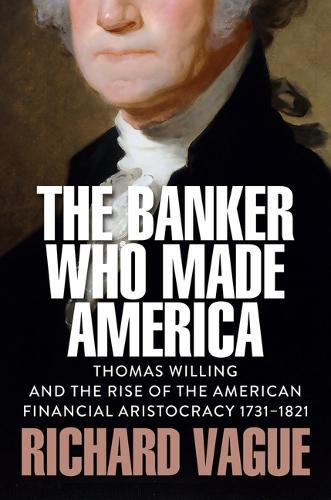
If you haven’t followed the money, chances are you don’t know the real story of America and its Revolution. Nothing gives a clearer insight into this history than the life of early America’s dominant merchant trader, first bank president, and first central banker, Thomas Willing. In this book, Richard Vague shows how Willing bankrolled – and in the process helped save – the Revolution and then fundamentally shaped the financial architecture of the young Republic. So powerful was Willing that President John Adams complained that George Washington and Alexander Hamilton were governed by him. Yet at a decisive moment in Willing’s life he voted against independence, as conflict between Pennsylvania’s moneyed elite and the emergent lower and middle classes embroiled the politics of 1776 in bitter class conflict. This dynamic would continue after independence, as Willing and his associates attempted to tame the democratic forces unleashed by revolution and thereby set up a tension that has never stopped shaping US politics. This dramatic untold story sheds genuinely new light on the genesis of the American Republic, as well as the enduring economic and political conflicts that still shape US society today.
Full Product Details
Author: Richard Vague
Publisher: John Wiley and Sons Ltd
Imprint: Polity Press
Dimensions:
Width: 16.00cm
, Height: 4.80cm
, Length: 23.10cm
Weight: 0.794kg
ISBN: 9781509569083
ISBN 10: 1509569081
Pages: 448
Publication Date: 05 February 2026
Audience:
General/trade
,
General
Format: Hardback
Publisher's Status: Forthcoming
Availability: Awaiting stock

Reviews
�With two hundred and fifty years of writing about the American Revolution behind us, what new insights could an author possibly bring to the table? Richard Vague has the answer: a whole heck of a lot! The Banker Who Made America brings an underappreciated American Founder to life through deep research in primary sources, keen historical insights, and engaging prose. You will love it.� R. Scott Stephenson, PhD, President & Chief Executive Officer, Museum of the American Revolution �Thomas Willing�s many interwoven careers merchant trader, politician, peerless banker contributed enormously to America�s early history. But what makes Richard Vague�s biography The Banker Who Made America: Thomas Willing and the Rise of the American Financial Aristocracy fascinating is his exploration of the many Revolutionary-era socio/economic/political struggles, in which Willing was deeply involved, and which foreshadow similar polarizing American divisions today.� Pat Toomey, Former United States Senator �Richard Vague�s absolutely engrossing biography of Thomas Willing tells the little-known story of the wealthy Philadelphia merchant banker, whose steady hand helped save the fledgling American republic from financial ruin first by stabilizing confidence in its currency following the hyperinflation of the War of Independence, and then, as president of its first central bank, the Bank of the United States, by steering it through the speculative booms and busts of those first few years.� Liaquat Ahamed, Pulitzer Prize-winning author of The Lords of Finance �Willing was present at the creation of so much of our country�s core history yet hasn�t been considered with the depth and clarity Vague brings to this compelling subject. I urge you to read this insightful narrative about how our country�s Revolution was financed and our early Republic sustained.� Chris Coons, United States Senator
Author Information
Richard Vague is a businessman, banker, and commentator on economics. He is the former Secretary of Banking and Securities for the Commonwealth of Pennsylvania. His previous books include The Case for a Debt Jubilee and The Paradox of Debt.