Overview
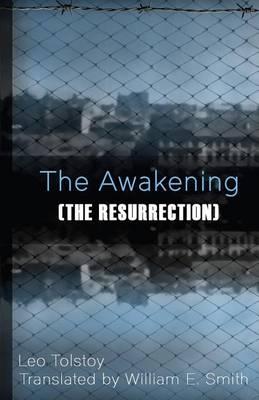
The book includes more than 90 illustrations. The Awakening is a book by Leo Tolstoy written during the period of 1889-1899. This is the translation by William E. Smith, which is easy to read and understand. It is one of the best translations of the work ever published. It tells the story of a nobleman overburdened with the sin he has committed. This sin concerns a young peasant woman whom he seduced and then left. He lives the ordinary life of a self-proud rich man until he encounters his former lover. The place where they see each other is the court, and the girl is being accused. Being a religious person, baptized in the Orthodox faith, Tolstoy declared expressly in a number of his works written during the last two decades of his life, especially in the novel The Awakening, that he denied some of the major dogmas of the Russian Orthodox Church. In The Awakening, he depicted the clergy as perfunctory ritual performers. Many found the cold and cynical Toporov to resemble K. Pobedonostsev, the Ober-Procurator of the Most Holy Synod of the Russian Orthodox Church. The Synod succeeded in insisting on banning Tolstoy's novel The Awakening for disrespectful statements on the Orthodox Church and Christianity back in 1901. Leo Tolstoy criticized the Russian Orthodox Church in harsh terms for postponing the original Christian ideals to its own interests. The Russian Ministry of Interior passed a circular order prohibiting the publication of any telegrams, news, and articles expressing sympathy with the writer and criticizing the Synod's decision. However, Russian glass plant workers presented Tolstoy with a large lump of glass. The lump had the following engraved in gold on it, You share the fate of many great people in advance of their time, dearest Leo Tolstoy! They used to be burned at the stake and sent to rot in prison or exile before. Let the pharisaic 'high priests' excommunicate you. Russian people will always be proud of you, outstanding, much appreciated and greatly admired as you are. In a conversation, Tolstoy said, There are both pages of rhetoric and those of fiction in 'The Awakening.' They are agreeable when taken individually. But it is terrible to combine them in one work. What made me publish them this way is my eagerness to help Doukhobors right now...
Full Product Details
Author: William E Smith, Reverand (Odii and the George Washington University USA) ,
Leo Tolstoy
Publisher: Createspace Independent Publishing Platform
Imprint: Createspace Independent Publishing Platform
Dimensions:
Width: 14.00cm
, Height: 1.50cm
, Length: 21.60cm
Weight: 0.322kg
ISBN: 9781530465415
ISBN 10: 1530465419
Pages: 276
Publication Date: 16 April 2016
Audience:
General/trade
,
General
Format: Paperback
Publisher's Status: Active
Availability: Available To Order

We have confirmation that this item is in stock with the supplier. It will be ordered in for you and dispatched immediately.
Author Information
Deputy of the First State Duma Victor Obninsky wrote the following in the newspaper Utro Rossii (Russian Morning) on November 4, 1910, ...What do we have to justify our new crime?.. We ruined Pushkin and Lermontov, drove Gogol insane, sent Dostoyevsky to rot in prison, exiled Turgenev to foreign land, and finally threw Tolstoy, eighty-two years of age, onto a wooden bench at an out-of-the-way station!.. Our life seems to be a ceaseless descent into a bottomless dull pit, where nothingness, a spiritual death, awaits us.