Overview
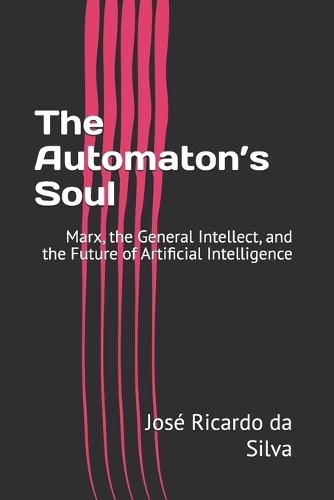
This book, The Automaton's Soul: Marx, the General Intellect, and the Future of Artificial Intelligence, is dedicated to exploring the explosive implications of that single, prophetic fragment. Our core thesis is that through the ""Fragment on Machines,"" Karl Marx successfully anticipated the socio-economic essence of Artificial Intelligence. To be clear from the outset: Marx did not predict microchips, neural networks, or the technical architecture of server farms. He was not a science fiction writer guessing at future gadgets. Rather, his genius lay in understanding the social and economic relations that drive technological development. He understood that capitalism is uniquely compelled to constantly revolutionize the means of production, striving to replace the unpredictable, biological, and politically troublesome human worker with obedient, hyper-productive fixed capital. He realized that this process would not stop at replacing physical muscle with steam power; it would inevitably progress to replacing human cognition with what he called ""intellectual organs."" At the heart of Marx's vision is the concept of the ""General Intellect."" Marx observed that as machinery becomes more complex, the individual skill of the worker becomes less important. Instead, the machine embodies the collective scientific knowledge, the historical accumulation of engineering, and the social cooperation of humanity. The machine becomes the physical crystallization of the social brain. Capital, in its relentless pursuit of profit, appropriates this general intellect ""free of charge"" and transforms it into private property-into an alien power that confronts the living worker as a master. Today, we do not have to stretch our imaginations to understand what the privatization of the ""General Intellect"" looks like. We are living through its most dramatic manifestation. Modern Artificial Intelligence-specifically Generative AI and Large Language Models-is the literal extraction, digitization, and monopolization of humanity's collective knowledge. An AI model trained on the entirety of the open internet, containing the collective artistic, linguistic, and scientific output of the human species, is the purest realization of Marx's social brain turned into capital. However, the AI revolution is an unfinished process. The developments described in the ""Fragment on Machines"" are still unfolding around us, creating a period of intense economic anxiety and structural contradiction. Marx identified a fatal flaw in the capitalist design: the system relies on human labor time as the sole measure of value and wealth, yet it is simultaneously driven by competition to eliminate human labor time through automation. Capital, as Marx famously wrote in the Fragment, becomes a ""moving contradiction."" It wants to reduce labor to a minimum, but it can only survive if it continues to extract surplus labor from the masses. If AI pushes human labor to the extreme periphery-turning us all into mere ""watchmen and regulators"" of an autonomous cognitive machine-how does the vast majority of humanity survive in a system that requires them to sell their labor to buy the means of subsistence? What happens when the fundamental link between employment and survival is severed by the ultimate technological triumph of capital?
Full Product Details
Author: José Ricardo Da Silva
Publisher: Independently Published
Imprint: Independently Published
Dimensions:
Width: 15.20cm
, Height: 0.70cm
, Length: 22.90cm
Weight: 0.193kg
ISBN: 9798197192264
Pages: 136
Publication Date: 16 May 2026
Audience:
General/trade
,
General
Format: Paperback
Publisher's Status: Active
Availability: Available To Order

We have confirmation that this item is in stock with the supplier. It will be ordered in for you and dispatched immediately.