Overview
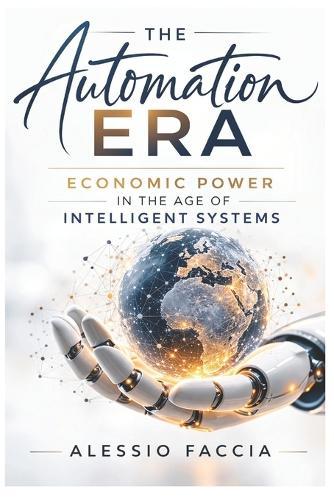
The Automation Era: Economic Power in the Age of Intelligent Systems examines how artificial intelligence, machine learning, platforms, data systems, cloud infrastructure, predictive models, and digital control are changing the structure of modern capitalism. Alessio Faccia moves past the usual discussion of productivity gains and job replacement and studies a harder issue: who gains wealth, authority, and strategic influence when decision-making, pricing, market access, public administration, and financial allocation are increasingly shaped by intelligent systems. A strong thread runs through the book from the first page to the last. Automation is not treated as a narrow technical event. It is treated as a redistribution mechanism. Wealth moves towards owners of scalable systems. Labour is repriced according to its exposure to routine automation. Professional hierarchies shift as standard knowledge work loses scarcity and judgement, trust, system oversight, and accountability gain value. Firms no longer compete only through labour, physical capital, and ordinary management. They compete through data quality, compute access, software architecture, predictive capacity, workflow embedment, and control over decision environments. Readers will find a rigorous discussion of platform dominance, digital market power, intelligent pricing, machine-led cost structures, private equity, venture capital, valuation of data-rich firms, algorithmic trading, systemic risk, and the rising value of intangible assets. Equal attention is given to labour markets, social mobility, education, reskilling, wage pressure, the decline of routine expertise, and the widening gap between ownership returns and returns from ordinary work. Public policy is examined with the same depth. The book studies industrial policy, taxation of automated wealth, public services, state automation, strategic dependence, digital colonisation, and sovereignty risk in a world shaped by chips, cloud systems, and international competition for talent and compute. The Automation Era is written for readers interested in economics, finance, artificial intelligence, digital transformation, public policy, business strategy, labour markets, corporate governance, and geopolitical change. It is suited to executives, investors, researchers, students, policymakers, analysts, and professionals seeking a serious framework for understanding how intelligent systems are reshaping firms, states, and societies. Discussion is direct, analytical, and grounded in political economy rather than hype. A broader question stands at the centre of the book. What kind of economic order emerges when automation no longer affects only manual labour, but also pricing, analysis, administration, market visibility, credit access, hiring, insurance, taxation, and strategic planning. Answers offered here are neither naïve nor fatalistic. Gains from automation are real. Risks are equally real. Stronger productivity may coexist with weaker mobility. Faster decisions may coexist with weaker accountability. Wider digital access may coexist with tighter ownership concentration. Modern economies therefore face a turning point. Intelligent systems are becoming part of the governing logic of economic life, and the settlement built around them will shape inequality, growth, legitimacy, and opportunity for decades. Readers searching for books on artificial intelligence and the economy, automation and jobs, platform capitalism, digital wealth, political economy of AI, future of work, economic inequality, machine learning in finance, state automation, industrial policy, digital sovereignty, algorithmic markets, and intelligent systems in business will find here a serious and original guide. The Automation Era explains not only how the new economy works, but why power is moving, who benefits most, who faces pressure, and what institutional choices will decide the next phase of capitalism.
Full Product Details
Author: Alessio Faccia
Publisher: Independently Published
Imprint: Independently Published
Dimensions:
Width: 15.20cm
, Height: 1.50cm
, Length: 22.90cm
Weight: 0.376kg
ISBN: 9798251779592
Pages: 280
Publication Date: 12 March 2026
Audience:
General/trade
,
General
Format: Paperback
Publisher's Status: Active
Availability: Available To Order

We have confirmation that this item is in stock with the supplier. It will be ordered in for you and dispatched immediately.