Overview
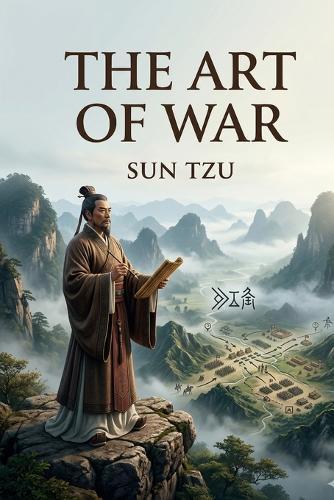
The Art of War is an ancient Chinese military treatise dating from the late Spring and Autumn period (roughly 5th century BCE). The work, which is attributed to the ancient Chinese military strategist Sun Tzu (""Master Sun""), is composed of 13 chapters. Each chapter is devoted to a different set of skills or arts related to warfare, finance and how they apply to military strategy and tactics. For almost 1,500 years, it was the lead text in an anthology that was formalized as the Seven Military Classics by Emperor Shenzong of Song in 1080. The Art of War remains one of the most influential works on strategy of all time[1] and has shaped both East Asian and Western military theory and thinking.[2] The book contains a detailed explanation and analysis of the 5th-century BCE Chinese military, from weapons, environmental conditions, financial logistics and strategy to morale, rank and discipline. Sun portrays war as a costly, destructive last resort; prolonged warfare erodes the state faster than the enemy ever could. Sun uses diplomacy and economic principles in explaining how to keep war brief, contained, controlled, and as cheap as possible by minimizing financial exposure. Sun also stresses the importance of intelligence operatives and espionage to both the war effort and the prevention of war. Considered one of history's finest military tacticians and analysts, his teachings and strategies formed the basis of advanced military training throughout the world. The text was first translated into a European language in 1772, when the French Jesuit priest Jean Joseph Marie Amiot produced a French version. The first annotated English translation was published in 1910 by the British scholar Lionel Giles.[3] Military and political leaders such as the Chinese communist revolutionary Mao Zedong, Japanese daimyō Takeda Shingen, Vietnamese general Võ Nguyên Giáp, and American generals Douglas MacArthur and Norman Schwarzkopf Jr. are all cited as having drawn inspiration from the book.
Full Product Details
Author: Sun Tzu
Publisher: Les Prairies Numeriques
Imprint: Les Prairies Numeriques
Dimensions:
Width: 15.20cm
, Height: 1.70cm
, Length: 22.90cm
Weight: 0.408kg
ISBN: 9791043136740
Pages: 304
Publication Date: 27 February 2026
Audience:
General/trade
,
General
Format: Paperback
Publisher's Status: Active
Availability: Available To Order

We have confirmation that this item is in stock with the supplier. It will be ordered in for you and dispatched immediately.
Reviews
Beginning around the 12th century, Chinese scholars began to question Sun Tzu's historical existence. Their primary ground was that the historical classic Zuo Zhuan, which mentions most of the notable figures from the Spring and Autumn period, does not mention Sun Tzu at all.[6] The name ""Sun Wu"" (孫武) does not appear in any text prior to the Records of the Grand Historian.[8] Some scholars have suspected it is a made-up descriptive cognomen meaning ""the fugitive warrior"", glossing the surname ""Sun"" as the related term ""fugitive"" (xùn 遜), while ""Wu"" (wǔ 武) is (1) the ancient Chinese virtue of ""martial, valiant"" and (2) a Jianghuai dialectal synonym of 士; shì ""knight"", [9][10] which corresponds to Sunzi's role as the hero's doppelgänger in the story of Wu Zixu.[11] In the early 20th century, the Chinese writer and reformer Liang Qichao theorized that the text was actually written in the 4th century BC by Sun Tzu's purported descendant Sun Bin, as several historical sources mention a military treatise he wrote.[6] In 1972, the Yinqueshan Han slips were discovered in two Han dynasty (206 BC - 220 AD) tombs near the city of Linyi in Shandong.[12] Among the many bamboo slip writings contained in the tombs, which had been sealed between 134 and 118 BC, were two separate texts: one attributed to ""Sun Tzu"", corresponding to the received text, and another attributed to Sun Bin, which explains and expands upon the earlier The Art of War by Sunzi.[13] The Sun Bin text's material overlaps with much of the ""Sun Tzu"" text. The two may be ""a single, continuously developing intellectual tradition united under the Sun name"".[14] This discovery showed that much of the historical confusion was due to the fact that there were two texts that could have been referred to as ""Master Sun's Art of War"", not one.[13] The content of the earlier text is about one-third of the chapters of the modern The Art of War, and their text matches very closely.[12] It is now generally accepted that the earlier The Art of War was completed sometime between 500 and 430 BC