Overview
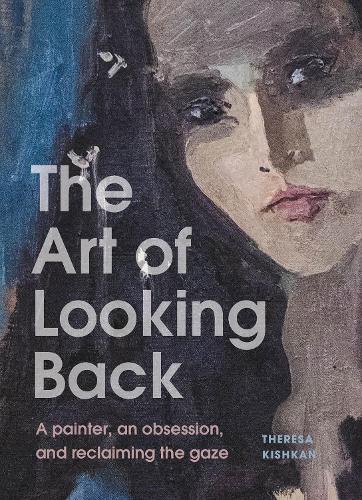
A former artist's model and muse reclaims her image and voice, dismantling the male gaze that once framed her. At 23, Theresa Kishkan met an artist who became obsessed with her. She was young, she was flattered, and the situation quickly overwhelmed her. He drew and painted her for a few months, after which she went away for a year. When she returned, she was determined not to resume the relationship. But the artist made contact with her after the birth of her first child and became a family friend, bringing gifts of paintings. Those images hung in Theresa's home, and one in particular reminded her almost daily of her younger self, in ways both positive and not so much. She avoided looking too closely at his images of her and at his long, passionate and often troubling letters. Decades later, while sorting old correspondence, she was taken back to those early days and began, at last, to write about her relationship with the now-deceased artist. The Art of Looking Back is a meditation on the male gaze, on reclaiming one's younger self, and on agency: how we lose it, how we find it again. This poetic memoir asks questions about older men and younger women and girls, and the persistence of that dynamic in art.
Full Product Details
Author: Theresa Kishkan
Publisher: Thornapple Press
Imprint: Thornapple Press
Dimensions:
Width: 13.50cm
, Height: 0.60cm
, Length: 18.30cm
Weight: 0.136kg
ISBN: 9781997702061
ISBN 10: 1997702061
Pages: 216
Publication Date: 29 May 2026
Audience:
General/trade
,
General
Format: Hardback
Publisher's Status: Active
Availability: Not yet available

This item is yet to be released. You can pre-order this item and we will dispatch it to you upon its release.
Reviews
“Kishkan is a lid lifter, bearer of ceilings, and stair dweller who scatters thoughts and emotions with keen insight, Homeric hymns, and the Limners of Victoria’s artistic scene. Her portrait with dark hair, strewn flowers, blue vest, and lateral gaze haunts the pages of her memoir. Her story involves an understanding of boundaries, not just between men and women, but between art and society, and the nature of frames and framing. … Kishkan’s flowing words, thoughts, and rhythms overpaint Wilkinson’s portraits in a pentimento of counter-discourse that purges shame and guilt.”—Michael Greenstein, The Seaboard Review of Books
“The pacing is as deliberate as a brush stroke, and Kishkan’s unflinching, vividly rendered reflections offer a powerful study of how art can both celebrate and appropriate the female form. A richly textured meditation on a reclamation of self from the frames of the past.”—Kirkus “Kishkan is a lid lifter, bearer of ceilings, and stair dweller who scatters thoughts and emotions with keen insight, Homeric hymns, and the Limners of Victoria’s artistic scene. Her portrait with dark hair, strewn flowers, blue vest, and lateral gaze haunts the pages of her memoir. Her story involves an understanding of boundaries, not just between men and women, but between art and society, and the nature of frames and framing. … Kishkan’s flowing words, thoughts, and rhythms overpaint Wilkinson’s portraits in a pentimento of counter-discourse that purges shame and guilt.”—Michael Greenstein, The Seaboard Review of Books “A stunning landscape of memory, archive and art that reads like a confessional. This haunting story of subversive beauty is not to be missed.”—Sonja Pinto, BC Bookworld “Theresa Kishkan writes beautifully about art and selfhood, about the timorous spirit of young women during an era that was repressive of their sexuality even while it held them accountable for men's desires and actions. For British Columbia readers, this is also a fascinating portrait of Victoria during the era of the significant Limners Society, a group of artists and writers that included (as well as Kishkan's portraitist), crucial figures like Myfanwy Pavelic and poet-critic Robin Skelton.”—Heidi Tiedemann Darroch, Canadian Women’s Crime Fiction
“The pacing is as deliberate as a brush stroke, and Kishkan’s unflinching, vividly rendered reflections offer a powerful study of how art can both celebrate and appropriate the female form. A richly textured meditation on a reclamation of self from the frames of the past.”—Kirkus “Kishkan is a lid lifter, bearer of ceilings, and stair dweller who scatters thoughts and emotions with keen insight, Homeric hymns, and the Limners of Victoria’s artistic scene. Her portrait with dark hair, strewn flowers, blue vest, and lateral gaze haunts the pages of her memoir. Her story involves an understanding of boundaries, not just between men and women, but between art and society, and the nature of frames and framing. … Kishkan’s flowing words, thoughts, and rhythms overpaint Wilkinson’s portraits in a pentimento of counter-discourse that purges shame and guilt.”—Michael Greenstein, The Seaboard Review of Books “A stunning landscape of memory, archive and art that reads like a confessional. This haunting story of subversive beauty is not to be missed.”—Sonja Pinto, BC Bookworld “Theresa Kishkan writes beautifully about art and selfhood, about the timorous spirit of young women during an era that was repressive of their sexuality even while it held them accountable for men's desires and actions. For British Columbia readers, this is also a fascinating portrait of Victoria during the era of the significant Limners Society, a group of artists and writers that included (as well as Kishkan's portraitist), crucial figures like Myfanwy Pavelic and poet-critic Robin Skelton.”—Heidi Tiedemann Darroch, Canadian Women’s Crime Fiction “Theresa Kishkan grafts the artful candour of memoir onto a psychological labyrinth. But unlike the murky mazes of antiquity, the braided essays of Kishkan’s The Art of Looking Back provide passage to clarity, empathy, and lightness.”—Michael Gurney, Coast Reporter “Kishkan is a movingly precise raconteur.”—Catherine Owen, River Street Writing
Author Information
Theresa Kishkan lives on the Sechelt Peninsula, BC with her husband, poet John Pass. She has published 16 books, several of which have been nominated for awards, including the Hubert Evans Award and the Ethel Wilson Prize. Theresa's essay collection Phantom Limb received the inaugural Readers' Choice Award from the Creative Nonfiction Collective in 2008.