Overview
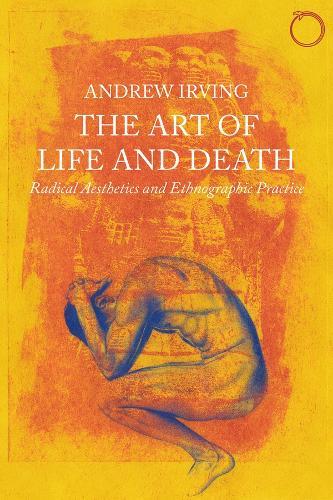
The Art of Life and Death explores how the world appears to people who have an acute perspective on it: those who are close to death. Based on extensive ethnographic research, Andrew Irving brings to life the lived experiences, imaginative lifeworlds, and existential concerns of persons confronting their own mortality and non-being. Encompassing twenty years of working alongside persons living with HIV/AIDS in New York, Irving documents the radical but often unspoken and unvoiced transformations in perception, knowledge, and understanding that people experience in the face of death. By bringing an “experience-near” ethnographic focus to the streams of inner dialogue, imagination, and aesthetic expression that are central to the experience of illness and everyday life, this monograph offers a theoretical, ethnographic, and methodological contribution to the anthropology of time, finitude, and the human condition. With relevance well-beyond the disciplinary boundaries of anthropology, this book ultimately highlights the challenge of capturing the inner experience of human suffering and hope that affect us all—of the trauma of the threat of death and the surprise of continued life.
Full Product Details
Author: Andrew Irving
Publisher: HAU
Imprint: HAU
Dimensions:
Width: 15.30cm
, Height: 2.30cm
, Length: 22.90cm
Weight: 0.482kg
ISBN: 9780997367515
ISBN 10: 0997367512
Pages: 264
Publication Date: 15 September 2017
Audience:
Professional and scholarly
,
Professional & Vocational
Format: Paperback
Publisher's Status: Active
Availability: Out of stock

The supplier is temporarily out of stock of this item. It will be ordered for you on backorder and shipped when it becomes available.
Reviews
This beautifully written and constructed book weaves together sophisticated social theory, philosophy, art work, and vivid biographical narratives to offer insights into how HIV/AIDS patients have learned to live a meaningful existence in the pre- and post-antiretroviral eras while negotiating a terminal illness. Basing his book on 20 years of work with adults living with HIV/AIDS in New York, visual anthropologist Irving has carried out a compelling anthropological study of the complex inner world of those who struggle, cope, fight, and ultimately come to terms with their own impending deaths. The author draws on philosophical writings and social theories to contextualize his results, but is at his best when allowing his subjects to speak for themselves. The evocative words of subjects like artist Albert Velasco provide fascinating insights into the ways that dying persons with HIV/AIDS grapple with the mundane, like keeping medical appointments, as well as the profound reckoning with their own mortality and purpose. An engaging read that will enrich upper-level and graduate collections on death and dying, ethnographic methods, and HIV/AIDS. Highly recommended. --Choice
"""An excellent, thought-provoking book. . . . Brilliantly succeeding in drawing both a conceptual and empirical portrait of the patterns in which HIV, as a socio-historically traceable illness, tends to articulate the life/death dialectical relation on the discovery threshold of embodied mortality. . . . Groundbreaking.""-- ""Mortality"" ""An exceptional achievement that gets under your skin from beginning to end. . . . Outstanding interweaving of theoretical critique and aspiration, collaborative ethnography, and methodological experimentation and innovation. . . . Inspiring, essential reading for anyone interested in new ethnographic methods to more deeply access the complex inner dimensions of human experience.""-- ""American Ethnologist"" ""Of interest to anyone looking to explore people's dynamic, perceptive, and reflective outlook on the world - whether looking to the future, contemplating death, or simply being alive. . . . No curious anthropology student - or for that matter, person - would be left un-inspired or non-transformed by this text and I implore as wide a readership as possible.""-- ""Anthropology & Aging"" ""Of the utmost importance. . . . a very worthwhile introduction to any medical anthropologist because it includes detailed ethnographic descriptions, a variety of ethnographic methods and a range of key anthropological themes, including a focus on embodied experiences, social injustice and how individuals deal with death. The narrative style of the book makes it easy to read and relate to. This is a great feat given the complex and troubling themes discussed, which lead one to question their very perception of life itself.""-- ""Journal of the Anthropological Society of Oxford"" ""This beautifully written and constructed book weaves together sophisticated social theory, philosophy, art work, and vivid biographical narratives to offer insights into how HIV/AIDS patients have learned to ""live a meaningful existence in the pre- and post-antiretroviral eras while negotiating a terminal illness."" Basing his book on 20 years of work with adults living with HIV/AIDS in New York, visual anthropologist Irving has carried out a compelling anthropological study of the ""complex inner world"" of those who struggle, cope, fight, and ultimately come to terms with their own impending deaths. The author draws on philosophical writings and social theories to contextualize his results, but is at his best when allowing his subjects to speak for themselves. The evocative words of subjects like artist Albert Velasco provide fascinating insights into the ways that dying persons with HIV/AIDS grapple with the mundane, like keeping medical appointments, as well as the profound reckoning with their own mortality and purpose. An engaging read that will enrich upper-level and graduate collections on death and dying, ethnographic methods, and HIV/AIDS. Highly recommended.""-- ""Choice"""
This beautifully written and constructed book weaves together sophisticated social theory, philosophy, art work, and vivid biographical narratives to offer insights into how HIV/AIDS patients have learned to live a meaningful existence in the pre- and post-antiretroviral eras while negotiating a terminal illness. Basing his book on 20 years of work with adults living with HIV/AIDS in New York, visual anthropologist Irving has carried out a compelling anthropological study of the complex inner world of those who struggle, cope, fight, and ultimately come to terms with their own impending deaths. The author draws on philosophical writings and social theories to contextualize his results, but is at his best when allowing his subjects to speak for themselves. The evocative words of subjects like artist Albert Velasco provide fascinating insights into the ways that dying persons with HIV/AIDS grapple with the mundane, like keeping medical appointments, as well as the profound reckoning with their own mortality and purpose. An engaging read that will enrich upper-level and graduate collections on death and dying, ethnographic methods, and HIV/AIDS. Highly recommended. --Choice Of interest to anyone looking to explore people's dynamic, perceptive, and reflective outlook on the world - whether looking to the future, contemplating death, or simply being alive. . . . No curious anthropology student - or for that matter, person - would be left un-inspired or non-transformed by this text and I implore as wide a readership as possible. --Anthropology & Aging Of the utmost importance. . . . a very worthwhile introduction to any medical anthropologist because it includes detailed ethnographic descriptions, a variety of ethnographic methods and a range of key anthropological themes, including a focus on embodied experiences, social injustice and how individuals deal with death. The narrative style of the book makes it easy to read and relate to. This is a great feat given the complex and troubling themes discussed, which lead one to question their very perception of life itself. --Journal of the Anthropological Society of Oxford An excellent, thought-provoking book. . . . Brilliantly succeeding in drawing both a conceptual and empirical portrait of the patterns in which HIV, as a socio-historically traceable illness, tends to articulate the life/death dialectical relation on the discovery threshold of embodied mortality. . . . Groundbreaking. --Mortality An exceptional achievement that gets under your skin from beginning to end. . . . Outstanding interweaving of theoretical critique and aspiration, collaborative ethnography, and methodological experimentation and innovation. . . . Inspiring, essential reading for anyone interested in new ethnographic methods to more deeply access the complex inner dimensions of human experience. --American Ethnologist
This beautifully written and constructed book weaves together sophisticated social theory, philosophy, art work, and vivid biographical narratives to offer insights into how HIV/AIDS patients have learned to live a meaningful existence in the pre- and post-antiretroviral eras while negotiating a terminal illness. Basing his book on 20 years of work with adults living with HIV/AIDS in New York, visual anthropologist Irving has carried out a compelling anthropological study of the complex inner world of those who struggle, cope, fight, and ultimately come to terms with their own impending deaths. The author draws on philosophical writings and social theories to contextualize his results, but is at his best when allowing his subjects to speak for themselves. The evocative words of subjects like artist Albert Velasco provide fascinating insights into the ways that dying persons with HIV/AIDS grapple with the mundane, like keeping medical appointments, as well as the profound reckoning with their own mortality and purpose. An engaging read that will enrich upper-level and graduate collections on death and dying, ethnographic methods, and HIV/AIDS. Highly recommended. --Choice An excellent, thought-provoking book. . . . Brilliantly succeeding in drawing both a conceptual and empirical portrait of the patterns in which HIV, as a socio-historically traceable illness, tends to articulate the life/death dialectical relation on the discovery threshold of embodied mortality. . . . Groundbreaking. --Mortality An exceptional achievement that gets under your skin from beginning to end. . . . Outstanding interweaving of theoretical critique and aspiration, collaborative ethnography, and methodological experimentation and innovation. . . . Inspiring, essential reading for anyone interested in new ethnographic methods to more deeply access the complex inner dimensions of human experience. --American Ethnologist Of interest to anyone looking to explore people's dynamic, perceptive, and reflective outlook on the world - whether looking to the future, contemplating death, or simply being alive. . . . No curious anthropology student - or for that matter, person - would be left un-inspired or non-transformed by this text and I implore as wide a readership as possible. --Anthropology & Aging Of the utmost importance. . . . a very worthwhile introduction to any medical anthropologist because it includes detailed ethnographic descriptions, a variety of ethnographic methods and a range of key anthropological themes, including a focus on embodied experiences, social injustice and how individuals deal with death. The narrative style of the book makes it easy to read and relate to. This is a great feat given the complex and troubling themes discussed, which lead one to question their very perception of life itself. --Journal of the Anthropological Society of Oxford
Author Information
Andrew Irving is director of the Granada Centre for Visual Anthropology at the University of Manchester.