Overview
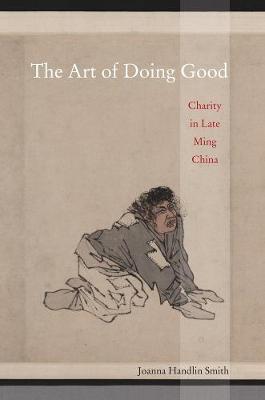
An unprecedented passion for saving lives swept through late Ming society, giving rise to charitable institutions that transcended family, class, and religious boundaries. Analyzing lecture transcripts, administrative guidelines, didactic tales, and diaries, Joanna Handlin Smith abandons the facile explanation that charity was a response to poverty and social unrest and examines the social and economic changes that stimulated the fervor for doing good. With an eye for telling details and a finesse in weaving the voices of her subjects into her narrative, Smith brings to life the hard choices that five men faced when deciding whom to help, how to organize charitable distributions, and how to balance their communities' needs against the interests of family and self. She thus shifts attention from tired questions about whether the Chinese had a tradition of charity (they did) to analyzing the nature of charity itself. Skillfully organized and engaging, The Art of Doing Good moves from discussions about moral leadership and beliefs to scrutiny of the daily operation of soup kitchens and medical dispensaries, and from examining local society to generalizing about the just use of resources and the role of social networks in charitable giving. Smith's work will transform our thinking about the boundaries between social classes in late imperial China and about charity in general.
Full Product Details
Author: Joanna Handlin Smith
Publisher: University of California Press
Imprint: University of California Press
Dimensions:
Width: 15.20cm
, Height: 3.60cm
, Length: 22.90cm
Weight: 0.726kg
ISBN: 9780520253636
ISBN 10: 0520253639
Pages: 424
Publication Date: 11 March 2009
Audience:
Professional and scholarly
,
Professional & Vocational
Format: Hardback
Publisher's Status: Active
Availability: Out of stock

The supplier is temporarily out of stock of this item. It will be ordered for you on backorder and shipped when it becomes available.
Reviews
[Smith] convincingly proves that charity was a vibrant motivation for many in [the Ming] period. --Chinese Cross Currents Few if any equals in the scholarly studies of the actual working of local politics in late imperial China. --Journal of Chinese Studies This is an extraordinary book which, in addition to adding a wealth of detail on life at the local level to the existing literature on the late Ming, also offers sophisticated analysis of the diaries on which it is largely based. --Bltn of Sch of Oriental & African Stds This volume raises a great number of relevant questions with regard to China today. --China Perspectives A contribution to the study of premodern China's social elite ... the book deepens our understanding of gentry identity. --American Historical Review
[Smith] convincingly proves that charity was a vibrant motivation for many in [the Ming] period. --Chinese Cross Currents Few if any equals in the scholarly studies of the actual working of local politics in late imperial China. --Journal of Chinese Studies This is an extraordinary book which, in addition to adding a wealth of detail on life at the local level to the existing literature on the late Ming, also offers sophisticated analysis of the diaries on which it is largely based. --Bltn of Sch of Oriental & African Stds This volume raises a great number of relevant questions with regard to China today. --China Perspectives A contribution to the study of premodern China's social elite ... the book deepens our understanding of gentry identity. --American Historical Review
Author Information
Joanna Handlin Smith is the Editor Emeritus of the Harvard Journal of Asiatic Studies and the author of Action in Late Ming Thought: The Reorientation of Lu K'un and Other Scholar-Officials (UC Press).