Overview
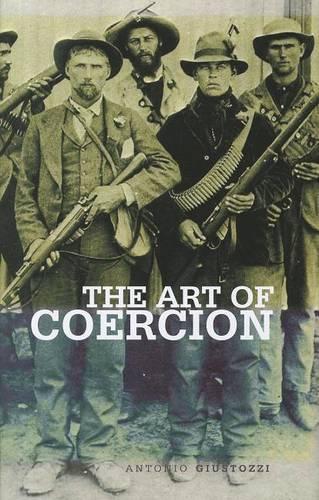
An expert on the Taliban's modern habits and practices, Antonio Giustozzi asserts a controversial point about the role of violence and coercion in state building, which also happens to be relevant to liberal interventionism. Liberal interventionism's dominant discourse dangerously neglects the role of coercion and the monopoly of violence in the countries it purports to aid. Many scholars assume that a functional liberal state can emerge from a settlement between warring parties, especially if the agreement is characterized by political inclusiveness and a social contract. Yet similar post--Cold War deals have exposed the fallacy of such logic. Giustozzi contends that a key flaw lies in the confusion over the specifics of state formation and state building. In his view, completely different ""rules of the game"" apply in each scenario. Naked coercion is a key component of state formation, and very few states have been formed without recourse to it. In contrast, the history of state consolidation after initial formation reflects a taming of violence and a sophisticated method of managing it. The Art of Coercion introduces a new framework for analyzing the role of security in its broadest sense, particularly its place in state formation and state building. While focusing largely on nineteenth- and twentieth-century examples, Giustozzi discusses instances of coercive power throughout history, ranging from its use in the Carolingian empire to South Africa's Boer War, and from China's Warring States period to Emiliano Zapata's Mexican Revolution. He scrutinizes the role of armies, guerilla bands, mercenaries, police forces, and intelligence services, exploring why some coups fail while others succeed and how the monopoly of violence decays over time.
Full Product Details
Author: Dr. Antonio Giustozzi
Publisher: Columbia University Press
Imprint: Columbia University Press
Dimensions:
Width: 14.00cm
, Height: 2.40cm
, Length: 22.20cm
Weight: 0.454kg
ISBN: 9780231702409
ISBN 10: 023170240
Pages: 256
Publication Date: 20 September 2011
Audience:
Professional and scholarly
,
Professional & Vocational
Format: Hardback
Publisher's Status: Unknown
Availability: In Print

Limited stock is available. It will be ordered for you and shipped pending supplier's limited stock.
Reviews
<p> The Art of Coercion is a superb addition to the literature: erudite, wide-ranging in its historical examples, and neatly structured. Its arguments about the typically ruthless 'primitive accumulation of a monopoly of violence' and the institutional and political challenges of this and of maintaining a monopoly once achieved will appeal to more than scholars. The evidence and arguments have profoundly challenging implications for all those involved in interventions to 'build stability overseas, ' as well as those interested in conflict prevention and state building.--Christopher Cramer, School of Oriental and African Studies, University of London
Antonio Giustozzi has written another terrific book. He places coercion and violence within the framework of state-building literature and engages the critical issue of the monopoly of violence head on. His discussions of elite bargaining and its relationship to coercion in civil wars and internal crises, the role of political policing, the political micromanagement of population control, and the origins and development of policing are full of original insights and thought-provoking arguments. Moreover, Giustozzi's mastery of history -- unusual among most social scientists -- shines through as he illustrates his contentions with wonderfully apt examples from the past. This book is a major contribution to the field of security studies and, just as important, is a joy to read even for those who lack a specialist's fascination with the topic. -- Zoltan Barany, University of Texas The Art of Coercion is a superb addition to the literature: erudite, wide-ranging in its historical examples, and neatly structured. Its arguments about the typically ruthless 'primitive accumulation of a monopoly of violence' and the institutional and political challenges of this and of maintaining a monopoly once achieved will appeal to more than scholars. The evidence and arguments have profoundly challenging implications for all those involved in interventions to 'build stability overseas,' as well as those interested in conflict prevention and state building. -- Christopher Cramer, School of Oriental and African Studies, University of London
Author Information
Antonio Giustozzi is an associate at the Crisis States Research Centre, London School of Economics. His two most recent books, both published by Columbia University Press, are Empires of Mud: Wars and Warlordism in Afghanistan and Decoding the New Taliban: Insights from the Afghan Field.