|
|
|||
|
||||
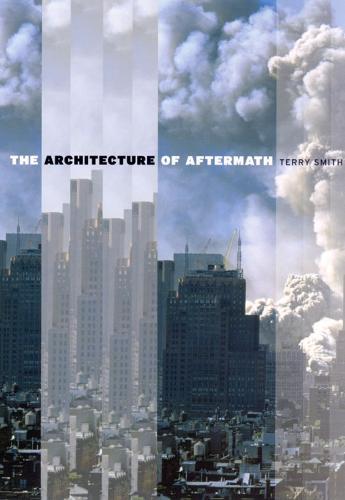
OverviewThe September 11 terrorist attacks targeted, in Osama bin Laden’s words, “America’s icons of military and economic power.” In The Architecture of Aftermath, Terry Smith argues that it was no accident that these targets were buildings: architecture has long served as a symbol of proud, defiant power—and never more so than in the late twentieth century. But after September 11, Smith asserts, late modern architecture suddenly seemed an indulgence. With close readings of key buildings—including Jørn Utzon’s Sydney Opera House, Minoru Yamasaki’s World Trade Center, Frank Gehry’s Guggenheim Museum Bilbao, and Richard Meier’s Getty Center—Smith traces the growth of the spectacular architecture of modernity and then charts its aftermath in the conditions of contemporaneity. Indeed, Smith focuses on the very culture of aftermath itself, exploring how global politics, clashing cultures, and symbolic warfare have changed the way we experience destination architecture. Like other artists everywhere, architects are responding to the idea of aftermath by questioning the viability of their forms and the validity of their purposes. With his richly illustrated The Architecture of Aftermath, Smith has done so as well. Full Product DetailsAuthor: Terry SmithPublisher: The University of Chicago Press Imprint: University of Chicago Press Edition: New edition Dimensions: Width: 1.80cm , Height: 0.10cm , Length: 2.60cm Weight: 0.652kg ISBN: 9780226764696ISBN 10: 0226764699 Pages: 280 Publication Date: 01 April 2006 Audience: Professional and scholarly , Professional & Vocational Format: Paperback Publisher's Status: Active Availability: Out of stock The supplier is temporarily out of stock of this item. It will be ordered for you on backorder and shipped when it becomes available. Table of ContentsReviews"""This provocative, lively, and well-written book challengingly addresses the place of architecture in the contested aftermath of September 11 and indeed of modernism as such. It has range, bite, and insight, reinforced by a dazzling range of reference and vision."" - Nicholas Mirzoeff, New York University""" This provocative, lively, and well-written book challengingly addresses the place of architecture in the contested aftermath of September 11 and indeed of modernism as such. It has range, bite, and insight, reinforced by a dazzling range of reference and vision. - Nicholas Mirzoeff, New York University Author InformationTerry Smith is the Andrew W. Mellon Professor of Contemporary Art History and Theory in the Department of the History of Art and Architecture at the University of Pittsburgh. Tab Content 6Author Website:Countries AvailableAll regions |
||||