Overview
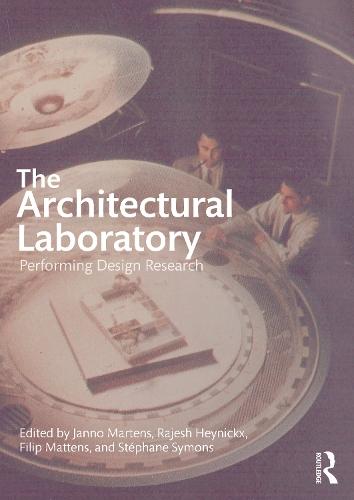
Over the past thirty years, the number of architectural laboratories has surged from a handful to hundreds across the globe. Yet the term remains elusive: What defines an architectural lab? And why has it become so compelling to architects today? The Architectural Laboratory is the first volume to critically address these questions, assembling a series of essays that examine some of the most remarkable architectural labs of the twentieth century. While scientific laboratories have long been the subject of scholarly inquiry, architecture labs remain underexplored. This book situates them within their specific architectural-historical contexts, revealing how they have operated both metaphorically and materially. On the one hand, architectural laboratories have functioned as amulets – protective spaces that shield practitioners from conventional expectations while fostering creativity through their unique material environments. On the other, they served as shibboleths – symbolic alignments with scientific traditions that lend credibility and facilitate interdisciplinary exchange. Within this dual framework, the volume identifies three key modalities of laboratory performance: simulation, personification, and technological visualization. Essential reading for architectural historians, theorists, practitioners, educators, students, critics, and curators, The Architectural Laboratory offers a compelling lens through which to understand the evolving role of experimentation in architectural practice.
Full Product Details
Author: Janno Martens ,
Rajesh Heynickx ,
Filip Mattens ,
Stéphane Symons (KU Leuven, Belgium)
Publisher: Taylor & Francis Ltd
Imprint: Routledge
Weight: 0.470kg
ISBN: 9781032891255
ISBN 10: 1032891254
Pages: 242
Publication Date: 29 May 2026
Audience:
College/higher education
,
Professional and scholarly
,
Tertiary & Higher Education
,
Professional & Vocational
Format: Paperback
Publisher's Status: Active
Availability: Not yet available

This item is yet to be released. You can pre-order this item and we will dispatch it to you upon its release.
Author Information
Janno Martens is an FWO postdoctoral fellow at the Department of Architecture of KU Leuven (Belgium). He has published articles in several journals including The Journal of Art Historiography, Phenomenology and the Cognitive Sciences, and The Journal of Architectural Education. Together with Dirk van den Heuvel and Víctor Muñoz Sanz, he co-edited Habitat: Ecology Thinking in Architecture (2020). After studying philosophy and art history at the University of Amsterdam he worked at RAAAF (Rietveld Architecture-Art-Affordances), where he explored the relationship between architecture and ecological psychology together with its founding partner, Erik Rietveld. From 2018–2019, Janno served as coordinator of the Jaap Bakema Study Centre in Rotterdam. His subsequent doctoral studies at KU Leuven's Faculty of Architecture focused on the notion of environment in American architecture and planning between 1965 and 1985. His current research investigates transatlantic oceanic architecture of the 1960s and 1970s. As a research associate at the Flanders Architecture Institute, he also studies the historical relation between software and design. Rajesh Heynickx is a full professor in the field of intellectual history and architectural theory at the KU Leuven in Belgium. He is chair of the Department of Architecture. His work demonstrates that modern art and architecture did not emerge solely from instrumental reason, order, or functionality; rather, myth, history, and spirituality played equally formative – at times even decisive – roles. With the edited volumes The Figure of Knowledge: Conditioning Architectural Theory, 1960s–1990s (2020, together with Hilde Heynen and Sebastiaan Loosen) and Architecture Thinking Across Boundaries: Knowledge Transfers since the 1960s (2021, together with Ricardo Agarez and Elke Couchez), he demonstrated that the development of architectural knowledge was not locked into demarcated ‘schools’, but related to the contexts in which it was produced, disseminated, and tested. This same approach also informs Architectural Education Through Materiality: Pedagogies of 20th Century Design (2021, edited together with Elke Couchez), in which the analysis of collages, models, or even entire campuses reveals the circulation and transformation of architectural theories. Filip Mattens is a trained architect and holds a PhD in philosophy. He is a professor at the Faculty of Architecture, KU Leuven, where he teaches philosophy and aesthetics and uses a design studio that centres on experiment and experience. His philosophical research focuses primarily on sensibility and perception, and extends into architectural questions relating to drawing, image, and form. Stéphane Symons is a professor of continental philosophy and aesthetics at the Institute of Philosophy of KU Leuven. His research interests are interwar German philosophy (Frankfurt School and interlocutors) and post-war French thought (post-structuralism). His current projects revolve around Aby Warburg, and philosophy of drawing.