Overview
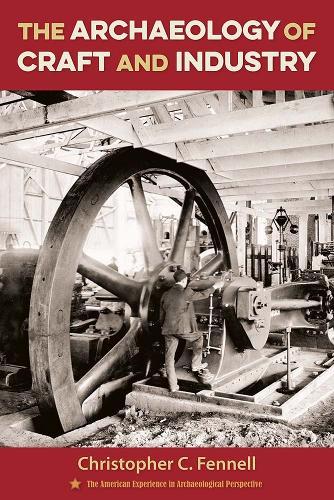
In this expansive yet concise survey, Christopher Fennell discusses archaeological research from sites across the United States that once manufactured, harvested, or processed commodities. Through studies of craft enterprise and the Industrial Revolution, this book uncovers key insights into American history from the seventeenth through the nineteenth centuries. Exploring evidence from textile mills, glassworks, cutlery manufacturers, and tanneries, Fennell describes the complicated transition from skilled manual work to mechanized production methods, and he offers examples of how artisanal skill remained important in many factory contexts. Fennell also traces the distribution and transportation of goods along canals and railroads. He delves into sites of extraction, such as lumber mills, copper mines, and coal fields, and reviews diverse methods for smelting and shaping iron. The book features an in-depth case study of Edgefield, South Carolina, a town that pioneered the production of alkaline-glazed stoneware pottery. Fennell outlines shifts within the field of industrial archaeology over the past century that have culminated in the recognition that these locations of remarkable energy, tumult, and creativity represent the lives and ingenuity of many people. In addition, he points to ways the field can help inform sustainable strategies for industrial enterprises in the present day.
Full Product Details
Author: Christopher C. Fennell
Publisher: University Press of Florida
Imprint: University Press of Florida
Dimensions:
Width: 15.20cm
, Height: 1.40cm
, Length: 22.80cm
Weight: 0.475kg
ISBN: 9780813069043
ISBN 10: 0813069041
Pages: 230
Publication Date: 28 September 2021
Audience:
Professional and scholarly
,
Professional & Vocational
Format: Hardback
Publisher's Status: Active
Availability: In Print

This item will be ordered in for you from one of our suppliers. Upon receipt, we will promptly dispatch it out to you. For in store availability, please contact us.
Reviews
Fennell offers us a fresh and exciting expansion of industrial archaeology through the lens of craft production. This book, with its impressive array of case studies, unequivocally demonstrates the relevance of historical and industrial archaeology to the broader anthropological project. - Charles E. Orser Jr., author of The Archaeology of Race and Racialization in Historic America; Sheds light on the vast array of craft and industrial work that shaped the American experience and the North American landscape. Fennell amasses a broad range of archaeological scholarship to identify contributions and new directions. - Paul J. White, author of The Archaeology of American Mining.
“Fennell offers us a fresh and exciting expansion of industrial archaeology through the lens of craft production. This book, with its impressive array of case studies, unequivocally demonstrates the relevance of historical and industrial archaeology to the broader anthropological project.”- Charles E. Orser Jr., author of The Archaeology of Race and Racialization in Historic America; “Sheds light on the vast array of craft and industrial work that shaped the American experience and the North American landscape. Fennell amasses a broad range of archaeological scholarship to identify contributions and new directions.”- Paul J. White, author of The Archaeology of American Mining.
Author Information
Christopher C. Fennell, professor of anthropology and law at the University of Illinois at Urbana-Champaign, is the author of Broken Chains and Subverted Plans: Ethnicity, Race, and Commodities and Crossroads and Cosmologies: Diasporas and Ethnogenesis in the New World.