|
|
|||
|
||||
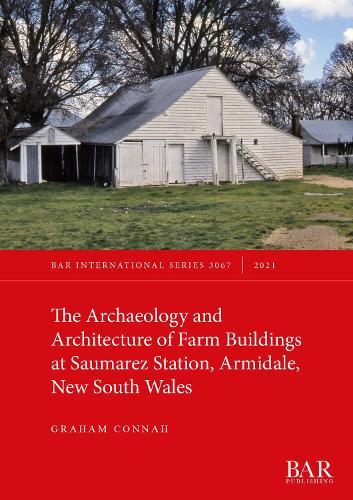
OverviewThis book is an analysis of nineteenth and early twentieth-century farm buildings dating from Australia's rural pioneering period. Based on field recording during the 1980s, its historical value is now particularly significant because similar buildings in Australia have since often deteriorated or vanished completely. Construction techniques, the use of materials, mainly timber as slabs or weather boarding, and of galvanized corrugated iron, including the role of recycling, and the ways in which the buildings were adapted to economic and social changes in agricultural production are examined. In particular, the distinctive Australian tradition of making do with whatever was available is considered. The result is a study of humble, utilitarian buildings that have been given less attention than grand houses of the past or public buildings. Nevertheless, they played a vital role in Australia's past development, and they deserve close consideration. Full Product DetailsAuthor: Graham ConnahPublisher: BAR Publishing Imprint: BAR Publishing Weight: 0.590kg ISBN: 9781407358802ISBN 10: 1407358804 Pages: 148 Publication Date: 31 December 2021 Audience: Professional and scholarly , Professional & Vocational Format: Paperback Publisher's Status: Active Availability: Available To Order We have confirmation that this item is in stock with the supplier. It will be ordered in for you and dispatched immediately. Table of ContentsList of Figures Foreword Abstract 1. People and places 2. The old homestead site 2.1. The excavation 2.2. Structural evidence 2.3. Artefactual evidence 2.4. Conclusion 3. The store 3.1. Construction and materials 3.2. Building chronology 3.3. Document recovery 3.4. Conclusion 4. The working-horse stable, later the barn 4.1. Construction 4.2. Gates, doors and stairs 4.3. The chaff-cutting room 4.4. Other artefacts in the building 4.5. Conclusion 5. The Thomas Building 5.1. Site, construction and layout 5.2. Materials and techniques 5.3. Roof, flooring and chimneys 5.4. Internal details 5.5. Ceilings 5.6. Subsequent use 5.7. Conclusion 6. The riding-horse stable, skillion and carriage house 6.1. The stable 6.2. The skillion 6.3. The carriage house 6.4. The condition of the building 6.5. Conclusion 7. The killing shed and piggery site 7.1. Structural development 7.2. Operating the killing shed 7.3. Conclusion 8. Two contrasting poultry houses 8.1. The buildings 8.2. Discussion 8.3. Conclusion 9. The cowshed 9.1. The survey 9.2. The layout of the building 9.3. The flow of animals and materials 9.4. Building materials and methods 9.5. The strength of the building 9.6. Portable equipment in the building 9.7. Discussion 9.8. Conclusion 10. The fences 10.1. Killing shed (1) and Fence 2 10.2. Fence 3 10.3. Fences 4 and 5 10.4. Fence 6 10.5. Fence 7 10.6. Fence 8 10.7. Fence 9 10.8. Fence 10 10.9. Fences 11 and 12 10.10. Fences 13 and 14 10.11. Fence 15 10.12. Fence 16 10.13. Fence 17 10.14. Fences 18, 19, 20 and 24 10.15. Fences 21, 22 and 23 10.16. Conclusion 11. Jack Haynes's Cottage 11.1. Conclusion 12. The garden at Jack Haynes's Cottage 12.1. Plants identified in the garden 12.2. Conclusion 13. Comparisons and conclusion 13.1. Abington (photographs by Graham Connah) 13.2. Newholme (photographs by Graham Connah) 13.3. Conclusion ReferencesReviews'An important contribution to documentation of Australian rural building heritage and socio-economic history.' Professor Penelope Allison, University of Leicester Author InformationGraham Connah has written widely on African archaeology, his best-known book being African Civilizations, now in its third edition (2015). He was also one of the pioneers of Australian historical archaeology, publishing The Archaeology of Australia's History in 1988. In 2000 he was awarded the Order of Australia for his contributions to archaeology. Tab Content 6Author Website:Countries AvailableAll regions |
||||