Overview
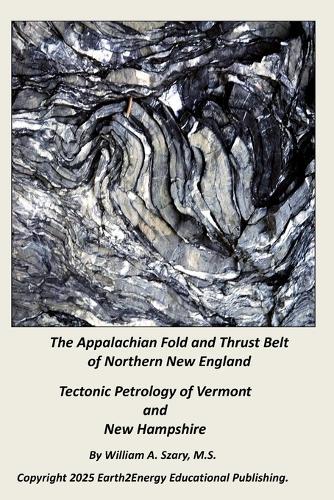
Vermont has five distinct physiographic regions categorized by geological and physical attributes. For the purpose of discussion in this book, those five physiographic provinces were reduced to three regions: North, Central, and South. Both Vermont and New Hampshire were exposed to tectonic activities which left evidence in the form of petrologic formations in sparse locations in the landscape. This book attempts to summarize select portions of these rocks along selected road cuts in each of the state's regions. About 500 million years ago, Vermont was part of Laurentia located in the tropics. The oldest rocks in Vermont formed about 1 billion years ago during the first mountain building event called the Grenville orogeny formed during assembly of the Rodinian supercontinent. About 400 mya, a second mountain building event called the Taconic orogeny uplifted Precambrian and Cambrian rocks while pushing Ordovician rocks west by the Champlain Thrust Fault now located along the eastern shore of Lake Champlain. As a result of tectonic formation, eastern central Vermont was formed by rocks produced during the Silurian to Devonian periods (Taconic and Acadian orogenies). Western Vermont was produced by rocks of Precambrian to Cambrian ages. (Grenville orogeny). Several large deposits within the state contain younger aged granite. Remains of the Chazy Formation are present at the Isle La Motte location. This area was one of the first tropical reef deposits including the Fish Quarry. Southeast Vermont contains snowball garnets which represent tectonic rotations occurring in Northern New England in both counterclockwise and clockwise directions. The geology of New Hampshire is similar consisting of a series of metamorphosed sedimentary and volcanic rocks of Late Proterozoic to Devonian age. These rocks were intruded by plutons and dikes ranging in age from Late Proterozoic to Early Cretaceous. Schists, gneiss, and granite dominate. New Hampshire was divided into North, Central, and South regions for discussion purposes similar to Vermont. The state straddles three composite tectonostratigraphic terranes. The large portion of the state lies with the Central Maine trough in the east and the Bronson Hill mantled gneiss domes in the west. A small area of the first composite terrane belongs to the Hurricane Mountain belt and olistostrome belt. The northernmost corner of the state lies in the Connecticut Valley trough of the Boundary Mountains composite terrane. Coastal region in the southeast belongs to the Merrimack-Orrington Belt of Nashoba-Casco-Miramichis composite terrane.
Full Product Details
Author: William A Szary M S
Publisher: Independently Published
Imprint: Independently Published
Dimensions:
Width: 15.20cm
, Height: 1.10cm
, Length: 22.90cm
Weight: 0.272kg
ISBN: 9798279202225
Pages: 200
Publication Date: 20 December 2025
Audience:
General/trade
,
General
Format: Paperback
Publisher's Status: Active
Availability: Available To Order

We have confirmation that this item is in stock with the supplier. It will be ordered in for you and dispatched immediately.