|
|
|||
|
||||
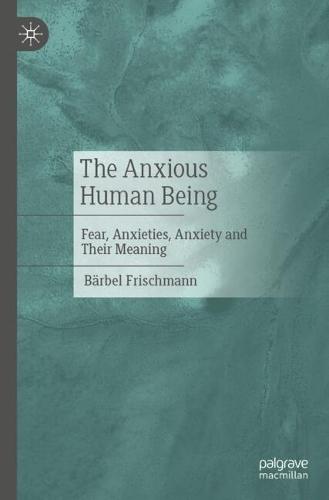
OverviewAnxiety accompanies us whenever and wherever we are. It is part of being human. Humans are creatures of anxiety, and this shapes their relationship to the world, to others, and to themselves. In order to highlight the different ways in which anxiety manifests, a distinction is proposed between three basic functions: affective fear, felt anxieties, and mental anxiety. Each represents a specific form of vital danger management, encompassing not only physical protection functions but also the mental anticipation of possible risks and threats. However, anxiety—particularly in the form of emotional experiences—can become imbalanced, be experienced as distressing, and even become pathological. Therefore, it is hoped that people possess the mental strength to meaningfully incorporate their anxieties into their lives. To offer a nuanced perspective of the topic, relevant theories from biology, psychology, sociology, and philosophy are considered, with further exploration of the findings in social, political, and ideological-worldview applications. Full Product DetailsAuthor: Bärbel FrischmannPublisher: Springer-Verlag Berlin and Heidelberg GmbH & Co. KG Imprint: Springer-Verlag Berlin and Heidelberg GmbH & Co. K ISBN: 9783662722367ISBN 10: 3662722364 Pages: 287 Publication Date: 13 April 2026 Audience: General/trade , General Format: Paperback Publisher's Status: Forthcoming Availability: Not yet available This item is yet to be released. You can pre-order this item and we will dispatch it to you upon its release. Table of Contents1 Introduction: The conceptual distinction between affective fear, felt anxieties, and mental anxiety.- 2 How humans became beings of anxiety: Evolution and culture.- 3 Biology and psychology on fear, anxieties, and anxiety.- 4 Fear, anxieties, and anxiety in European theoretical history.- 5 The concept of anxiety in existential philosophy.- 6 Anxieties and anxiety as a social phenomenon.- 7 Political anxieties, power, totalitarianism, terror.- 8 Religions, ideologies, and conspiracy theories.- 9 Final reflections: The human as a being of anxiety and the power of the human mind.ReviewsAuthor InformationBärbel Frischmann is a Professor of the History of Philosophy at the Department of Philosophy at the University of Erfurt. Her main areas of research include: classical German philosophy and early Romanticism, Existential Philosophy, Nietzsche, Heidegger, Cassirer, Postmodern Philosophy and Deconstruction, philosophy of culture, political philosophy, social philosophy and theories of anxiety. Tab Content 6Author Website:Countries AvailableAll regions |
||||