Overview
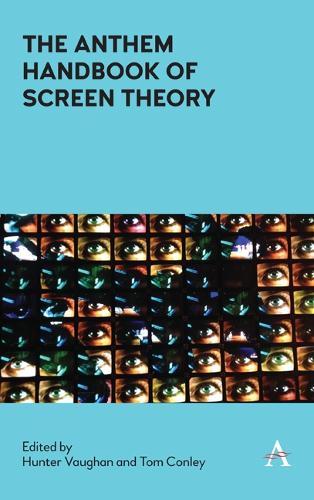
The Anthem Handbook of Screen Theory offers a unique and progressive survey of screen theory and how it can be applied to a range of moving-image texts and sociocultural contexts. Focusing on the 'handbook' angle, the book includes only original essays from established authors in the field and new scholars on the cutting edge of helping screen theory evolve for the twenty-first-century vistas of new media, social shifts and geopolitical change. This method guarantees a strong foundation and clarity for the canon of film theory, while also situating it as part of a larger genealogy of art theories and critical thought, and reveals the relevance and utility of film theories and concepts to a wide array of expressive practices and specified arguments. The Anthem Handbook of Screen Theory is at once inclusive, applicable and a chance for writers to innovate and really play with where they think the field is, can and should be heading.
Full Product Details
Author: Hunter Vaughan , Tom Conley
Publisher: Anthem Press
Imprint: Anthem Press
Dimensions:
Width: 15.30cm
, Height: 2.60cm
, Length: 22.90cm
Weight: 0.454kg
ISBN: 9781783088232
ISBN 10: 1783088230
Pages: 372
Publication Date: 30 July 2018
Audience:
Professional and scholarly
,
Professional & Vocational
Format: Hardback
Publisher's Status: Active
Availability: Manufactured on demand 
We will order this item for you from a manufactured on demand supplier.
Table of Contents
List of Figures; Preface, Hunter Vaughan; Acknowledgments; Introduction Post- , Grand, Classical or “So- Called”: What Is, and Was, Film Theory?, Francesco Casetti; Part I What We Are; Chapter One The Brain’s Labor: On Marxism and the Movies, Pasi Väliaho; Chapter Two Racial Being, Aff ect and Media Cultures, Camilla Fojas; Chapter Three Thinking Sex, Doing Gender, Watching Film, Theresa L. Geller; Chapter Four “Complicated Negotiations”: Reception and Audience Studies into the Digital Age, Brendan Kredell; Chapter Five World Cinema and Its Worlds, James Tweedie; Chapter Six Screen Theory Beyond the Human: Toward an Ecomaterialism of the Moving Image, Hunter Vaughan; Chapter Seven “We Will Exchange Your Likeness and Recreate You in What You Will Not Know”: Transcultural Process Philosophy and the Moving Image, Laura U. Marks; Part II What Screen Culture Is; Chapter Eight Apparatus Theory, Plain and Simple, Tom Conley; Chapter Nine Properties of Film Authorship, Codruţa Morari; Chapter Ten “Deepest Ecstasy” Meets Cinema’s Social Subjects: Theorizing the Screen Star, Mary R. Desjardins; Chapter Eleven Rethinking Genre Memory: Hitchcock’s Vertigo and Its Revision, Elisabeth Bronfen; Chapter Twelve Digital Technologies and the End(s) of Film Theory, Trond Lundemo; Chapter Thirteen How John the Baptist Kept His Head: My Life in Film Philosophy, William Rothman; Part III How We Understand Screen Texts; Chapter Fourteen The Expressive Sign: Cinesemiotics, Enunciation and Screen Art, Daniel Yacavone; Chapter Fifteen Narratology in Motion: Causality, Puzzles and Narrative Twists, Warren Buckland; Chapter Sixteen He(u)retical Film Theory: When Cognitivism Meets Theory, William Brown; Chapter Seventeen Philosophy Encounters the Moving Image: From Film Philosophy to Cinematic Thinking, Robert Sinnerbrink; Chapter Eighteen Screen Perception and Event: Beyond the Formalist/ Realist Divide, Nadine Boljkovac; Postface, Tom Conley; Notes on Contributors; Filmography; Index.
Reviews
Author Information
Hunter Vaughan is associate professor of cinema studies at Oakland University, USA. His work focuses on environmental media, screen theory and philosophy, and issues of identity and ethics in visual culture. He is the author of Where Film Meets Philosophy (2013), Screen Life and Identity: A Guide to Film and Media Studies (with Meryl Shriver-Rice, 2017) and Hollywood's Dirtiest Secret (forthcoming). Tom Conley is the Lowell Professor in Visual and Environmental Studies and Romance Languages at Harvard University, USA. He is the author of Film Hieroglyphs (1991/2006) and Cartographic Cinema (2007), and co-editor of the Wylie-Blackwell Companion to Godard (2014).
Tab Content 6
Author Website:
Countries Available
All regions
|