|
|
|||
|
||||
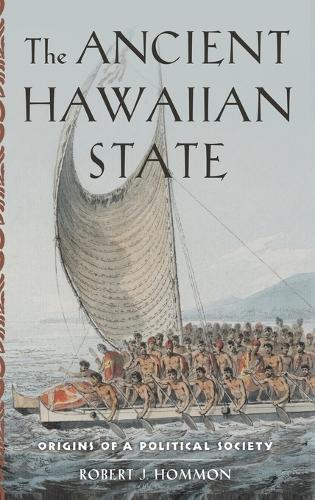
OverviewFull Product DetailsAuthor: Robert J. Hommon (Former Senior Cultural Resouce Scientist and Archaeologist, Former Senior Cultural Resouce Scientist and Archaeologist, Former Pacific islands Support Office)Publisher: Oxford University Press Inc Imprint: Oxford University Press Inc Dimensions: Width: 23.90cm , Height: 2.80cm , Length: 16.30cm Weight: 0.732kg ISBN: 9780199916122ISBN 10: 0199916128 Pages: 336 Publication Date: 25 April 2013 Audience: College/higher education , Professional and scholarly , Tertiary & Higher Education , Professional & Vocational Format: Hardback Publisher's Status: Active Availability: To order Stock availability from the supplier is unknown. We will order it for you and ship this item to you once it is received by us. Table of ContentsIntroduction PART ONE: Hawai'i in The Early Contact Era 1. The People 2. Government, War, and Refuge 3. Houses and Crafts 4. Farming and Fishing 5. Gods and Temples 6. Makahiki, Trails, and Exchange PART TWO: State Societies and the Ancient Hawaiian Example 7. State Societies 8. The Ancient Hawaiian State PART THREE: Polynesian Societies 9. Polynesian Comparisons 10. Tikopia 11. The Marquesas Islands: Nuku Hiva and `Ua Pou 12. The Society Islands: Tahiti and Porapora 13. The Ancient Tongan State PART FOUR: The Hawaiian State Emergence Model 14. The Model: Introduction and Chronology Construction 15. The Model of Hawaiian State Emergence 16. Summary and Conclusion Appendix A. Summary of Ancient Hawaiian Political History Appendix B. Glossary Bibliography IndexReviews<br> Hommon's masterful integration of archaeological and documentary records demands attention from scholars beyond Oceania who must interpret the world's early states without eyewitness accounts. Hawai'i offers a perspective that is rarely accessible to archaeologists who study complex societies solely through material records. --James M. Bayman, University of Hawai'i at Manoa<p><br> Robert Hommon offers us not only a comprehensive description of the ancient Hawaiian state, but a model for state emergence that draws upon a wealth of comparative data from other Polynesian societies. Hommon moves longstanding debates over the nature of Polynesian political organization to a new level of understanding. --Patrick V. Kirch, University of California, Berkeley<p><br> Author InformationRobert J. Hommon, (Ph.D., University of Arizona), retired archaeologist and Senior Cultural Resource Scientist for the Pacific Islands Office, National Park Service, has conducted research on seven of the eight major Hawaiian Islands focused on the cultural, social, and economic roots of the Hawaiian kingdoms' emergence. Tab Content 6Author Website:Countries AvailableAll regions |
||||