Overview
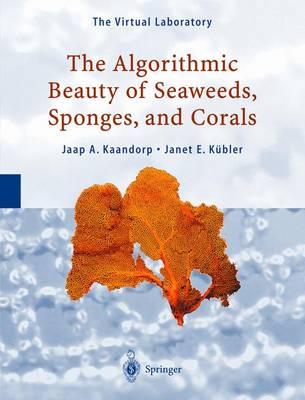
This book gives a state-of-the-art overview of modeling growth and form of marine sessile organisms - such as stromatolites, algae, and metazoans including stony corals, hydrocorals, octocorals, and sponges -, using large-scale computing techniques, scientific visualization, methods for analyzing 2D and 3D forms, and particle-based modeling techniques. It originates from the workshop on Modeling Growth and Form of Marine Sessile Organisms, held at the National Center for Ecological Analysis and Synthesis, Santa Barbara, California, August 1999. Experts from various disciplines including developmental biology, ecology, computer science, physics and mathematics, who have research interests in modeling the development of these organisms have been invited to contribute. The book describes all the steps required to develop and experimentally validate morphological models including collecting biological information and methods for specifying and comparing forms. Examples are given of how models are currently being applied to simulate growth and form of marine sessile organisms. Potential applications of growth models and morphological analyses in modern and paleo-bio-monitoring, the detection of environmental change, and the conservation and restoration of marine ecosystems and aquaculture are addressed. The combination of simulation models with laboratory and field experiments provides a powerful tool to obtain insights on how the growth forms of marine organisms emerge from physical, genetic and environmental influences.
Full Product Details
Author: Jaap A. Kaandorp ,
Janet E. Kübler
Publisher: Springer-Verlag Berlin and Heidelberg GmbH & Co. KG
Imprint: Springer-Verlag Berlin and Heidelberg GmbH & Co. K
Edition: 2001 ed.
Dimensions:
Width: 21.00cm
, Height: 1.70cm
, Length: 27.70cm
Weight: 0.839kg
ISBN: 9783540677000
ISBN 10: 3540677003
Pages: 193
Publication Date: 28 September 2001
Audience:
Professional and scholarly
,
College/higher education
,
Professional & Vocational
,
Undergraduate
Format: Hardback
Publisher's Status: Active
Availability: In Print

This item will be ordered in for you from one of our suppliers. Upon receipt, we will promptly dispatch it out to you. For in store availability, please contact us.
Reviews
From the reviews: Sessile marine organisms, like sponges or corals, are often modular organisms, typically built of repeated units, the modules. ... Improved computing methods have made it possible to simulate the growth of such organisms ... . This volume is the outcome of a 1999 conference. It is mainly devoted to the interaction of biology and computing. Many figures confronting photos of live animals with computer generated simulations give a good impression for the non-specialist. (Benno Artmann, Zentralblatt MATH, Vol. 1007, 2003) The purpose of this book ... is to `provide an overview of how simulation models can provide insights into the growth and forms of seaweeds, sponges, corals and other marine sessile organisms. ... the text as a whole has coherence and balance. It is beautifully, if sometimes eccentrically, illustrated with photographs, drawings and computer simulations. It provides a clear and much-needed summary of the state of the art in this difficult but important area of biological simulation that will appeal to the specialist. (Michael Whitfield, Times Higher Education Supplement, November, 2002) Jaap Kaandorp and Janet Kubler's book The Algorithmic Beauty of Seaweeds, Sponges and Corals covers the modelling of the growth and form of some organisms. Lots of detail is provided for the biology ... . there is enough information to encourage investigations - and the many wonderful illustrations help to spur on the reader. (Andrew Bowler, New Scientist, March, 2002)
From the reviews: <p> Sessile marine organisms, like sponges or corals, are often modular organisms, typically built of repeated units, the modules. a ] Improved computing methods have made it possible to simulate the growth of such organisms a ] . This volume is the outcome of a 1999 conference. It is mainly devoted to the interaction of biology and computing. Many figures confronting photos of live animals with computer generated simulations give a good impression for the non-specialist. (Benno Artmann, Zentralblatt MATH, Vol. 1007, 2003) <p> The purpose of this book a ] is to a ~provide an overview of how simulation models can provide insights into the growth and forms of seaweeds, sponges, corals and other marine sessile organisms. a ] the text as a whole has coherence and balance. It is beautifully, if sometimes eccentrically, illustrated with photographs, drawings and computer simulations. It provides a clear and much-needed summary of the state of the art in this difficult but important area of biological simulation that will appeal to the specialist. (Michael Whitfield, Times Higher Education Supplement, November, 2002) <p> Jaap Kaandorp and Janet KA1/4blera (TM)s book The Algorithmic Beauty of Seaweeds, Sponges and Corals covers the modelling of the growth and form of some organisms. Lots of detail is provided for the biology a ] . there is enough information to encourage investigations a and the many wonderful illustrations help to spur on the reader. (Andrew Bowler, New Scientist, March, 2002)