Overview
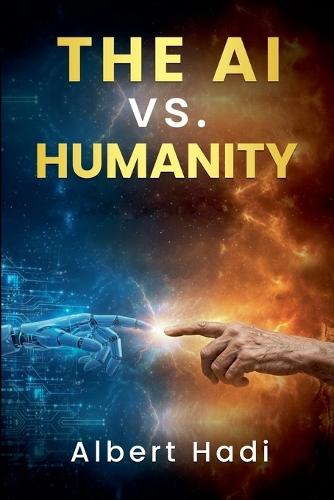
Who Really Controls Your Work, Money, and Future Today, automated decision-making systems screen job applications, assign credit risk, flag security threats, rank students, prioritize patients, and filter access to housing and financial services. Résumé screening software eliminates candidates before a hiring manager reads a name. Credit scoring algorithms categorize borrowers into invisible risk tiers. Predictive analytics tools influence policing, insurance rates, and access to opportunity. These systems operate quietly, often without transparency, appeal, or meaningful oversight. The AI vs. Humanity examines how algorithmic governance has moved from technical support tool to gatekeeper of modern life. This book is not a speculative warning about the future. It is an investigation of what is already happening. Inside, you will discover: - How hiring algorithms and résumé filters determine employment outcomes long before human interviews begin - How financial scoring systems and digital profiling shape credit, insurance, and economic mobility - How automated healthcare prioritization and risk modeling influence who receives attention first - How algorithmic bias enters code through historical data and is reinforced at scale - How surveillance technologies and predictive systems classify individuals without their knowledge Artificial intelligence is often described as neutral, objective, and efficient. But every automated system reflects human design choices, embedded assumptions, and institutional priorities. When decisions are outsourced to code, responsibility becomes harder to trace, and accountability fades behind technical language. Search terms like algorithmic bias, hiring algorithms, digital surveillance, automated credit scoring, and AI decision making reflect growing public concern. People are asking why they were rejected, flagged, or filtered out without explanation. This book connects those questions to documented practices in employment technology, financial modeling, and data-driven governance. The shift is not theoretical. It affects work, money, healthcare, privacy, and social mobility. The AI vs. Humanity explores who builds these systems, who defines the criteria, and who benefits from invisible automation. It asks whether efficiency has replaced deliberation, and whether human judgment can survive in environments increasingly governed by predictive systems. If you have ever wondered why a decision about your life felt instant, final, and impersonal, this book provides clarity. Because the system did not act alone. Someone designed it.
Full Product Details
Author: Albert Hadi
Publisher: Albert Hadi
Imprint: Albert Hadi
Dimensions:
Width: 15.20cm
, Height: 1.60cm
, Length: 22.90cm
Weight: 0.399kg
ISBN: 9798233646386
Pages: 296
Publication Date: 01 March 2026
Audience:
General/trade
,
General
Format: Paperback
Publisher's Status: Active
Availability: Available To Order

We have confirmation that this item is in stock with the supplier. It will be ordered in for you and dispatched immediately.
Author Information
Albert Hadi is an accomplished author and researcher with over 25 years of experience in war zones and conflict environments. His career has centered on counterterrorism, extremist propaganda, and the global struggle over information control-issues that lie at the core of press freedom and media ethics. He has collaborated extensively with U.S. interagency entities, serving as Arabic Press Officer with the U.S. Department of State and as Team Leader of the Digital Engagement Team (DET) at U.S. Central Command. As Editor-in-Chief of A Word of Truth, Albert directly challenged ISIS propaganda and al-Qaeda's manipulative narratives, exposing how regimes and terrorist organizations alike exploit media as a tool of control and repression. His work has given him rare insight into how freedom of expression is defended in open societies and suppressed under authoritarian systems. Widely recognized for his analysis of press freedom, human rights, and global media regulation, Albert has published eight books in Arabic and English, as well as numerous articles and research papers on terrorism, radicalization, and the politics of information. His writing continues to highlight the urgent importance of human rights, freedom of expression, independent journalism, and protecting vulnerable minorities from systemic silencing.