Overview
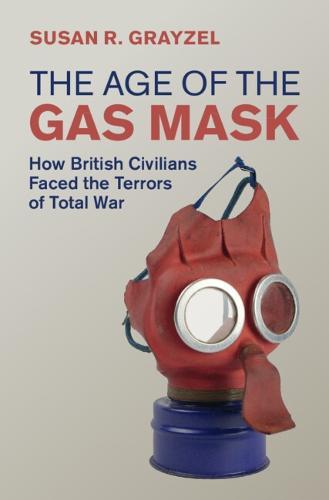
The First World War introduced the widespread use of lethal chemical weapons. In its aftermath, the British government, like that of many states, had to prepare civilians to confront such weapons in a future war. Over the course of the interwar period, it developed individual anti-gas protection as a cornerstone of civil defence. Susan R. Grayzel traces the fascinating history of one object – the civilian gas mask – through the years 1915–1945 and, in so doing, reveals the reach of modern, total war and the limits of the state trying to safeguard civilian life in an extensive empire. Drawing on records from Britain's Colonial, Foreign, War and Home Offices and other archives alongside newspapers, journals, personal accounts and cultural sources, she connects the histories of the First and Second World Wars, combatants and civilians, men and women, metropole and colony, illuminating how new technologies of warfare shaped culture, politics, and society.
Full Product Details
Author: Susan R. Grayzel (Utah State University)
Publisher: Cambridge University Press
Imprint: Cambridge University Press
Edition: New edition
Dimensions:
Width: 15.90cm
, Height: 2.00cm
, Length: 23.50cm
Weight: 0.550kg
ISBN: 9781108491273
ISBN 10: 1108491278
Pages: 288
Publication Date: 11 August 2022
Audience:
General/trade
,
General
Format: Hardback
Publisher's Status: Active
Availability: Available To Order

We have confirmation that this item is in stock with the supplier. It will be ordered in for you and dispatched immediately.
Reviews
'Grayzel's book is a compelling account of the social life of gas masks. She tells the history of war through one object – the gas mask – highlighting the tsunami of emotions it incites, the intensity of people's imagination, and their terror in the face of bodily violence. It is a book guaranteed to destroy any complacency about the inhumanity of war.' Joanna Bourke, author of Wounding the World: How Military Violence and War-Play Invade our Lives 'This book encourages us to think about the idea of total war in the 20th century in new and surprising ways, through the lens of material culture, and the 'weaponisation of the air'. Grayzel illuminates novel ways of thinking about the relationship between individual citizens and states, and the way that war permeated all aspects of life, for both men and women. Britain, and its empire, appear as fresh sites for understanding total war. I expect this will be a landmark book for the social and cultural history of the First and Second World Wars.' Yasmin Khan, author of The Raj at War: a People's History of India's Second World War 'One of the most horrifying strategies of twentieth-century warfare involved poisoning the air. Grayzel's meticulous study of popular and political responses to this awful prospect opens out the meanings and the legacies of efforts to protect the civilian body and offers new ways of understanding modern war.' Penny Summerfield, author of Contesting Home Defence: Men, Women and the Home Guard in the Second World War 'Grayzel's impressive archival collection reveals the value of tracing one technological object as it moved from the battlefield onto civilian bodies and eventually into the minds of an entire generation.' Peter Thompson, Technology and Culture 'This book is not just a story about an object. It tells a deeper, more significant, story about the emergence of 'civil defence' and the national security state, the projection and exercise of power, and the changing character of modern warfare. … This is a methodologically innovative project and presents something relatively new to the history of warfare. Usefully, the practically minded epilogue presents a model for future work, and one is left wondering what other objects could be used to illuminate modern conflict still further.' Alex Mayhew, War in History 'Reading this book has made me reflect on the intrusive reach of the state into the private lives of its citizens at a time of national emergency, and the lengths to which governments in the not-too-distant past were able - and willing - to go to assure and support their citizens.' Michael Roper, First World War Studies 'This book is to be admired for the extent of the research supporting it, Grayzel's facility with prose, her sophistication in analysis, and her creativity in approach. Its value also lies in its accessibility. The cultural emphasis, especially the assessment of emotions and the extensive visual examples - understanding gas masks requires seeing them literally and figuratively - means that the book will be appealing to the general reader unfamiliar with chemical warfare as well as to scholars. Finally, of course, historians of chemical warfare, Britain, military historians, and cultural historians should find themselves impressed and interested as well. Susan Grayzel's examination of a small object has a sizeable impact.' M. Girard Dorsey, American Historical Review 'An outstanding contribution to our understanding of an object that exerts an outsized influence on humanity's past and present, and that will likely continue to impact our future.' Thomas I. Faith, Journal of Modern History
'Grayzel's book is a compelling account of the social life of gas masks. She tells the history of war through one object - the gas mask - highlighting the tsunami of emotions it incites, the intensity of people's imagination, and their terror in the face of bodily violence. It is a book guaranteed to destroy any complacency about the inhumanity of war.' Joanna Bourke, author of Wounding the World: How Military Violence and War-Play Invade our Lives 'This book encourages us to think about the idea of total war in the 20th century in new and surprising ways, through the lens of material culture, and the 'weaponisation of the air'. Grayzel illuminates novel ways of thinking about the relationship between individual citizens and states, and the way that war permeated all aspects of life, for both men and women. Britain, and its empire, appear as fresh sites for understanding total war. I expect this will be a landmark book for the social and cultural history of the First and Second World Wars.' Yasmin Khan, author of The Raj at War: a People's History of India's Second World War 'One of the most horrifying strategies of twentieth-century warfare involved poisoning the air. Grayzel's meticulous study of popular and political responses to this awful prospect opens out the meanings and the legacies of efforts to protect the civilian body and offers new ways of understanding modern war.' Penny Summerfield, author of Contesting Home Defence: Men, Women and the Home Guard in the Second World War
'Grayzel's book is a compelling account of the social life of gas masks. She tells the history of war through one object – the gas mask – highlighting the tsunami of emotions it incites, the intensity of people's imagination, and their terror in the face of bodily violence. It is a book guaranteed to destroy any complacency about the inhumanity of war.' Joanna Bourke, author of Wounding the World: How Military Violence and War-Play Invade our Lives 'This book encourages us to think about the idea of total war in the 20th century in new and surprising ways, through the lens of material culture, and the 'weaponisation of the air'. Grayzel illuminates novel ways of thinking about the relationship between individual citizens and states, and the way that war permeated all aspects of life, for both men and women. Britain, and its empire, appear as fresh sites for understanding total war. I expect this will be a landmark book for the social and cultural history of the First and Second World Wars.' Yasmin Khan, author of The Raj at War: a People's History of India's Second World War 'One of the most horrifying strategies of twentieth-century warfare involved poisoning the air. Grayzel's meticulous study of popular and political responses to this awful prospect opens out the meanings and the legacies of efforts to protect the civilian body and offers new ways of understanding modern war.' Penny Summerfield, author of Contesting Home Defence: Men, Women and the Home Guard in the Second World War
Author Information
Susan R. Grayzel is Professor of History at Utah State University. Her previous publications include Women's Identities at War: Gender, Motherhood and Politics in Britain and France during the First World War (1999), At Home and under Fire: Air Raids and Culture in Britain from the Great War to the Blitz (2012), and the co-edited volume Gender and the Great War (2017).