Overview
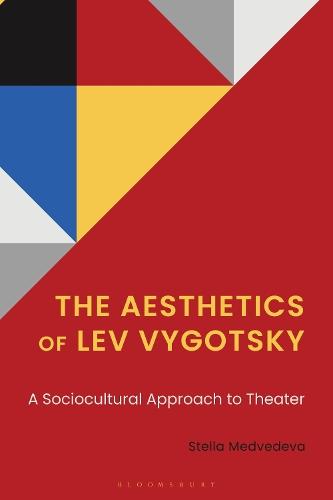
At the crossroads of theater, art, and psychology, Lev Vygotsky's compelling theory of aesthetics helped shape the intellectual currents of Russian Modernism. This new book combines our understanding of Vygotsky's scientific and artistic legacies, bridging the divide between human consciousness and the transformative power of art. The Aesthetics of Lev Vygotsky: A Sociocultural Approach to Theater introduces the concept of Vygotsky’s aesthetics, offering an unprecedented exploration of Lev Vygotsky’s early writings on art, literature, and theater. Long overshadowed by his later work in psychology, these formative texts reveal a compelling theory of art’s psychological function, shaped by the artistic and intellectual currents of Russian Modernism. By rereading Vygotsky’s aesthetic writings in dialogue with this context and with his mature psychological theories, this book challenges the divide often drawn between his scientific and artistic legacies, illustrating how Vygotsky’s thinking oscillates fluidly between disciplines, bridging the study of human consciousness with the transformative power of art. Through this interdisciplinary lens, Vygotsky’s aesthetics emerges as a distinct and timely framework; one that speaks not only to scholars of theater and psychology, but to anyone interested in how art helps us understand what it means to be human.
Full Product Details
Author: Dr. or Prof. Stella Medvedeva
Publisher: Bloomsbury Publishing Plc
Imprint: Rowman & Littlefield
ISBN: 9781666946468
ISBN 10: 166694646
Pages: 220
Publication Date: 22 January 2026
Audience:
Professional and scholarly
,
Professional & Vocational
Format: Hardback
Publisher's Status: Forthcoming
Availability: Manufactured on demand

Reviews
“Stella Medvedeva’s well-researched, lucid, erudite, and insightful book situates Vygotsky’s ideas on art and emotion firstly within his broader effort to articulate a comprehensive developmental psychology of socially, culturally, and historically grounded individuals and social groups, and then within the scholarship that extended his work beyond Vygotskian studies in Russia. The book admirably scrutinizes Vygotsky’s views on theater and performance while paying special attention to Vygotsky’s profound interest in Shakespeare’s Hamlet, often staged in the 1910s-20s. Medvedeva also brings Vygotsky’s aesthetic thought into dialogue with various contemporary trends such as educational theater, cognitive theater studies, and Rancière’s philosophical approaches to art. Her book makes a unique contribution to the existing literature by promoting Vygotsky as an important theater critic and theoretician whose theatrical experiences shaped his conceptualizing of the human subject and agency.” * Alexandra Smith, Reader in Russian Studies, University of Edinburgh, UK * “A groundbreaking exploration of theories of aesthetics and psychology, Medvedeva’s insightful analysis brings new attention to Vygotsky’s contributions to literature and theater criticism. This book is an essential read for scholars and practitioners keen to explore the dynamic relationship between art and emotion. By introducing Vygotsky in a new light to a contemporary readership, Medvedeva makes a compelling case for the role of aesthetics in social and psychological transformation.” * David Overend, Lecturer in Interdisciplinary Studies, University of Edinburgh, UK *
“Stella Medvedeva’s well-researched, lucid, erudite and insightful book situates Vygotsky’s ideas on art and emotion firstly within his broader effort to articulate a comprehensive developmental psychology of socially, culturally and historically grounded individuals and social groups, and then within the scholarship that extended his work beyond Vygotskian studies in Russia. The book admirably scrutinises Vygotsky’s views on theatre and performance while paying special attention to Vygotsky’s profound interest in Shakespeare’s Hamlet, often staged in the 1910s-20s. Medvedeva also brings Vygotsky’s aesthetic thought into dialogue with various contemporary trends such as educational theatre, cognitive theatre studies and Rancière’s philosophical approaches to art. Her book makes a unique contribution to the existing literature by promoting Vygotsky as an important theatre critic and theoretician whose theatrical experiences shaped his conceptualising of the human subject and agency.” * Alexandra Smith, Reader in Russian Studies, University of Edinburgh, UK * “A groundbreaking exploration of theories of aesthetics and psychology, Medvedeva’s insightful analysis brings new attention to Vygotsky’s contributions to literature and theatre criticism. This book is an essential read for scholars and practitioners keen to explore the dynamic relationship between art and emotion. By introducing Vygotsky in a new light to a contemporary readership, Medvedeva makes a compelling case for the role of aesthetics in social and psychological transformation.” * David Overend, Lecturer in Interdisciplinary Studies, University of Edinburgh, UK *
Author Information
Stella Medvedeva is a theater scholar and researcher who has developed courses on physical theater in the twentieth century for the Aristotle University of Thessaloniki, the University of Peloponnese and the Academia dell’ Arte in Italy.