Overview
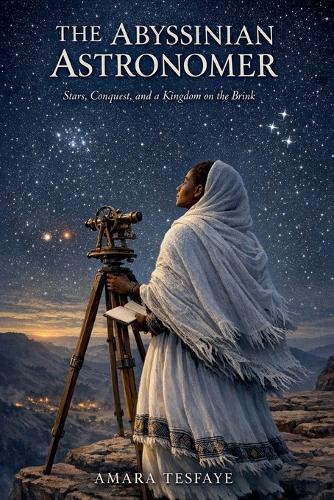
Ethiopia, 1884. On a stone plateau above Adwa, a young woman is doing something that the empire assembling 5,000 miles away in Berlin has decided African people do not do. She is reading the sky with scientific precision. She is writing down what she finds. She has been doing it every clear night for three years, and she has not stopped since. Selamawit is the daughter of an Ethiopian Orthodox deacon who taught her the computus, the ancient astronomical-mathematical system by which the Ethiopian church calculates its festival calendar. She has taken that tradition beyond anything her father anticipated, building a prediction model that can tell the village when the rains will come, what the next season's harvest will look like, and, as she slowly understands, something far more consequential: where an invading army will come, when it will arrive, and under what conditions it can be stopped. When Empress Taitu Betul, the formidable co-ruler of Ethiopia and the most significant African political figure most readers have never heard of, learns of a woman on the Tigray plateau who predicts rains and tracks Italian column movements from highland ridges, she summons her. The commission she gives Selamawit is simple and enormous: build a predictive system for the Italian advance. You have years. Use them. Across eleven years of systematic observation, two knowledge systems collide and synthesize. The Ethiopian computus, which has been watching this sky for a millennium, meets a European theodolite captured through diplomatic arrangements no one asks about. The result is a hybrid method that is Selamawit's alone, calibrated to the exact latitude of the northern Tigray plateau, designed to answer questions the instrument's European designers never considered. Meanwhile an Italian surveying officer named Fiorelli collects three Ge'ez notebooks from a Tigray village in 1885, has them partially translated in 1893, writes a report on their military significance, and watches the report filed at category two. He is not a villain. He is a good man working inside a system doing something wrong, which is the most common kind of complicity and the least satisfying kind to hold. On 1 March 1896, at the Battle of Adwa, the Ethiopian forces defeated the Italian expeditionary force in the most significant African military victory over a European colonial army of the nineteenth century. The result was neither magic nor accident. It was the consequence of knowing the terrain, knowing the weather, knowing the approach corridors, and knowing the sky, for eleven years, with the specific precision of someone who understood that survival required the kind of knowledge that the colonizing power was certain did not exist. The Abyssinian Astronomer is a novel about science as a form of sovereignty, about the political dimensions of who gets to know things and whose knowledge counts, and about a woman who read the stars over the Ethiopian plateau for eleven years and was proven correct on the morning that mattered. For readers of Chimamanda Ngozi Adichie's Half of a Yellow Sun, Anthony Doerr's All the Light We Cannot See, and Laila Ibrahim's Book of the Little Axe.
Full Product Details
Author: Amara Tesfaye
Publisher: Abdul Ahad Ansari
Imprint: Abdul Ahad Ansari
Dimensions:
Width: 15.20cm
, Height: 0.50cm
, Length: 22.90cm
Weight: 0.122kg
ISBN: 9798235837201
Pages: 82
Publication Date: 22 April 2026
Audience:
General/trade
,
General
Format: Paperback
Publisher's Status: Active
Availability: Available To Order

We have confirmation that this item is in stock with the supplier. It will be ordered in for you and dispatched immediately.