Overview
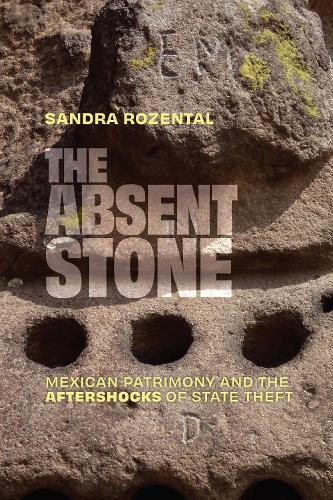
Where and to whom do ancient things belong? What happens when they are stolen--not by a colonial power, but by a national museum claiming them as state patrimony? What kinds of healing and restitution can follow? In The Absent Stone, Sandra Rozental tells the story of the Piedra de los Tecomates, the largest stone monument in the Americas, popularly identified as the pre-Hispanic rain deity Tlaloc. In 1964, the Mexican state called in the military to forcefully relocate this 167-ton carving from the town of Coatlinchan to Mexico City's National Anthropology Museum. Using in-depth historical and ethnographic research, Rozental traces how the stone's absence continues to affect and unsettle Coatlinchan and its residents decades later, revealing the tensions between patrimony, nationalism, territory, memory, and materiality in Mexico. Questioning the premise that historical artifacts belong in museums under state-sanctioned care, The Absent Stone pushes contemporary critical scholarship on monuments and museum collections beyond the language of law, heritage, and cultural property, demonstrating how ancient things remain bound to the people and places they come from even after they are removed and displayed elsewhere.
Full Product Details
Author: Sandra Rozental
Publisher: Duke University Press
Imprint: Duke University Press
Weight: 0.445kg
ISBN: 9781478033127
ISBN 10: 1478033126
Pages: 320
Publication Date: 17 February 2026
Audience:
Professional and scholarly
,
Professional & Vocational
Format: Paperback
Publisher's Status: Forthcoming
Availability: Not yet available

This item is yet to be released. You can pre-order this item and we will dispatch it to you upon its release.
Reviews
""In her brilliant ethnography of Mexico's 'Tlaloc' monolith, Rozental reveals how territory--national, local, material, symbolic--is made and remade through relations between human, non, or more-than-human, agents within socio-spatial ecologies. Through the story of this iconic stone, she makes timely interventions into the politics of repatriation and debates over monumental heritage, revealing the creative strategies for repair generated by and for communities living in the wake of cultural theft.""--Mary K. Coffey, author of, Orozco's Epic: Myth, History, and the Melancholy of Race
“In her brilliant ethnography of Mexico’s ‘Tlaloc’ monolith, Rozental reveals how territory—national, local, material, symbolic—is made and remade through relations between human, non, or more-than-human, agents within socio-spatial ecologies. Through the story of this iconic stone, she makes timely interventions into the politics of repatriation and debates over monumental heritage, revealing the creative strategies for repair generated by and for communities living in the wake of cultural theft.”—Mary K. Coffey, author of, Orozco's Epic: Myth, History, and the Melancholy of Race “This is an outstanding and fascinating contribution to debates about heritage and the affective power of objects. Based on incredibly rich fieldwork and archival work, Rozental artfully examines the many tensions that exist between the Mexican state’s appropriation and monumentalization of ‘The Stone of Tlaloc’ and the experience of residents who feel robed of a beloved local object and are haunted by its absence.”—Gastón Gordillo, author of, Rubble: The Afterlife of Destruction
Author Information
Sandra Rozental is an anthropologist and Research Professor at the Centro de Estudios Históricos, El Colegio de México.