Overview
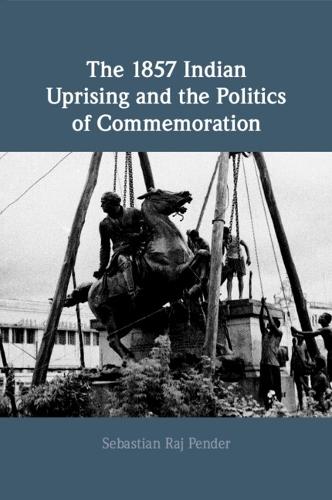
The Cawnpore Well, Lucknow Residency, and Delhi Ridge were sacred places within the British imagination of India. Sanctified by the colonial administration in commemoration of victory over the 'Sepoy Mutiny' of 1857, they were read as emblems of empire which embodied the central tenets of sacrifice, fortitude, and military prowess that underpinned Britain's imperial project. Since independence, however, these sites have been rededicated in honour of the 'First War of Independence' and are thus sacred to the memory of those who revolted against colonial rule, rather than those who saved it. The 1857 Indian Uprising and the Politics of Commemoration tells the story of these and other commemorative landscapes and uses them as prisms through which to view over 150 years of Indian history. Based on extensive archival research from India and Britain, Sebastian Raj Pender traces the ways in which commemoration responded to the demands of successive historical moments by shaping the events of 1857 from the perspective of the present. By telling the history of India through the transformation of mnemonic space, this study shows that remembering the past is always a political act.
Full Product Details
Author: Sebastian Raj Pender (University of Oxford)
Publisher: Cambridge University Press
Imprint: Cambridge University Press
Dimensions:
Width: 15.20cm
, Height: 1.40cm
, Length: 22.90cm
Weight: 0.395kg
ISBN: 9781009055505
ISBN 10: 100905550
Pages: 268
Publication Date: 06 February 2025
Audience:
General/trade
,
General
Format: Paperback
Publisher's Status: Active
Availability: Manufactured on demand

We will order this item for you from a manufactured on demand supplier.
Reviews
'This well-researched book charts the changing commemorative landscape of the 1857 Indian Uprising from post-Mutiny reconciliation efforts to the rise of identity politics in post-colonial India. The result is a fascinating exploration of the intersections between history, memory, and culture.' Jill C. Bender, University of North Carolina at Greensboro 'As much as it was a crucial historical event, the so-called 'Mutiny' of 1857 was a defining narrative and key motif of commemoration in the British imperial imagination. Pender skilfully writes the history of the Raj through the management of both memory and memorial sites, revealing the true significance of the rallying cry 'Remember Cawnpore!' Kim Wagner, Queen Mary, University of London 'A fine account of British mnemonic politics set squarely in the Victorian era. A range of historical sources are marshalled in order to make a persuasive case for why memory is key to imperial formations as well as the postcolonial state in the light of 1857. The book does a fine job of taking us through the itineraries of imperial desire around memory with all its attendant anxieties … warrant[s] a close reading in our troubled times.' Siddharth Mallavarapu, Victorian Studies
'This well-researched book charts the changing commemorative landscape of the 1857 Indian Uprising from post-Mutiny reconciliation efforts to the rise of identity politics in post-colonial India. The result is a fascinating exploration of the intersections between history, memory, and culture.' Jill C. Bender, University of North Carolina at Greensboro 'As much as it was a crucial historical event, the so-called 'Mutiny' of 1857 was a defining narrative and key motif of commemoration in the British imperial imagination. Pender skilfully writes the history of the Raj through the management of both memory and memorial sites, revealing the true significance of the rallying cry 'Remember Cawnpore!' Kim Wagner, Queen Mary, University of London
Author Information
Sebastian Raj Pender is a Research Associate at Balliol College, University of Oxford.