Overview
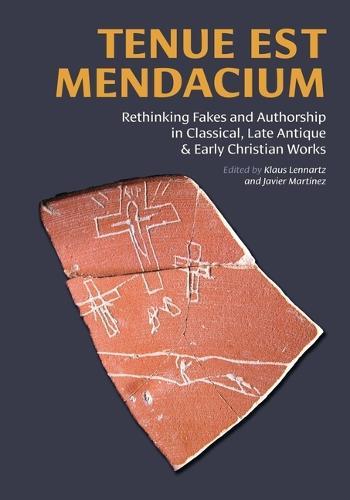
Many new and fruitful avenues of investigation open up when scholars consider forgery as a creative act rather than a crime. We invited authors to contribute work without imposing any restrictions beyond a willingness to consider new approaches to the subject of ancient fakes, forgeries, and questions of authenticity. The result is this volume, in which our aim is to display some of the many possibilities available to scholarship. The exposure of fraud and the pursuit of truth may still be valid scholarly goals, but they implicitly demand that we confront the status of any text as a focal point for matters of belief and conviction. Recent approaches to forgery have begun to ask new questions, some intended purely for the sake of debate: Ought we to consider any author to have some inherent authenticity that precludes the possibility of a forger's successful parody? If every fake text has a real context, what can be learned about the cultural circumstances which give rise to forgeries? If every real text can potentially engender a parallel history of fakes, what can this alternative narrative teach us? What epistemological prejudices can lead us to swear a fake is genuine, or dismiss the real thing as inauthentic? Following Splendide Mendax and Animo Decipiendi?, this is the latest installment of an ongoing inquiry, conducted by scholars in numerous countries, into how the ancient world - its literature and culture, its history and art - appears when viewed through the lens of fakes and forgeries, sincerities and authenticities, genuine signatures and pseudepigrapha. How does scholarship tell the truth if evidence doesn't? But fabula docet: The falsum does not simply make the great, annoying stone before the door of the truth (otherwise this here would really be a ""council of antiquarians and paleographers""). The falsum makes a delicate, fine tissue. It allows the verum to shine through, in nuances and reliefs that were less noticeable without its counterpart, really tied at the head. And, treated differentiated, it becomes even itself perlucidum, shines out with ""hidden values.""
Full Product Details
Author: Klaus Lennartz ,
Javier Martínez
Publisher: Barkhuis
Imprint: Barkhuis
Dimensions:
Width: 17.20cm
, Height: 2.60cm
, Length: 24.40cm
Weight: 0.748kg
ISBN: 9789493194366
ISBN 10: 9493194361
Pages: 369
Publication Date: 07 April 2022
Audience:
General/trade
,
General
Format: Hardback
Publisher's Status: Active
Availability: Available To Order

We have confirmation that this item is in stock with the supplier. It will be ordered in for you and dispatched immediately.
Reviews
""...continues an international scholarly inquiry into how the ancient world--its literature and culture, its history and art--appears when viewed through the lens of fakes and forgeries, sincerities and authenticities, genuine signatures and pseudepigrapha.""-- ""New Testament Abstracts""
...continues an international scholarly inquiry into how the ancient world--its literature and culture, its history and art--appears when viewed through the lens of fakes and forgeries, sincerities and authenticities, genuine signatures and pseudepigrapha. -- New Testament Abstracts