Overview
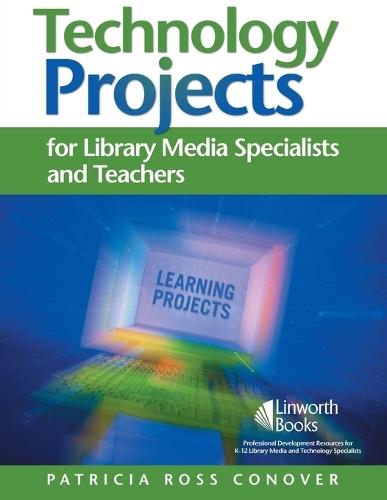
These easy-to-use technology projects require very basic hardware and software, while engaging students in Information Literacy Standards for Student Learning and National Educational Technology Standards (NETS). Lessons include clear, concise instructions for technology projects created in Microsoft Word™, PowerPoint™, and Excel™ programs. Use this book to challenge your students to research and then exhibit what they have learned. They will have fun while they improve their technology skills and learn content.
Full Product Details
Author: Patricia Conover
Publisher: Bloomsbury Publishing Plc
Imprint: Linworth Publishing, Incorporated
Dimensions:
Width: 21.30cm
, Height: 0.80cm
, Length: 27.40cm
Weight: 0.272kg
ISBN: 9781586832230
ISBN 10: 1586832239
Pages: 128
Publication Date: 01 November 2006
Recommended Age: From 7 to 17 years
Audience:
Professional and scholarly
,
College/higher education
,
Professional & Vocational
,
Tertiary & Higher Education
Format: Paperback
Publisher's Status: Active
Availability: Manufactured on demand

We will order this item for you from a manufactured on demand supplier.
Reviews
<p> A compilation of 50 ideas, culminating in 50 computer-generated products. Organized into three sections, it includes things that are just plain fun to make (bags, banners, T-shirts), those that are actually reports presented in nontraditional packages (acrostics, word art, paper chains), and those that present serious research (culture cards, wanted posters, totem poles). Each spread is laid out by 'Plan' (curriculum connections, software requirements), 'Prepare' (a checklist of what teachers need to know and do), and 'Present' (the step-by-step instruction), with useful diagrams, computer screens, and examples. Utilizing Microsoft products found in most schools, the projects are easy to complete, and instruction parameters include a differentiation table to accommodate varied learners and a rubric useful for judging the lesson and the product. Helpful for newbies trying their hand at basic technology, the book also has enormous potential as a resource for experienced teachers who want to teach the research process painlessly by having it culminate in formats achieved quickly and colorfully. A winner. - <p>School Library Journal
<p> A compilation of 50 ideas, culminating in 50 computer-generated products. Organized into three sections, it includes things that are just plain fun to make (bags, banners, T-shirts), those that are actually reports presented in nontraditional packages (acrostics, word art, paper chains), and those that present serious research (culture cards, wanted posters, totem poles). Each spread is laid out by 'Plan' (curriculum connections, software requirements), 'Prepare' (a checklist of what teachers need to know and do), and 'Present' (the step-by-step instruction), with useful diagrams, computer screens, and examples. Utilizing Microsoft products found in most schools, the projects are easy to complete, and instruction parameters include a differentiation table to accommodate varied learners and a rubric useful for judging the lesson and the product. Helpful for newbies trying their hand at basic technology, the book also has enormous potential as a resource for experienced teachers who
A compilation of 50 ideas, culminating in 50 computer-generated products. Organized into three sections, it includes things that are just plain fun to make (bags, banners, T-shirts), those that are actually reports presented in nontraditional packages (acrostics, word art, paper chains), and those that present serious research (culture cards, wanted posters, totem poles). Each spread is laid out by 'Plan' (curriculum connections, software requirements), 'Prepare' (a checklist of what teachers need to know and do), and 'Present' (the step-by-step instruction), with useful diagrams, computer screens, and examples. Utilizing Microsoft products found in most schools, the projects are easy to complete, and instruction parameters include a differentiation table to accommodate varied learners and a rubric useful for judging the lesson and the product. Helpful for newbies trying their hand at basic technology, the book also has enormous potential as a resource for experienced teachers who want to teach the research process painlessly by having it culminate in formats achieved quickly and colorfully. A winner. - School Library Journal
Author Information
Patricia R. Conover is a library media specialist at Antioch Middle School in Shawnee Mission, KS.