|
|
|||
|
||||
Awards
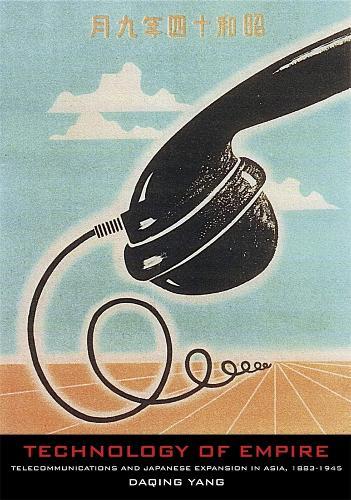
OverviewFull Product DetailsAuthor: Daqing YangPublisher: Harvard University, Asia Center Imprint: Harvard University, Asia Center Volume: No.219 Dimensions: Width: 15.20cm , Height: 3.70cm , Length: 22.90cm Weight: 0.794kg ISBN: 9780674010918ISBN 10: 0674010914 Pages: 468 Publication Date: 18 April 2011 Audience: Professional and scholarly , Professional & Vocational Format: Hardback Publisher's Status: Active Availability: In Print This item will be ordered in for you from one of our suppliers. Upon receipt, we will promptly dispatch it out to you. For in store availability, please contact us. Table of ContentsFigures, Tables, Maps, and Photographs Abbreviations Epigraph Sources Introduction Part I: Genesis, 1853-1931 1. An Emerging Empire in the Age of Submarine Telegraphy 2. Wireless and the Crisis in the Informal Empire Part II: Technology, 1931-1940 3. Toward a New Order on the Continent 4. Inventing Japanese Technology 5. Envisioning Imperial Integration Part III: Control, 1936-1945 6. Negotiating Control at Home 7. Consolidating Control in China 8. Gaining Control in Southeast Asia Part IV: Network, 1939-1945 9. Integrating Systems 10. Operation, Meltdown and Aftermath Conclusion Bibliography IndexReviewsYang carefully examines Japan's submarine and wireless telegraph and telephone networks and the ways in which the emerging system grew within Japan's expanding empire, as well as the ways in which the configuration of the system supported the empire and was, in tum, shaped by the demands and complexity of it. Scholars and graduate students interested in modern Japan, comparative empires, and/or technology and society will learn much from this new, important book.--W. D. Kinzley Choice (1/1/2012 12:00:00 AM) Yang carefully examines Japan's submarine and wireless telegraph and telephone networks and the ways in which the emerging system grew within Japan's expanding empire, as well as the ways in which the configuration of the system supported the empire and was, in tum, shaped by the demands and complexity of it. Scholars and graduate students interested in modern Japan, comparative empires, and/or technology and society will learn much from this new, important book.-- (01/01/2012) Yang carefully examines Japan's submarine and wireless telegraph and telephone networks and the ways in which the emerging system grew within Japan's expanding empire, as well as the ways in which the configuration of the system supported the empire and was, in tum, shaped by the demands and complexity of it. Scholars and graduate students interested in modern Japan, comparative empires, and/or technology and society will learn much from this new, important book.--W. D. Kinzley Choice (01/01/2012) Author InformationDaqing Yang is Associate Professor of History and International Affairs, George Washington University. Tab Content 6Author Website:Countries AvailableAll regions |
||||