Overview
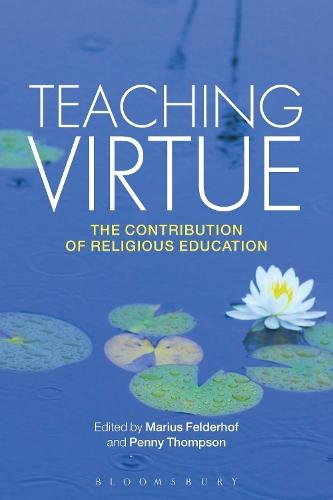
In much of the world, religious traditions are seriously valued but, in the context of religious plurality, this sets educationalists an enormous challenge. This book provides a way forward in exploring religious life whilst showing how bridges might be built between diverse religious traditions. Teaching Virtue puts engagement with religious life - and virtue ethics - at the heart of religious education, encouraging 'learning from' religion rather than 'learning about' religion. The authors focus on eight key virtues, examining these for what they can offer of religious value to pupils and teachers. Individual chapters put the discussion into context by offering a vision of what religious education in the future could look like; the need for responsible religious education; a historical review of moral education and an introduction to virtue ethics. Lesson plans and examples demonstrate how the virtues may be approached in the classroom, making it an invaluable guide for all involved in teaching religious education.
Full Product Details
Author: Marius Felderhof (University of Birmingham, UK) , Penny Thompson
Publisher: Bloomsbury Publishing PLC
Imprint: Bloomsbury Academic
Dimensions:
Width: 15.60cm
, Height: 1.80cm
, Length: 23.40cm
Weight: 0.517kg
ISBN: 9781472522917
ISBN 10: 1472522915
Pages: 248
Publication Date: 20 November 2014
Audience:
Professional and scholarly
,
Professional & Vocational
Format: Hardback
Publisher's Status: Active
Availability: Manufactured on demand 
We will order this item for you from a manufactured on demand supplier.
Table of Contents
Foreword Bhai Sahib Bhai Mohinder Singh Acknowledgements Notes on Contributors Introduction M.C. Felderhof (University of Birmingham, UK) and P.A. Thompson (Freelance Researcher and Writer, UK) Part I: Orientations 1. The Prospective Nature of Religious Education M.C. Felderhof (University of Birmingham, UK) 2. The Need for Responsible Religious Education in a 'Value Free' Society Brenda Watson (Freelance Educationalist and Writer, UK) 3. Virtue Ethics: Background and Current Popularity David Carr (University of Edinburgh, UK) 4. The Demise and Rebirth of Moral Education in English Religious Education L. Philip Barnes (King's College London, UK) Part II: Dispositions 5. Being Honest (Foundational) Brenda Watson (Freelance Educationalist and Writer, UK) 6. Being Compassionate (Looking to Others) Rod Garner (Diocese of Liverpool, UK) 7. Being Just (Relationships with Others) William K. Kay (Glyndwr University, UK) 8. Being Courageous (Required by the Pursuit of Justice) Ieuan Lloyd (University of Birmingham, UK) 9. Being Hopeful (Looking to Positive Outcomes of Actions) Penny Thompson (freelance writer and researcher, UK) 10. Being Temperate (Moderating Actions) M.C. Felderhof (University of Birmingham, UK) 11. Being Wise (Achieving a Balance) Joe Houston (University of Glasgow, UK) 12. Being Faithful (Being True to One's Calling) Jeff Astley (North of England Institute for Christian Education, UK) Part III: Exemplars Lesson Exemplars Appendix: The Birmingham Religious Education Survey, Penny Jennings (Freelance Researcher and Educationalist) References Index
Reviews
This is a clearly written and well informed book about improving educational practice in the field of virtues and religious education. I would recommend it highly, not only to religious education teachers, but to all teachers in training and in current practice. All will benefit from the insights and practical guidance that it offers. The authors are to be commended for such an excellent contribution to enhancing the good life through religious education. James Arthur, Professor of Education and Civic Engagement, and Head of School of Education, University of Birmingham, UK In a society that is often confused and strangely reticent about the value of virtue, the authors of this book leave us in no doubt that religious education that does not promote virtue is a house divided against itself. Learning about religion is shown to be the ideal context in which children and young people can develop their own models of virtuous living. This is a book for theoreticians and practitioners that combines a broad view of the field as it now stands with clear suggestions for the future and some down-to-earth lesson plans for those want to see how virtues can be taught effectively in primary and secondary education. It is thought provoking, easy to read and rooted in the reality of classroom life. Andrew Village, Reader in Practical and Empirical Theology, York St John University, UK
Author Information
Marius Felderhof is Honorary Senior Research Fellow in the Department of Theology and Religion at the University of Birmingham, UK. Penny Thompson is a freelance writer and researcher in religious education, based in the UK.
Tab Content 6
Author Website:
Countries Available
All regions
|