Overview
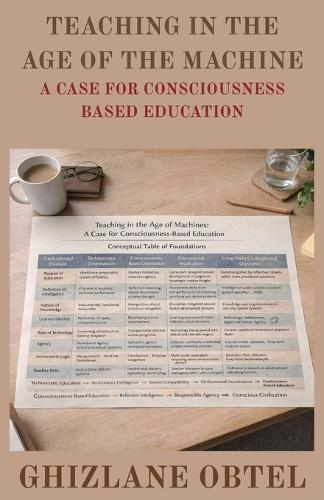
Prelude: A Moment That Demands Reflection There are rare moments in the history of civilization when societies sense-sometimes clearly, sometimes only intuitively-that they are standing at the threshold of a profound transformation. These moments are not always marked by dramatic revolutions or visible institutional collapses. Often, they unfold quietly, through subtle shifts in how people think, learn, judge, and imagine the future. Education is almost always the first place where such transformations take root, long before their consequences become visible in politics, culture, or social life. Our present age is one of those moments. Across the world, educational systems are being redesigned under the influence of powerful technological, economic, and administrative forces. Artificial intelligence, algorithmic systems, data-driven governance, automated assessment, and efficiency-centered institutional models are reshaping not only the tools of education but its underlying philosophy. Learning is increasingly described in terms of measurable outputs, optimized processes, scalable systems, and technological integration. The language of education is gradually merging with the language of engineering and system design. This transformation is often presented as inevitable progress. Yet beneath the surface lies a deeper question that is seldom asked with sufficient clarity: What kind of human being is this new educational order designed to produce? The urgency of this book arises from the recognition that the answer to this question will shape the intellectual, moral, and civilizational trajectory of the coming century. The Silent Redefinition of Learning Education is never neutral. Every curriculum, assessment model, pedagogical structure, and institutional framework carries an implicit vision of the human person-what learners are believed to be, what capacities matter most, and what forms of intelligence deserve cultivation. When educational systems shift toward technological optimization without a corresponding philosophical reflection, they do not remain neutral; they quietly redefine learning itself. If learning becomes primarily the efficient acquisition of information, then reflection loses priority. If success is defined by measurable performance alone, judgment becomes secondary. If systems reward speed, predictability, and technical compliance, creativity, moral reasoning, and interior development risk being treated as secondary or optional outcomes. Over time, such shifts do more than change classrooms. They reshape how societies think, how citizens deliberate, how institutions make decisions, and how individuals understand their own agency. The transformation may appear technical, but its consequences are civilizational.
Full Product Details
Author: Ghizlane Obtel
Publisher: Independently Published
Imprint: Independently Published
Dimensions:
Width: 14.00cm
, Height: 1.50cm
, Length: 21.60cm
Weight: 0.304kg
ISBN: 9798247381952
Pages: 260
Publication Date: 08 February 2026
Audience:
General/trade
,
General
Format: Paperback
Publisher's Status: Active
Availability: Available To Order

We have confirmation that this item is in stock with the supplier. It will be ordered in for you and dispatched immediately.