|
|
|||
|
||||
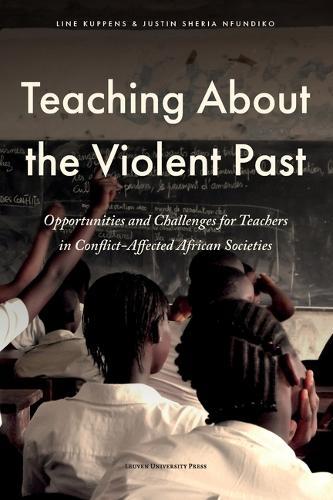
OverviewPolicy recommendations and strategies to support teachers in addressing the violent past. Education plays a vital role in fostering reconciliation and teaching peace in conflict-affected societies. In particular, teaching about the violent past from multiple perspectives helps replace fear and hatred with mutual understanding. While conflict-history education has been explored across sub-Saharan Africa and beyond, curricular reforms often overlook teachers—despite their key role in achieving success. Building on insights from education sciences, sociology, political sciences, memory studies and social psychology, this book introduces a novel and interdisciplinary framework to analyse secondary school teachers’ engagement with conflict-history education, using both qualitative and quantitative methods. It focuses on three distinct locations—Kenya, Côte d’Ivoire, and the Democratic Republic of Congo—that differ in the intensity of violence experienced and the time elapsed since conflict ended. This practice-oriented book aims at identifying teachers’ needs to feel confident and competent in driving reconciliation in their classrooms and provides actionable policy recommendations and teaching strategies to support them in this essential role. Full Product DetailsAuthor: Line Kuppens (University of Amsterdam) , Justin Sheria Nfundiko (Université Officielle de Bukavu)Publisher: Leuven University Press Imprint: Leuven University Press Weight: 0.454kg ISBN: 9789462704725ISBN 10: 9462704724 Pages: 220 Publication Date: 15 October 2025 Audience: College/higher education , Professional and scholarly , Postgraduate, Research & Scholarly , Professional & Vocational Format: Paperback Publisher's Status: Active Availability: In Print This item will be ordered in for you from one of our suppliers. Upon receipt, we will promptly dispatch it out to you. For in store availability, please contact us. Table of ContentsPreface List of Abbreviations Introduction I.1. Research gaps and objectives I.2. Case study contexts I.3. Methodology I.4. Outline of this book Part 1. Theory & Concepts Chapter 1. Reconciliation, memory and (peace) education 1.1. Conflict narratives 1.2. Challenging conflict narratives through transitional justice 1.3. Education as a subject & instrument of transitional justice 1.4. Direct peace education 1.5. Sociological time & societal ‘ripeness’ 1.6. Alternatives to direct peace education 1.7. Theory of change of direct peace education Chapter 2. The risk-taking continuum 2.0 2.1. Curricular-instructional gatekeeping 2.2. The risk-taking continuum 2.3. Limitations of the risk-taking continuum 2.4. Alternative frameworks 2.5. Towards a risk-taking continuum 2.0: the conflict-history education framework 2.6. Using the conflict-history education framework Part 2. Empirical evidence Chapter 3. Teaching about ethnic tensions in Kenya 3.1. Ethnic tensions and violence in Kenya 3.2. Education, conflict & peace 3.2.1. Kenya’s education system 3.2.2. Education & conflict 3.2.3. Education & peace 3.3. Survey data 3.4. Support for (in)direct peace education 3.4.1. Support for multicultural education 3.4.2. Support for direct peace education 3.5. (Dis)comfort 3.6. (In)competence: Stereotyping and ethnic favouritism in the classroom 3.6.1. Stereotyping in the classroom 3.6.2. Ethnic favouritism in the classroom 3.7. Situating Kenyan teachers within the framework of conflict-history education Chapter 4. Teaching about the violent past in Côte d’Ivoire 4.1. Conflict dynamics 4.2. Education, conflict & peace 4.2.1. Côte d’Ivoire’s educational system 4.2.2. Education & conflict 4.2.3. Education & peace 4.3. Survey data 4.4. Support for (in)direct peace education 4.4.1. Support for indirect peace education 4.4.2. Support for direct peace education 4.5. (Dis)comfort 4.6. (In)competence 4.6.1. Focus on competing narratives of conflict 4.6.2. Support for teacher training 4.7. Situating Ivorian teachers within the framework of conflict-history education Chapter 5. Teaching about ongoing violence in the eastern Democratic Republic of Congo 5.1. Conflict dynamics 5.2. Education, conflict & peace 5.2.1. The Congolese education system 5.2.2. Education & conflict 5.2.3. Education & peace 5.3. Survey data 5.4. Support for (in)direct peace education 5.4.1. Support for indirect peace education 5.4.2. Support for direct peace education 5.5. (Dis)comfort 5.6. (In)competence 5.7. Uprooted 5.7.1. Background on ‘Uprooted’ 5.7.2. Fostering critical design experts through ‘Uprooted’ 5.8. Situating Congolese teachers within the framework of conflict-history education Part 3. Conclusions & Policy recommendations Chapter 6. Main findings and conclusions 6.1. Situating teachers in terms of their support for direct peace education 6.2. Explaining differences 6.3. Teachers’ professional development needs 6.4. Limitations & future research directions Chapter 7. Promoting critical design experts? Policy recommendations 7.1. Reflections from the field 7.1.1. Kenya: Mary Wanjiru Kang’ethe 7.1.2. Côte d’Ivoire: Louis-Gervais Adomon Anoma 7.2. Policy recommendations 7.3. Teaching strategies 7.3.1. Silent conversations 7.3.2. Exploring the unknown 7.3.3. Forum theatre Appendix Notes References IndexReviews'This is a really excellent book that explores the role of teachers in exploring the challenging issues of teaching about the past in conflict affected contexts. With case studies from Kenya, Cote D’Ivoire and DRC it provides a sophisticated mixed methods research exploration of the challenges and potential of teaching about the past in highly contested contexts. It is well written, well-structured and a stimulating read that is useful for academics, teachers and policy makers concerned with issues relating to the role of education in conflict affected contexts.' - Mario Novelli, University of Sussex Author InformationLine Kuppens is an assistant professor at the University of Amsterdam, and visiting fellow at the Centre for Research on Peace and Development, KU Leuven. Her research focuses on peace education. Justin Sheria Nfundiko is an associate professor at the Université Officielle de Bukavu and Université Catholique de Bukavu. His research focuses on the role of education in consolidating peace. Tab Content 6Author Website:Countries AvailableAll regions |
||||