Overview
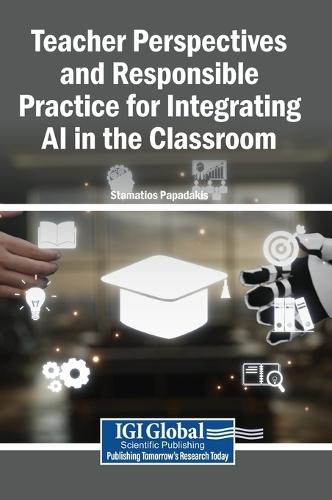
The rapid evolution of artificial intelligence (AI) transforms education at every level, from early childhood classrooms to higher education and specialized learning environments. As AI technologies become embedded in instructional design, assessment, student support, and institutional policy, educators face unprecedented opportunities and complex challenges. AI in education acts as a collaborative partner, one that personalized learning, enhances creativity, supports differentiation, and expands access, while also raising critical concerns regarding privacy, equity, bias, academic integrity, and emotional development. Further exploration into how AI can be thoughtfully, ethically, and effectively integrated into teaching and learning may reveal new avenues for classroom development and teaching practices. Teacher Perspectives and Responsible Practice for Integrating AI in the Classroom examine both emerging innovations and grounded classroom realities in technological integration. It explores responsible, evidence-informed AI practice in the classroom, and addresses pressing issues of bias, accessibility, and privacy. This book covers topics such as personalized learning, educational technologies, and instructional design, and is a useful resource for educators, engineers, academicians, researchers, and scientists.
Full Product Details
Author: Stamatios Papadakis
Publisher: Igi Global Scientific Publishing
Imprint: Igi Global Scientific Publishing
Dimensions:
Width: 17.80cm
, Height: 3.20cm
, Length: 25.40cm
Weight: 1.229kg
ISBN: 9798260001011
Pages: 600
Publication Date: 27 February 2026
Audience:
General/trade
,
General
Format: Hardback
Publisher's Status: Active
Availability: Available To Order

We have confirmation that this item is in stock with the supplier. It will be ordered in for you and dispatched immediately.
Author Information
Stamatios Papadakis is an Assistant Professor at the Department of Preschool Education, University of Crete, Greece. His expertise lies in Educational Technology with a specific focus on mobile learning. Engaged in numerous international and national projects concerning computational thinking and pedagogy across Pre-K to 16 Education, he is dedicated to advancing the field. His research primarily explores mobile learning, particularly leveraging smart mobile devices and associated applications in Preschool and Primary Education. He aims to foster Computational Thinking and enhance students' numerical comprehension. Additionally, his current research delves into the impact of a STEM learning approach facilitated by context-aware mobile learning environments in preschool classrooms, elucidating its effects on learning outcomes among preschoolers.