|
|
|||
|
||||
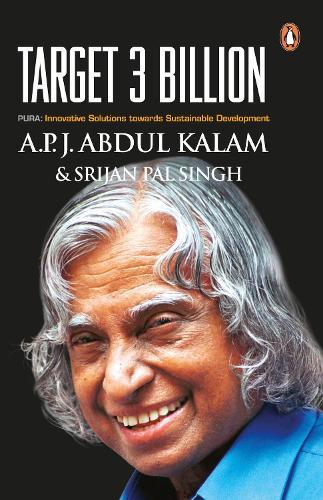
OverviewWith 750 million people living in villages, India has the largest rural population in the world. Based on his Indian experience, Dr Kalam recommends a sustainable and inclusive development system called PURA—Providing Urban Amenities in Rural Areas—to uplift the rural masses not by subsidies but through entrepreneurship with community participation. To make his case, Dr Kalam cites the examples of individuals and institutions, in India and from across the world, who, with an entrepreneurial spirit and a burning desire to make a difference, have successfully generated and tapped into the potential of the rural masses. Fabio Luiz de Oliveira Rosa changed the face of the rural district of Palmares, Brazil, by acquiring for the farmers access to electricity and water, which effect combined with better agricultural methods led to an increase in prosperity and stemmed the migration to the cities The 123-strong Magar clan owned Magarpatta, a 430-acre plot on the outskirts of Pune, Maharashtra. In the 1990s, they organized and set up the Magarpatta city which is now home to over 35,000 residents and a working population of 65,000, and boasts of an IT park. Full Product DetailsAuthor: APJ Abdul Kalam , Srijan Pal SinghPublisher: Penguin Random House India Imprint: Penguin Dimensions: Width: 13.50cm , Height: 2.30cm , Length: 21.60cm Weight: 0.272kg ISBN: 9780143417309ISBN 10: 0143417304 Pages: 320 Publication Date: 15 November 2011 Audience: General/trade , College/higher education , Professional and scholarly , General , Tertiary & Higher Education Format: Paperback Publisher's Status: Active Availability: In Print This item will be ordered in for you from one of our suppliers. Upon receipt, we will promptly dispatch it out to you. For in store availability, please contact us. Table of ContentsReviewsAuthor InformationA.P.J. Abdul Kalam was one of India's most distinguished scientists, responsible for the development of the country's first satellite launch vehicle and the operationalization of strategic missiles. He also pioneered India Vision 2020, a road map for transforming India. The President of India between 2002 and 2007, Dr Kalam was awarded honorary doctorates from thirty-eight universities and the country's three highest civilian honours- the Padma Bhushan (1981), Padma Vibhushan (1990) and Bharat Ratna (1997). A prolific and bestselling author, he conducted lectures on societal development in many international institutes and was involved in research on different societal missions. Dr Kalam passed away in July 2015. Tab Content 6Author Website:Countries AvailableAll regions |
||||