|
|
|||
|
||||
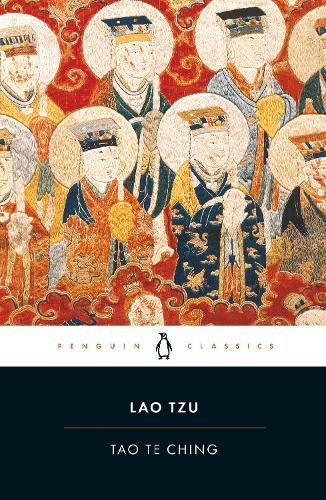
OverviewTraditionally attributed to Lao Tzu, an older contemporary of Confucius (551 - 479 BC), it is now thought that the work was compiled in about the fourth century BC. An anthology of wise sayings, it offers a model by which the individual can live rather than explaining the human place in the universe. The moral code it encourages is based on modesty and self-restraint, and the rewards reaped for such a life are harmony and flow of life. Full Product DetailsAuthor: Lao Tzu , D. C. Lau , D. C. LauPublisher: Penguin Books Ltd Imprint: Penguin Classics Dimensions: Width: 13.00cm , Height: 1.20cm , Length: 19.90cm Weight: 0.147kg ISBN: 9780140441314ISBN 10: 014044131 Pages: 192 Publication Date: 26 June 2003 Audience: General/trade , General Format: Paperback Publisher's Status: Active Availability: Available To Order We have confirmation that this item is in stock with the supplier. It will be ordered in for you and dispatched immediately. Language: Chinese Table of ContentsReviewsIt would be hard to find a fresh approach to a text that ranks only behind the Bible as the most widely translated book in the world, but Star achieves that goal. . . . As fascinating to the casual scholar as it is for the serious student. - NAPRA ReView Jonathan Star's Tao Te Ching achieves the essential: It clarifies the meaning of the text without in the slightest reducing its mystery. -Jacob Needleman It would be hard to find a fresh approach to a text that ranks only behind the Bible as the most widely translated book in the world, but Star achieves that goal. . . . As fascinating to the casual scholar as it is for the serious student. <b> -<i>NAPRA ReView</i> <b><b> Jonathan Star's Tao Te Ching achieves the essential: It clarifies the meaning of the text without in the slightest reducing its mystery. <b> -Jacob Needleman</b></b></b> Author InformationLao Tzu is a Chinese philosopher and founder of the Taoist religion in China. His name means 'Old Master'. He worked as a librarian at the court of Chou. When the kingdom showed signs of decay, Lao Tzu left and was never heard of again. Tao Te Chingis said to be his the principles of his philosophy. D. C. Lau read Chinese at the University of Hong Kong and in 1946 he went to Glasgow where he read philosophy. Tab Content 6Author Website:Countries AvailableAll regions |
||||