Overview
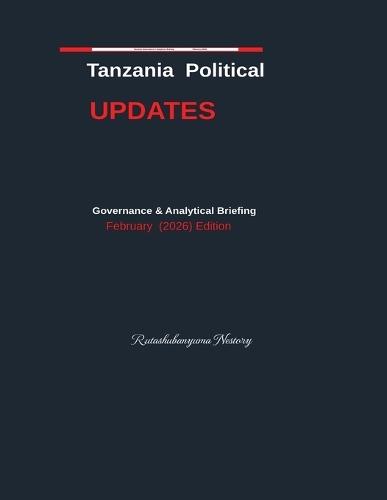
The briefings compiled in this volume were written between January and March 2026, in the aftermath of Tanzania's disputed 2025 general elections. The period was marked by heightened political reflection, competing narratives of legitimacy, and renewed debate over the relationship between state authority, accountability, and reconciliation. This book does not claim finality of interpretation. Instead, it seeks to clarify recurring questions that have become central to Tanzania's political trajectory: How does a state that once demonstrated capacity for internal accountability-such as during the 1976 Shinyanga crisis-struggle to reproduce that capacity in the present era? Why does external validation increasingly appear to substitute for domestic legitimacy? And what happens to political order when land, survival, and necessity begin to displace inherited patterns of political loyalty? These questions are not confined to academic debate. They are actively present in public discourse across rural communities, urban centers, digital platforms, and institutional spaces. The role of this work is therefore not to provide definitive answers, but to structure inquiry in a way that distinguishes evidence from speculation and analysis from partisan framing. These questions are not confined to academic debate. They are actively present in public discourse across rural communities, urban centers, digital platforms, and institutional spaces. The role of this work is therefore not to provide definitive answers, but to structure inquiry in a way that distinguishes evidence from speculation and analysis from partisan framing. The tone adopted throughout is deliberately restrained. In politically polarized environments, analysis often collapses into either defensive justification or categorical condemnation. This work attempts to avoid both. The governing party is subject to scrutiny not as an exceptional case, but because all political power requires accountability. Opposition actors are treated with the same analytical standards, because democratic systems require that all potential governing forces be evaluated consistently. What follows is offered as a contribution to public reasoning in a moment of national uncertainty.
Full Product Details
Author: Rutashubanyuma Nestory
Publisher: Rutashubanyuma Nestory.
Imprint: Rutashubanyuma Nestory.
Volume: 2
Dimensions:
Width: 21.60cm
, Height: 1.40cm
, Length: 27.90cm
Weight: 0.603kg
ISBN: 9798235836341
Pages: 258
Publication Date: 21 May 2026
Audience:
General/trade
,
General
Format: Paperback
Publisher's Status: Active
Availability: Available To Order

We have confirmation that this item is in stock with the supplier. It will be ordered in for you and dispatched immediately.
Author Information
The author is a Tanzanian national who has been penning down various issues concerning Tanzania political situation. He has been writing on print and digital media for at least the last 30 year and holds an M.A in public administration from Carleton University, Ottawa, Canada (1990). He has worked in both public and private sectors in Tanzania for the last 38 years.