Overview
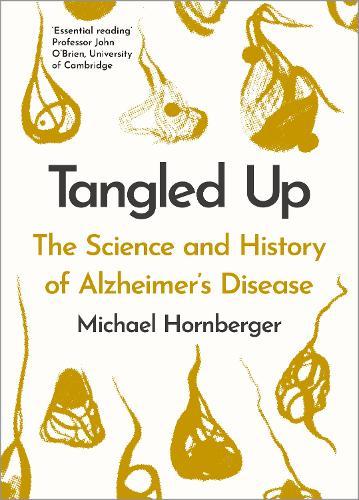
The only comprehensive guide to the history and science of Alzheimer’s disease When Alzheimer’s disease enters a family, it rarely arrives with clarity. A forgotten appointment, a repeated story, a moment of sudden disorientation—small fractures that raise frightening questions about the future. Tangled Up: The History and Science of Alzheimer’s Disease is Professor Michael Hornberger’s clear, readable guide to what is happening inside the brain, why it happens, and what today’s science can do about it. This is not a vague “brain health” overview. It is a lay-friendly journey through the neuroscience of Alzheimer’s disease: how the earliest brain changes build silently over years; how they translate into the symptoms families see; and why the story of Alzheimer’s is, at its heart, a story of proteins — amyloid plaques and tau tangles — becoming dangerously tangled up. Hornberger begins where the modern field began: early 20th-Century Germany, where Alois Alzheimer met Auguste Deter, the first patient whose symptoms were linked to distinctive microscopic changes in the brain. Alongside Alzheimer stands the overlooked Oskar Fischer — another pioneer whose discovery deserves to be remembered. Part history, part scientific detective story, these opening chapters bring human voices and hard evidence together. From there, Tangled Up moves into what most of us fear most: memory. Hornberger explains how episodic memory works — how the brain encodes, stores, and retrieves the events of our lives — and why Alzheimer’s disease disrupts access to recent memories first. You’ll understand why a loved one may seem to be “living in the past,” why the same questions return again and again, and why some everyday forgetfulness is normal ageing, while other patterns deserve attention. One of the book’s most valuable contributions is its spotlight on an under-recognised early warning sign: spatial disorientation. Getting lost in familiar places, confusion in one’s own home, and a shrinking “mental map” can appear early and carry real-world risk. Tangled Up shows how the brain’s navigation systems work and why Alzheimer’s can unsettle them — offering a new lens for understanding behaviour and planning for safety without surrendering dignity. At the core of the book is a deep dive into plaques and tangles. You’ll learn what amyloid and tau normally do, how they go awry, how they spread through the brain, and how modern biomarker technology is transforming diagnosis. Blood tests, spinal fluid measures, and advanced brain imaging are opening the door to earlier detection — sometimes even before symptoms are obvious — changing the future of prevention, clinical trials, and treatment. And treatments are no longer a distant promise. Hornberger explains the breakthroughs and the limitations: why many drug trials failed, why targeting a single pathway is difficult, and why some newer medications can slow progression in early stages. He demystifies the headlines around monoclonal antibodies and other emerging therapies, helping you follow the science with confidence instead of confusion. Because fear often begins with family history, Tangled Up tackles genetics with reassurance and precision. You’ll learn the difference between rare inherited forms and common risk genes, and why genes are rarely destiny. Just as importantly, Hornberger explores lifestyle and environmental risk factors — what is modifiable, what is not, and what evidence suggests can meaningfully lower risk. Finally, the book broadens the public understanding of Alzheimer’s disease by covering rarer forms that don’t begin with memory loss: variants that present with changes in behaviour, vision, language, or movement. Recognising these patterns can be life-changing for patients and families searching for answers. For readers seeking a comprehensive, trustworthy Alzheimer’s disease book — grounded in modern neuroscience yet written for general readers — Tangled Up brings the history, the science, and the practical implications into one compelling narrative. Whether you are a family member, caregiver, clinician, advocate, or simply curious about the brain, you will finish better informed, better prepared, and less afraid. Start reading today and make sense of Alzheimer’s science.
Full Product Details
Author: Michael Hornberger (University of East Anglia)
Publisher: Canbury Press
Imprint: Canbury
Dimensions:
Width: 15.30cm
, Height: 2.20cm
, Length: 23.40cm
Weight: 0.300kg
ISBN: 9781914487637
ISBN 10: 191448763
Pages: 252
Publication Date: 24 April 2025
Audience:
General/trade
,
Professional and scholarly
,
Adult education
,
General
,
Professional & Vocational
Format: Hardback
Publisher's Status: Active
Availability: Manufactured on demand

We will order this item for you from a manufactured on demand supplier.
Reviews
'A fascinating journey, both historically and scientifically, from the first recorded case of Alzheimer’s disease through to modern therapies. This book is essential reading for anyone wanting to understand the real science behind what causes Alzheimer’s disease, and how best to prevent it.' – John O'Brien, Professor of Old Age Psychiatry, University of Cambridge 'This is such a clear and interesting book, which takes away the fear from something to which we are all at risk. It is high time we knew more, and this is just the place to start.' – Professor Tom Shakespeare, Professor of Disability Research, London School of Hygiene and Tropical Medicine 'An enlightening exploration of complex concepts, approached with humour and warmth, and made accessible to all. The book expertly balances deep scientific insights with engaging storytelling, providing readers with a detailed understanding of Alzheimer’s disease from its historical beginnings, to our current understanding of its effects on brain biology and memory. As we enter an era of hope in our battle against this devastating disease, Tangled Up is an invaluable resource for the curious reader, be they caregiver, scientist or medical professional.' – Karen Duff, Centre Director, UK Dementia Research Institute at University College London
Author Information
Michael Hornberger is Professor of Applied Dementia Research and Associate Dean of Innovation at the University of Southampton in the UK. He regularly meets patients with Alzheimer’s disease as part of his research aimed at improving diagnosis, disease tracking and symptom management. Michael is originally from Germany and studied at the universities of Osnabruck and Vienna. He gravitated to England where he did his PhD at University College London before working at Cambridge University. He spent six years in Sydney, Australia, before returning to Cambridge. He then worked at Norwich Medical School at the University of East Anglia. In his spare time, he listens to jazz.