|
|
|||
|
||||
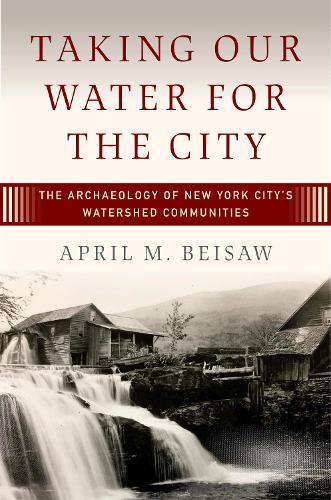
OverviewTap water enables the development of cities in locations with insufficient natural resources to support such populations. For the last 200 years, New York City has obtained water through a network of nineteen reservoirs and controlled lakes, some as far as 125-miles away. Engineering this water system required the demolition of rural communities, removal of cemeteries, and rerouting of roadways and waterways. The ruination is ongoing. This archaeological examination of the New York City watershed reveals the cultural costs of urban water systems. Urban water systems do more than reroute water from one place to another. At best, they redefine communities. At worst, they erase them. Full Product DetailsAuthor: April M. BeisawPublisher: Berghahn Books Imprint: Berghahn Books ISBN: 9781800738140ISBN 10: 1800738145 Pages: 154 Publication Date: 09 December 2022 Audience: Professional and scholarly , Professional & Vocational Format: Hardback Publisher's Status: Active Availability: In Print This item will be ordered in for you from one of our suppliers. Upon receipt, we will promptly dispatch it out to you. For in store availability, please contact us. Table of ContentsReviewsBeisaw takes the reader along with herself and her students as they walked over, through, and around the watershed communities of New York whose lands and livelihoods continue to be impacted by New York City's ever-increasing need for water. The careful and example-filled work provides the best sorts of nuance about the ways that text, artifact, and oral history can be harnessed by archaeological practice to show the real stakes of our collective use of water, and how that world-sanctioned human right will be even further at risk as the oceans rise and our climate continues to change. * Rebecca S. Graff, Lake Forest College Author InformationApril M. Beisaw is an Associate Professor of Anthropology at Vassar College in Poughkeepsie New York. Since publishing Identifying and Interpreting Animal Bones: A Manual, with Texas A&M University Press, April has focused on the archaeology of the recent past. Her work on the impacts of the New York City water system on contemporary watershed communities has appeared in the International Journal of Historical Archaeology and as a chapter within the volume Contemporary Archaeology and the City: Creativity, Ruination, and Political Action. Tab Content 6Author Website:Countries AvailableAll regions |
||||