Overview
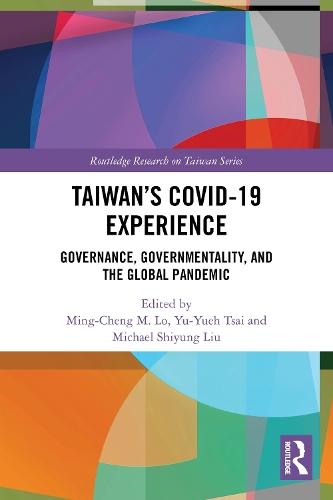
This book explores and develops the ongoing conversation about how Taiwan navigated through the COVID-19 pandemic. Emphasizing the themes of governance and governmentality, it moves the foci of the discussion from COVID policies to the social and political orders undergirding the statecraft of pandemic management. Furthermore, it analyzes how the pandemic fostered a historical moment at which new forms of governance and governmentality were beginning to take root. It also situates Taiwan’s precarious nationhood in its global context, thereby challenging a prevalent methodological nationalism – the assumption that the nation is a natural unit of analysis whose borders are more or less unquestioned – and contributing to decolonizing Western theories with perspectives from the Global South. Presenting rich original materials on the legal and public debates, individual reflections, and grassroots campaigns during COVID, this book will be essential reading for students and scholars of Taiwan's governance and social health policy, as well as medical anthropology and sociology.
Full Product Details
Author: Ming-Cheng M. Lo ,
Yu-Yueh Tsai ,
Michael Shiyung Liu
Publisher: Taylor & Francis Ltd
Imprint: Routledge
Weight: 0.590kg
ISBN: 9781032572215
ISBN 10: 1032572213
Pages: 302
Publication Date: 28 November 2025
Audience:
College/higher education
,
Tertiary & Higher Education
Format: Paperback
Publisher's Status: Active
Availability: Manufactured on demand

We will order this item for you from a manufactured on demand supplier.
Reviews
“This is a valuable collection of essays offering a critical analysis of the complex and often conflicted intersection of geopolitics, public health, and crisis management in the context of a global pandemic. The collection of essays provides deep, multi-disciplinary insight on the delicate and often contentious relationship of strict government control designed to protect and provide care on the one hand and the socio-political dynamics and restrictive consequences of biopower on the other.” Joseph Alter, Professor and Director of the Asian Studies Center, Department of Anthropology, University of Pittsburgh, USA “This remarkable collection clearly proves that we must put Taiwan at the center of the study of global epidemic control. The twelve theoretically informed chapters probe the intersection of democracy, surveillance, resistance, and health in startlingly fresh and sophisticated ways. Taiwan’s COVID-19 Experience will be a must-read for academics, medical professionals, and policy-makers alike.” Ruth Rogaski, Associate Professor of History and Asian Studies, Department of History, Vanderbilt University, USA “In the rapidly growing scholarship on global COVID-19 experiences, this book distinguishes itself with its wealth of empirical analysis and broad historical and theoretical perspectives.” Guobin Yang, Grace Lee Boggs Professor of Sociology and Communication and Director of Center on Digital Culture and Society, University of Pennsylvania, USA
Author Information
Ming-Cheng M. Lo is Professor of Sociology at the University of California, Davis, USA. Lo’s research addresses the cultures of democracy in East Asia, as well as the sense-making processes regarding illnesses, disasters, and cultural traumas. Yu-Yueh Tsai is Associate Research Fellow at the Institute of Sociology, Academia Sinica, Taiwan, working in the fields of medical sociology, science, technology, and society (STS), and race and ethnicity studies. Michael Shiyung Liu is Distinguish Professor of the History of Science and Medicine at Shanghai Jiao Tong University and Professor of History affiliated to the Asian Studies Center, University of Pittsburgh, USA. His research interests include Japanese colonial medicine, East Asian environmental history, and modern history of public health in East Asia.