Overview
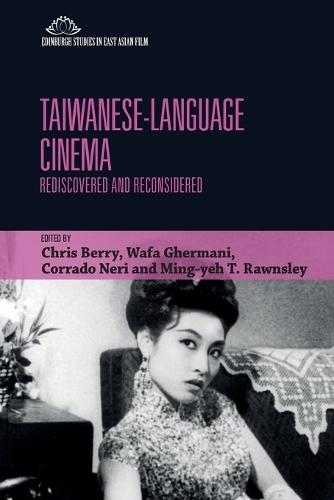
Taiwanese-Language Cinema: Rediscovered and Reconsidered presents diverse approaches to the vibrant commercial film industry known as Taiwanese-language cinema (taiyupian). After a long period of neglect, films are being restored and made available with subtitles. Taiwanese-language cinema was a cycle of over 1,000 dramatic feature films produced between the mid-50s and early 70s in the local Minnanhua Chinese language most commonly spoken on the island, also known as ""Taiwanese"" (taiyu). The rediscovery of Taiwanese-language cinema is stimulating new scholarship, both in Chinese in Taiwan and in other languages, which challenges our conventional understandings of Taiwanese film history and opens up new approaches to the films themselves. This volume includes a mix of new English-language scholarship material with key essays by Taiwanese scholars newly translated from Chinese for the volume.
Full Product Details
Author: Chris Berry (Professor of Film Studies, King’s College London) ,
Wafa Ghermani (assistant professor at Taiwan Central University, Taiwan Central University) ,
Corrado Neri (associate professor at the Jean Moulin University, Lyon 3, Jean Moulin University, Lyon 3) ,
Ming-yeh Rawnsley (Research Associate, Centre of Taiwan Studies, SOAS University of London, _x000D_Institute of Sociology, Academia Sinica, Taiwan)
Publisher: Edinburgh University Press
Imprint: Edinburgh University Press
ISBN: 9781399527897
ISBN 10: 1399527894
Pages: 288
Publication Date: 29 May 2026
Audience:
Professional and scholarly
,
Professional & Vocational
Format: Paperback
Publisher's Status: Forthcoming
Availability: Not yet available

This item is yet to be released. You can pre-order this item and we will dispatch it to you upon its release.
Reviews
Here Taiwanese-language cinema finally receives the sustained scholarly attention it deserves, with leading global scholars offering insightful readings of both acknowledged classics and relatively forgotten films placed in the broader context of Taiwan’s film industry, culture and society. An essential volume for those interested in Taiwan and Asian popular cinema. * Jason McGrath, University of Minnesota * A tour-de-force transnational endeavour with original research by scholars from Taiwan, the United Kingdom, and Europe, Taiwanese-Language Cinema: Rediscovered and Reconsidered offers illuminating analyses on taiyu pian, Taiwan’s native cinema that flourished during the 1950s and 1960s. A definitive work on the new history of the lost and found film treasures from Taiwan. * Emilie Yueh-yu Yeh, Lam Wong Yiu-Wah Chair Professor of Visual Studies, Lingnan University * Provides a lively, wide-ranging and critically persuasive account of an under-researched period in Taiwan’s film history and will surely help refocus critical attention on the island’s rich history of popular entertainment cinema. -- Christopher Brown * The China Quarterly * Taiwanese-Language Cinema: Rediscovered and Reconsidered—the first collection of its kind in English—offers a nuanced exploration of taiyupian’s complexity and diversity, covering topics such as historical revisits, genres, directors, studios, and music compositions. -- Beth Tsai * Taiwan Lit *
Here Taiwanese-language cinema finally receives the sustained scholarly attention it deserves, with leading global scholars offering insightful readings of both acknowledged classics and relatively forgotten films placed in the broader context of Taiwan’s film industry, culture and society. An essential volume for those interested in Taiwan and Asian popular cinema. * Jason McGrath, University of Minnesota * A tour-de-force transnational endeavour with original research by scholars from Taiwan, the United Kingdom, and Europe, Taiwanese-Language Cinema: Rediscovered and Reconsidered offers illuminating analyses on taiyu pian, Taiwan’s native cinema that flourished during the 1950s and 1960s. A definitive work on the new history of the lost and found film treasures from Taiwan. * Emilie Yueh-yu Yeh, Lam Wong Yiu-Wah Chair Professor of Visual Studies, Lingnan University * Provides a lively, wide-ranging and critically persuasive account of an under-researched period in Taiwan’s film history and will surely help refocus critical attention on the island’s rich history of popular entertainment cinema. -- Christopher Brown * The China Quarterly *
Author Information
Chris Berry is Professor of Film Studies at King’s College London. His curating work includes the 2011 Cultural Revolution in Cinema season in Vienna (with Katja Wiederspahn) and the Taiwan’s Lost Commercial Cinema: Recovered and Restored project (with the co-editors of this book). Film Festival jury service has included Hawai’i, Pusan, Singapore, and the Golden Horse (Taipei). He has authored and edited many books, most recently Film and the Chinese Medical Humanities (2020). Wafa Ghermani holds a PhD from the Université Paris 3 – La Sorbonne Nouvelle in film studies. Her PhD focused on Taiwan cinema and National Identity from the Japanese colonial period to the present. She is currently assistant professor at Taiwan Central University. She previously worked at the Cinémathèque française and is a curator for many festivals and Taiwan film-related events. Corrado Neri is an associate professor at the Jean Moulin University, Lyon 3. He has conducted extensive research on Chinese cinema in Beijing and Taipei and published many chapters in books and articles in journals. He is the author and co-editor of several books, including Tsai Ming-liang (2004), Ages Inquiets. Cinémas chinois: une representation de la jeunesse (2009) and Retro Taiwan: Le temps retrouvé dans le cinéma sinophone contemporain (2016). Ming-yeh T. Rawnsley is Research Associate, Centre of Taiwan Studies, SOAS University of London and also at the Institute of Sociology, Academia Sinica, Taiwan. She is the founding Editor-in-Chief, International Journal of Taiwan Studies and has published widely in both English and Chinese on Chinese-language cinema and media and democratisation in Taiwan. Her more recent publications include Taiwan Cinema: International Reception and Social Change (edited with Kuei-fen Chiu and Gary Rawnsley, 2017).